Coffee is the drink a Dubai cafe gets judged on first, and few things on the menu are as easy to photograph badly. Espresso turns from rich to muddy under the wrong light, latte art softens while you are still framing, and an iced latte starts to sweat and dilute the moment it leaves the bar.
Most weak cafe menus are not short of good coffee. They are short of a setup built for it.
This guide covers what a cafe menu set needs, how to light and angle each drink, the timing that keeps crema and foam fresh, and how to shoot once for the menu, delivery apps and Instagram. It is the same playbook we use on our beverage and drink photography shoots across Dubai.
What a cafe menu shoot should cover
Start from the menu board, not a mood board. A complete specialty coffee set usually falls into four groups, plus the food that sells alongside it:
- Espresso classics: espresso, cortado, flat white, cappuccino, latte and mocha.
- Filter and slow bar: V60, Chemex, batch brew and cold brew served black.
- Iced drinks: iced latte, iced Spanish latte, cold brew with milk and anything else built over ice.
- Signatures and seasonal drinks: the pistachio, saffron, rose or matcha creations that only your cafe makes.
- Pastries and pairings: a croissant beside a flat white sells two items in one frame.
Skip the milk swaps. Oat, almond and full-fat milk look identical in a cup, so one frame per drink is enough unless the milk brand is part of the story, as it was when Alpro took its Barista range into Dubai cafes. Our cafe photography service covers the brunch plates and the room, and bakery and pastry photography covers the counter.
Light: window light or controlled flash
Both work. The right choice depends on how much of the menu you are shooting and whether next season's drinks need to match this season's.
Window light is soft and flattering for latte art, hands and the interior. In Dubai it is also strong and quick to change, especially through a glass shopfront, so diffuse it with a white scrim or a sheer curtain and shoot side-on, never straight into it. As the sun moves, colour and contrast drift, which is fine for a few social posts and a problem for a long menu that has to match.
Controlled flash gives the same light on the first drink and the last, freezes a pour mid-stream, and can be rebuilt exactly when a new drink launches. For a full menu or anything going onto delivery apps, it is usually the safer choice.
Avoiding the brown, murky cup. Black coffee and espresso swallow light. Put the main light behind and to one side so the crema rim catches a highlight, add a white card in front to lift the surface, and switch off warm pendant lights so they do not tint the foam yellow. A pale cup or saucer also separates a dark drink from a dark table, where a black cup on walnut simply disappears.
Angles that suit each drink
There is no single best angle for coffee. Match the angle to whatever makes the drink different:
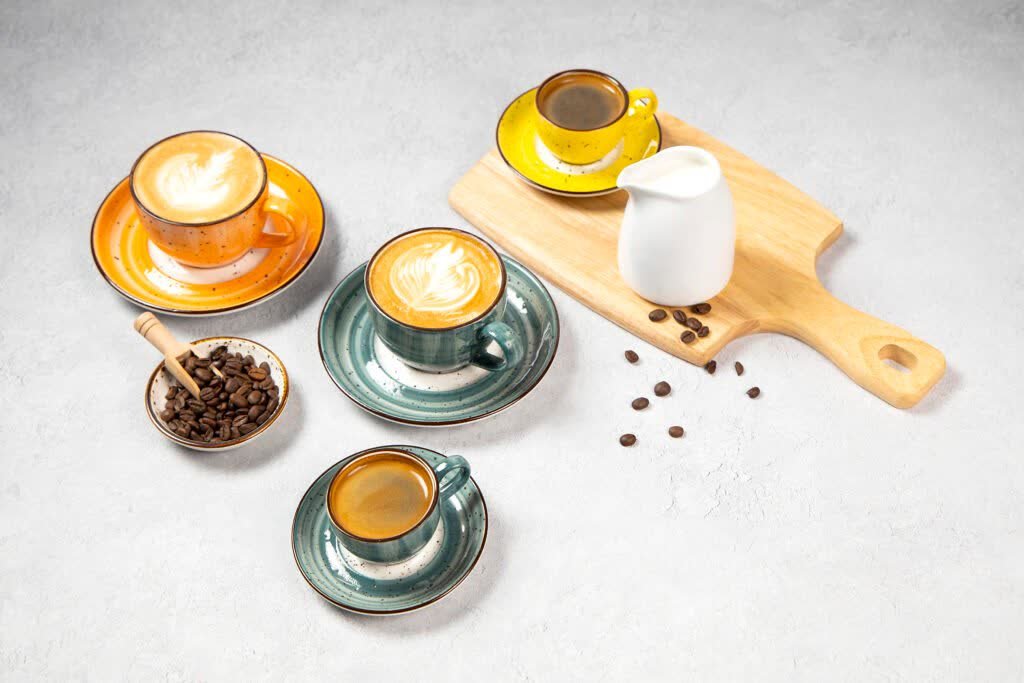
- Top down for latte art, cappuccino foam and a full order laid out on the table. Keep the cup dead level and turn the handle to about four o'clock so it reads naturally.
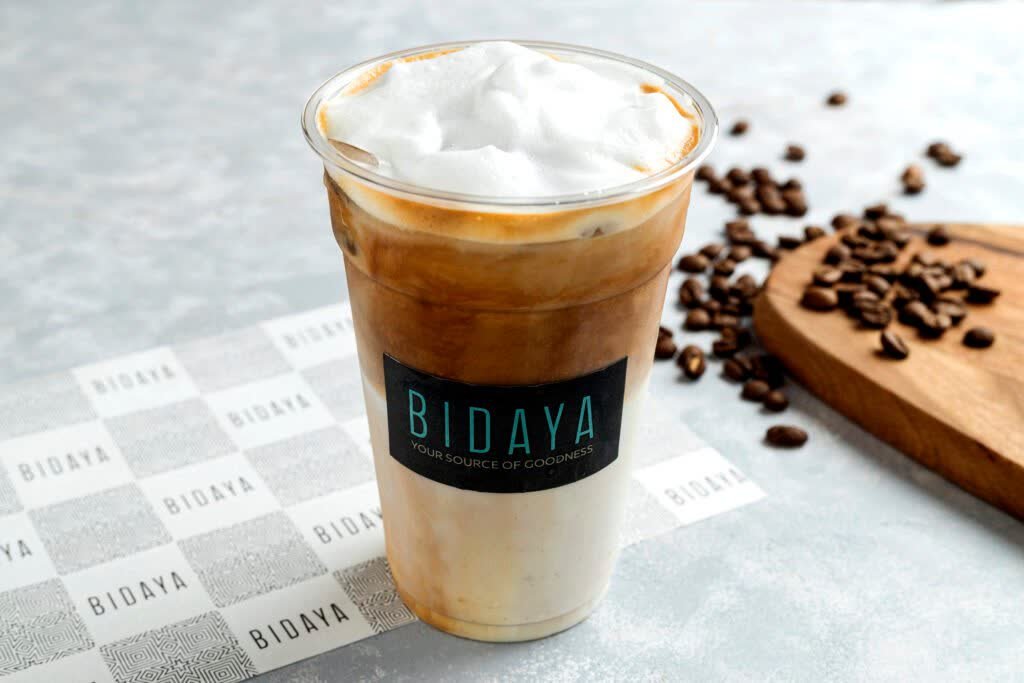
- From just above eye level up to roughly forty-five degrees for layered iced drinks. Straight on shows the layers; tilting up adds the foam cap or garnish. Go much higher and the glass foreshortens until the layers blur together.
- Eye level for pours, espresso running from the portafilter and anything tall, where height and movement are the point.
Timing: crema, foam, condensation and ice
Coffee has a shorter life on set than almost anything else a cafe sells. Plan the shoot around these windows:
- Crema. Fresh crema is thick, reddish-brown and lightly flecked, and it starts to thin and pale almost as soon as the shot is pulled. Pull a fresh shot for every hero frame rather than reusing one.
- Foam and latte art. The pattern looks sharpest in the first moments after the pour, before bubbles open at the rim. Have the barista pour at the set, not across the room, and replace the drink rather than trying to revive it.
- Condensation. On a chilled glass, condensation starts within a minute or two under lights, then runs into drips. Wipe the base between frames, and for a long setup use a light glycerine mist that holds even beads.
- Ice. Cubes melt, shift and float, which changes the drink while you shoot. Build iced drinks last, pre-chill the glass, keep backup ice close, and use acrylic cubes only in background glasses.
Glassware, cups and surfaces
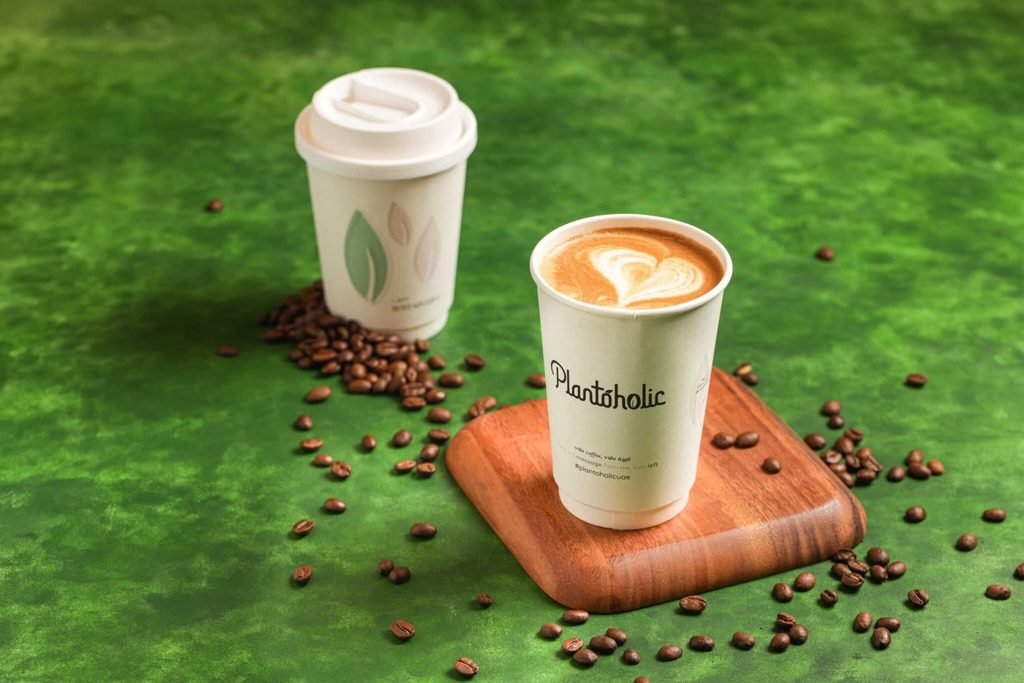
Your cups are part of the brand. If customers drink from speckled ceramic or a printed takeaway cup, that is what belongs in the photo, and cafe branding work on cups and sleeves pays off most when the camera can see it.
Glass needs more care than ceramic. Double-walled glasses show off layers but double every reflection, heavy-based tumblers distort whatever sits behind them, and plastic takeaway cups scratch and fog. Polish everything, handle glassware by the base, and keep a spare of each.
For surfaces, use what the cafe actually has: the marble counter, the oak table, the terrazzo bar. Avoid high-gloss tops that mirror the cup, and keep props to a few beans, a spoon or a pastry rather than a scatter of everything in the cupboard.
Shooting for the 1:1 delivery crop and for Instagram
Delivery apps show drinks as small square or landscape thumbnails, and a tall glass framed tightly for a menu board will lose its straw or garnish when the app crops it. Compose with space around the drink, keep it centred, and deliver a square version as a separate file. Our delivery app menu photography service shoots to each platform, and our guide to menu photos that sell on Talabat, Deliveroo and Noon covers the basics.
Instagram wants the opposite: vertical frames for the feed and full-screen stories, with room at the top and bottom for text. Shoot the vertical at the camera rather than cropping it from a landscape frame later, because a landscape composition rarely has a good vertical hiding inside it. Your Google Business Profile photos deserve the same care.
Seasonal drinks: shoot before the launch
Seasonal drinks are where cafes compete hardest on Instagram, and they have the shortest life on the menu. Our summer menu photography guide recommends shooting three to four weeks before the menu launches so images are ready for delivery apps, social and print on day one, and the same logic applies to Ramadan and winter menus.
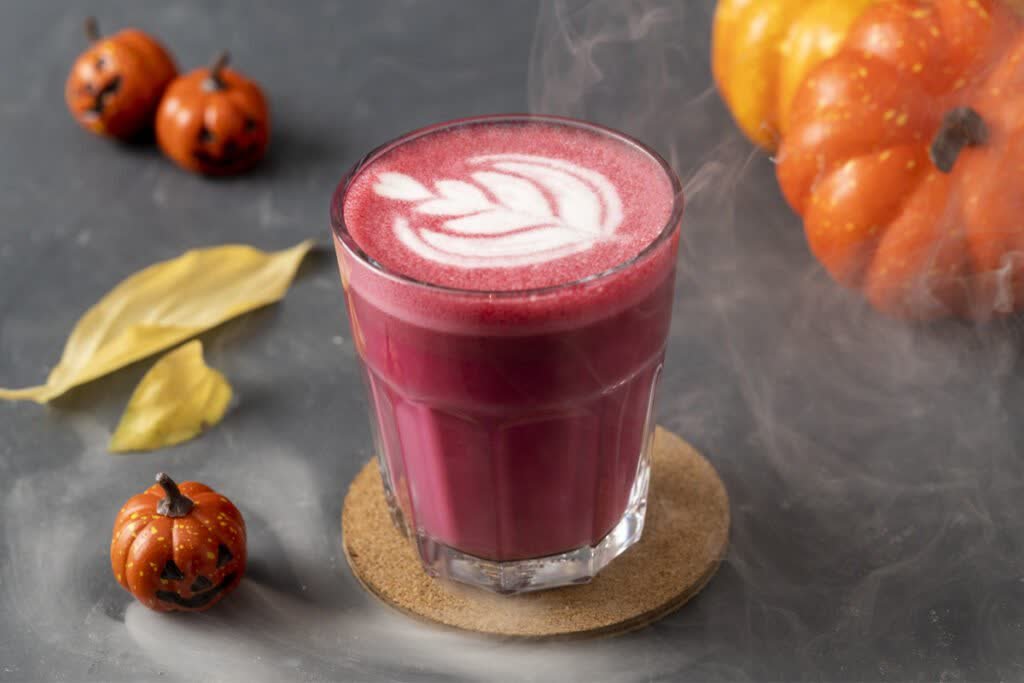
Ramadan brings its own drinks, from date shakes to saffron and rose lattes for suhoor menus, and the light and styling should feel like evening rather than brunch. Our notes on Ramadan and iftar menu photography cover the timing. For autumn and winter specials, a single prop such as a pumpkin or a cinnamon stick sets the season without hiding the drink.
Short video: pours, latte art and the first sip
A still sells the drink; a few seconds of video sells the ritual. Milk folding into espresso, a rosetta forming from above, ice dropping into cold brew and cold foam sliding down an iced latte are the clips that stop a scroll. Our guide to Reels and short-form food video in Dubai covers how cafes use them.
Film them in the same session as the stills. The drink is already built and lit and the barista is already on set, so a few extra takes cost minutes rather than a second shoot day. Our food video production team plans the clips into the same shot list.
When to bring in a specialist
A phone and a bright window are enough for daily stories and the odd special. Bring in a specialist when the images have to work harder: a new menu, a rebrand, a delivery app relaunch, a product partnership with a milk or coffee brand, or a seasonal campaign with a fixed launch date.
What you are paying for is not the camera. It is the shot list, lighting that matches across a whole menu, timing that keeps every crema fresh, and a grade that makes the full set look like one cafe. A specialist also brings kit most cafes do not own, from flash heads and scrims to a tethered screen so you can approve frames on set.
Frequently asked questions
How do you photograph latte art?
Photograph latte art from directly above, within seconds of the pour, with soft light from one side so the foam shows texture without glare. Keep the cup level, turn the handle to about four o'clock, and have the barista pour at the set. If the pattern softens or bubbles open at the rim, pour a fresh one.
What is the best angle for coffee photos?
It depends on the drink. Top down suits latte art, cappuccinos and flat lays. Layered iced drinks read best from just above eye level up to roughly forty-five degrees, where you see the layers and the foam cap together. Pours, espresso extraction and tall glasses work at eye level, where height and movement are clearest.
How do you photograph iced coffee without condensation ruining the shot?
Control the condensation instead of fighting it. Chill the glass, build the drink only when the light and frame are locked, and wipe the base before every frame so drips never pool. For a long setup, a light glycerine mist gives even beads that hold without running. Shoot the hero first, and keep backup ice and a second glass ready.
What time of day is best to shoot in a cafe?
Early morning, before opening or in the first quiet hour, is usually best. The room is clean and empty, staff are free to help, and window light is gentler than at midday. If breakfast is your busiest service, the lull between lunch and the evening rush is the next best window, with controlled flash to keep colour consistent.
How many drinks should a cafe photograph for its menu?
Photograph every drink that has its own line on the menu and looks different in the cup, then add your signatures and the current seasonal special. Milk swaps and syrup variations rarely need their own frame because they look the same. A sensible core set covers the espresso classics, iced and filter options, and every signature.
Can phone photos work for a cafe menu?
Yes, for daily stories and quick specials, if the light is good and the phone is steady. Soft window light, a clean surface and a wiped cup go a long way. For a full menu, delivery apps and print, a professional shoot gives consistent light and colour across every drink. Our guide to taking good food photos on your phone covers the basics.
How often should cafe drink photos be updated?
Update a drink photo whenever the recipe, cup or garnish changes, and shoot each seasonal menu before it launches. A photo that no longer matches what arrives draws complaints on delivery apps. Our guide on how often to update menu photos suggests a quarterly refresh for cafes and bakeries, because the counter changes constantly.
Where to start
Start with the menu board: list every drink, mark the heroes, and note which channel each image is for. That one page decides the shoot day, the glassware list and the quote.
Our beverage and drink photography in Dubai page explains how we plan and run cafe and bar shoots, with the Guinness and Alpro work behind it. When you are ready, contact us with your drinks list and we will come back with a shot plan.