A few years ago, video was the part of restaurant marketing that owners admired but rarely prioritized. It looked expensive, it felt like a luxury, and it was hard to connect to the till. That era is over. Short-form video has moved from the edges of food and beverage marketing to the center of how customers in Dubai discover where to eat, and the restaurants treating it as optional are quietly ceding attention, reach and orders to those that do not. Food videography in Dubai is no longer a vanity project. It is one of the most efficient ways to put your food in front of hungry people who have never heard of you, and to keep it in the minds of those who have.
The shift is driven by how discovery now works. People find restaurants the way they find everything else, by scrolling, and the platforms that govern that scrolling have decided that motion wins. A well made reel does something a photograph cannot. It shows the sizzle, the pour, the cheese pull and the reaction, and it does so with a sense of life and immediacy that still images can only hint at. Great food does not sell if it does not look irresistible online, and video is now the format in which irresistible is most powerfully expressed. This article looks at why short-form video has become a genuine growth channel for restaurants in Dubai, what the strongest brands do differently, where most go wrong, and how to think about video as a system that produces orders rather than a one-off production that produces applause.
Food Videography in Dubai: Why Short-Form Video Became a Growth Channel, Not a Nice-to-Have
The first thing to understand is that the platforms are actively pushing video, which changes the economics of attention. Instagram now gives reels significantly more reach than static posts, with reels reaching a far larger share of an account’s potential audience than image posts do, and food is one of the most consumed content categories online, with food-related short-form video generating enormous view volumes across Reels, TikTok and YouTube Shorts. In plain terms, the same effort put into a reel is shown to more people than the same effort put into a photo, because the algorithm has decided that is what keeps users watching.
The second thing to understand is that video earns disproportionate engagement, and engagement is the currency that buys further reach. Food reels routinely attract higher engagement rates than static images, and every like, save, comment and share signals to the platform that the content deserves to be pushed to more people. This is why a single strong reel can reach far beyond a restaurant’s existing followers and land in front of thousands of potential new customers who were never searching for you, which is a reach that photography and paid search struggle to match at the same cost.
The business implication is significant. Video is not competing with your other content for a slice of the same fixed audience, it is expanding the audience itself, functioning as a discovery engine that introduces your food to people at the top of the funnel. For a Dubai restaurant surrounded by competitors, that top-of-funnel reach is often the scarcest and most valuable thing marketing can buy, and short-form video has become one of the few channels that delivers it consistently without an ever-rising media budget. This is also where execution starts to matter enormously, because reach is only useful if the video that earns it actually makes people want to eat, and turning attention into appetite is a craft rather than an accident.
Authenticity Beats Polish, but Neither Beats Strategy
One of the most important shifts in food videography is that the most expensive-looking video is no longer the most effective one. The platforms increasingly reward authentic, identity-attached content over highly produced advertisements, and audiences respond to it in kind, because a real kitchen, a real hand plating a dish and a real reaction feel trustworthy in a way that a glossy commercial does not. Staff-led, behind-the-scenes and process-driven videos frequently outperform polished productions, and posting consistently at a steady cadence tends to beat releasing one perfect film a month.
It would be easy to misread this as permission to simply point a phone at the kitchen and post whatever happens, but that is the wrong lesson. Authenticity is a style, not a strategy, and raw content that is badly lit, poorly framed or disconnected from any commercial goal still fails, however genuine it feels. The restaurants that win combine the trust of authentic content with the discipline of a plan, capturing real moments but doing so with an eye for light, timing, framing and, crucially, purpose. A reel should not merely exist, it should be built to do a job, whether that is showcasing a signature dish, driving delivery orders, or building anticipation for a launch.
This is the balance that trips up most operators. Fully polished video feels out of step with how audiences now behave, while fully improvised video rarely converts attention into custom. The productive middle ground, authentic in feel but deliberate in construction, is difficult to hit consistently without either the time or the craft to plan, shoot and edit for the platform. It is exactly this combination of authenticity and intent that a specialized food and beverage creative team is built to deliver, treating each video as content designed to perform rather than footage that happened to be captured.
What Most Restaurants Get Wrong With Food Videography

Given how much reach short-form video can unlock, it is worth asking why so many restaurant feeds in Dubai still feel flat, sporadic and ineffective. The recurring mistakes are as predictable as they are avoidable.
They post inconsistently
The most common failure is treating video as an occasional burst rather than a habit. A flurry of reels around a launch, then silence for weeks, tells the algorithm the account is dormant and denies it the momentum that consistency builds. Short-form platforms reward frequency and regular engagement signals far more than they reward the occasional expensive production, so a restaurant posting a few thoughtful videos every week will almost always outgrow one that posts a single polished film every month.
They confuse effort with strategy
A second mistake is producing video with no clear commercial purpose. A reel that looks nice but is not built to showcase a specific dish, drive a specific action or reinforce a specific brand idea generates fleeting attention and no lasting result. Volume without direction burns time and goodwill, because the audience is entertained for a moment and then moves on with no reason to visit, order or remember.
They shoot for the wrong format
Many restaurants still create video in the wrong shape and length for how it will be watched. Short-form is vertical, fast and best held to a tight window, often most effective in the range of a handful of seconds up to around fifteen, yet operators keep posting long, horizontal clips that lose the viewer before the hook lands. A video that ignores the format of the platform is fighting the platform, and the platform always wins.
They have no visual identity in motion
Finally, restaurants often let their video look and feel drift, so that one reel is bright and playful, the next is dark and moody, and nothing ties them together. Just as an inconsistent menu weakens recall, an inconsistent feed makes a brand hard to recognize and easy to forget. Without a coherent visual identity carried through the video, each post starts from zero rather than compounding into a brand people know on sight. Each of these gaps is a matter of execution and planning rather than budget, and this is where a specialized food and beverage creative partner changes the trajectory, because it brings the consistency, format fluency and strategic intent that turn scattered clips into a growing channel.
What High-Performing F&B Brands Do Differently with Video
The restaurants and cloud kitchens that make short-form video pay share a set of practices, and the encouraging part is that none of them require a film crew or an inflated budget.
They commit to a consistent cadence, publishing regularly so the algorithm keeps rewarding them and the audience keeps expecting them, because momentum on these platforms is cumulative rather than instant. They give every video a job, deciding before they shoot whether a reel is meant to drive delivery orders, introduce a new dish, or deepen brand affinity, and they build the content around that goal. They shoot for the platform, keeping video vertical, tight and hook-led so it holds attention in the first crucial seconds. And they maintain a recognizable visual identity in motion, so that color, pace, framing and tone repeat across the feed and the brand becomes instantly identifiable even in a fast scroll.
The unifying principle is that high performers treat video as a system rather than a series of one-off productions, a repeatable engine that consistently converts attention into awareness, orders and loyalty. That systematic approach is what a specialized partner such as Food on Focus brings to food videography, planning content around business goals and brand identity so that each reel contributes to a compounding channel rather than a fleeting moment of applause.
Matching the Video to the Job It Needs to Do
Not all food video serves the same purpose, and one of the marks of a mature content strategy is choosing the right type of video for the outcome you need. The table below maps common short-form video styles to the business goal they are best suited to, which helps a restaurant plan a balanced feed rather than repeating the same format until it tires.
| Video type | What it does best | Primary business goal |
|---|---|---|
| Signature dish close-up | Triggers appetite with sizzle, pour or cheese pull | Drives orders of a specific high-margin dish |
| Behind-the-scenes and process | Builds trust through authentic, staff-led moments | Deepens brand affinity and recall |
| New launch or limited special | Creates urgency and anticipation | Spikes short-term demand around a launch |
| Customer and reaction moments | Adds social proof and relatability | Widens reach to new audiences |
A feed built only from one of these styles quickly plateaus, because it speaks to only one stage of the customer journey. A feed that blends appetite-driving dish videos, trust-building behind-the-scenes content, urgency-creating launch reels and reach-widening reaction moments works the whole funnel at once, pulling in new audiences while nudging existing ones toward an order. Planning that mix deliberately, rather than posting whatever gets filmed, is what turns a video presence into a genuine growth channel.
Why Food Videography Matters for Your Brand’s Growth
Brought together, food videography influences the growth levers that matter most to a restaurant in Dubai. It expands reach, because the platforms push video to far more people than static content, turning each strong reel into a discovery engine that finds customers who were never looking for you. It lifts engagement, because food video earns more interaction than images, and that interaction buys further reach in a compounding loop that steadily grows the audience.
It drives orders, because appetite-led video moves viewers from watching to wanting, and a well placed call to action converts that want into a delivery basket or a booking. It strengthens brand perception and recall, because a consistent, recognizable video identity makes the brand memorable in a way that a scattered feed never can, and memorable brands are the ones customers return to. And it improves the efficiency of paid promotion, because vertical short-form video tends to deliver strong returns on ad spend when the creative is genuinely engaging. Seen in full, video is not a costly extra bolted onto real marketing. It is one of the most efficient growth channels available to a modern F&B brand, precisely because it combines organic discovery, engagement and conversion in a single format, which is why the strongest operators treat it as core rather than optional.
When to Bring in a Specialized F&B Creative Agency
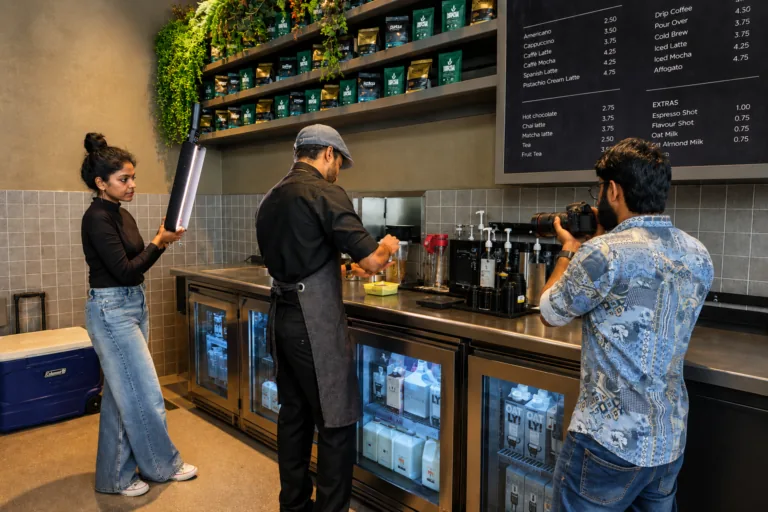
Video is not something every restaurant must outsource at every moment, but there are clear points where specialized help changes the outcome rather than simply adding to a content pile.
- At launch, when a new concept or cloud kitchen needs to build awareness quickly and a strong video presence can introduce it to a wide audience fast.
- During a rebrand, when the brand’s look and feel are changing and the video identity needs to be rebuilt consistently to match.
- While scaling, when new outlets, virtual brands or campaigns need a steady, repeatable stream of on-brand video rather than sporadic clips.
- When engagement is flat, and a feed is being posted to but not growing, which usually signals a gap in strategy, consistency or craft rather than effort.
- When ad performance disappoints, and paid video is spending without returning, because stronger, platform-native creative is often the fastest route to better results.
These are the moments when a specialized food and beverage creative partner earns its place, because the work is no longer about one reel but about a video system engineered for reach, engagement and conversion. Food on Focus works with restaurants, cafes and cloud kitchens at exactly these points, building short-form video strategies that tie every piece of content back to a clear business goal and a consistent brand.
Frequently Asked Questions
Why is food videography important for restaurants in Dubai?
Customers now discover restaurants by scrolling, and the platforms push video far more than static posts, giving reels much greater reach. Food is one of the most watched content categories online, so short-form video puts your food in front of large new audiences and, when it drives a clear action, turns that attention into orders.
Does short-form video actually increase orders?
It can, in two ways. Directly, appetite-led video paired with a clear call to action moves viewers toward a delivery order or booking. Indirectly, video expands reach and engagement, introducing your brand to people who then order later. The key is that each video is built with a purpose rather than posted for its own sake.
Do I need expensive equipment and a film crew for food video?
No. Audiences and algorithms now reward authentic, consistent, well-framed content over glossy productions, and much effective short-form video is captured simply but deliberately. What matters is not the budget but the craft and the plan: good light, a strong hook, the right vertical format, and a clear goal for each clip.
How often should a restaurant post food videos?
Consistency matters more than volume or polish. Posting a few considered videos each week generally outperforms one elaborate production a month, because short-form platforms reward regular activity and engagement. A steady, sustainable cadence builds the momentum that occasional bursts never achieve. You should treat any specific frequency as a guide to test, not a fixed rule.
What kind of food videos work best?
A balanced mix works best: appetite-driving close-ups of signature dishes to prompt orders, authentic behind-the-scenes content to build trust, launch reels to create urgency, and reaction or customer moments to widen reach. Relying on a single style tends to plateau, while a deliberate blend works the whole customer journey.
Ask What Your Feed Is Really Doing for You
Open your own restaurant’s Instagram or TikTok and scroll it as a stranger would, someone who has never eaten your food and is deciding in a second or two whether to care. Ask honestly whether your videos make that stranger hungry, whether the feed is consistent enough to be recognizable, and whether each clip is clearly doing a job or simply filling space. Notice whether you are posting often enough to build any momentum at all, or whether the account has gone quiet since the last burst of effort.
If the honest answer is that your video presence is sporadic, unfocused or forgettable, then you are leaving reach, engagement and orders on the table every week, and no single viral hope will substitute for a real system. When you are ready to turn short-form video into a channel that consistently grows your brand, Food on Focus can help you audit your current content and build the food videography strategy your restaurant deserves.
Planning this for your own brand? See our food video production.