
Small cafes get more value from food videography when each video has one job, fits the real service routine, and can be reused across menus, social posts, and local promotion.
What job should the cafe video do?
Food videography for a small cafe should begin with one business job, not a list of attractive shots. Decide whether the video needs to introduce the cafe, sell one signature item, show the preparation process, support a seasonal launch, or help customers understand the atmosphere. A single video can look polished and still fail if viewers do not know what to do next.
Write the intended viewer and action in one sentence. For example: “A nearby customer who has not visited should see the morning pastry service and decide to stop in before work.” This sentence controls the location, pace, props, framing, and final call to action.
Use these checks before planning the shoot:
- The featured food can be prepared consistently on filming day.
- The video has one primary audience and one primary action.
- The cafe can name where the video will appear, such as a menu page, social post, booking profile, or digital display.
- The staff know which details must be shown accurately.
- The final message will remain useful after the current promotion ends.
The most useful brief is short but specific. Include the featured item, service period, desired mood, audience, filming limits, delivery format, and approval process. Avoid vague requests such as “make the cafe look premium” unless premium has been translated into visible choices, such as quiet pacing, clean plating, warm lighting, or close attention to handwork.
Choose a format your team can sustain
A small cafe should choose a video format that matches its staff time, menu changes, and publishing rhythm. A short vertical preparation clip may be more useful than a cinematic brand film when the cafe needs regular content, while a wider atmosphere piece can suit a website or larger display. The right choice is the one the cafe can keep accurate and relevant.
Consider the job before choosing the format:
- Use a preparation sequence when texture, craft, or freshness is the reason to buy.
- Use a serving sequence when the finished dish and the customer experience matter most.
- Use an atmosphere sequence when location, seating, service, or community is the differentiator.
- Use a staff-led explanation when customers need help understanding an unfamiliar item.
- Use a mixed sequence only when each part supports the same customer action.
A common mistake is ordering one long showcase video and expecting it to solve every communication problem. A better brief identifies a main edit and useful cutdowns from the same filming session. Before filming, confirm the aspect ratios, opening frame, caption space, logo treatment, and destination for each version. These production details affect how much background, movement, and spoken information the camera can include.
If the cafe needs both stills and moving footage, coordinate them rather than treating them as separate visits. Food Photography & Videography in Dubai can help a reader compare the broader content-production scope before deciding whether one focused video session is enough.
Build a shot list around one service
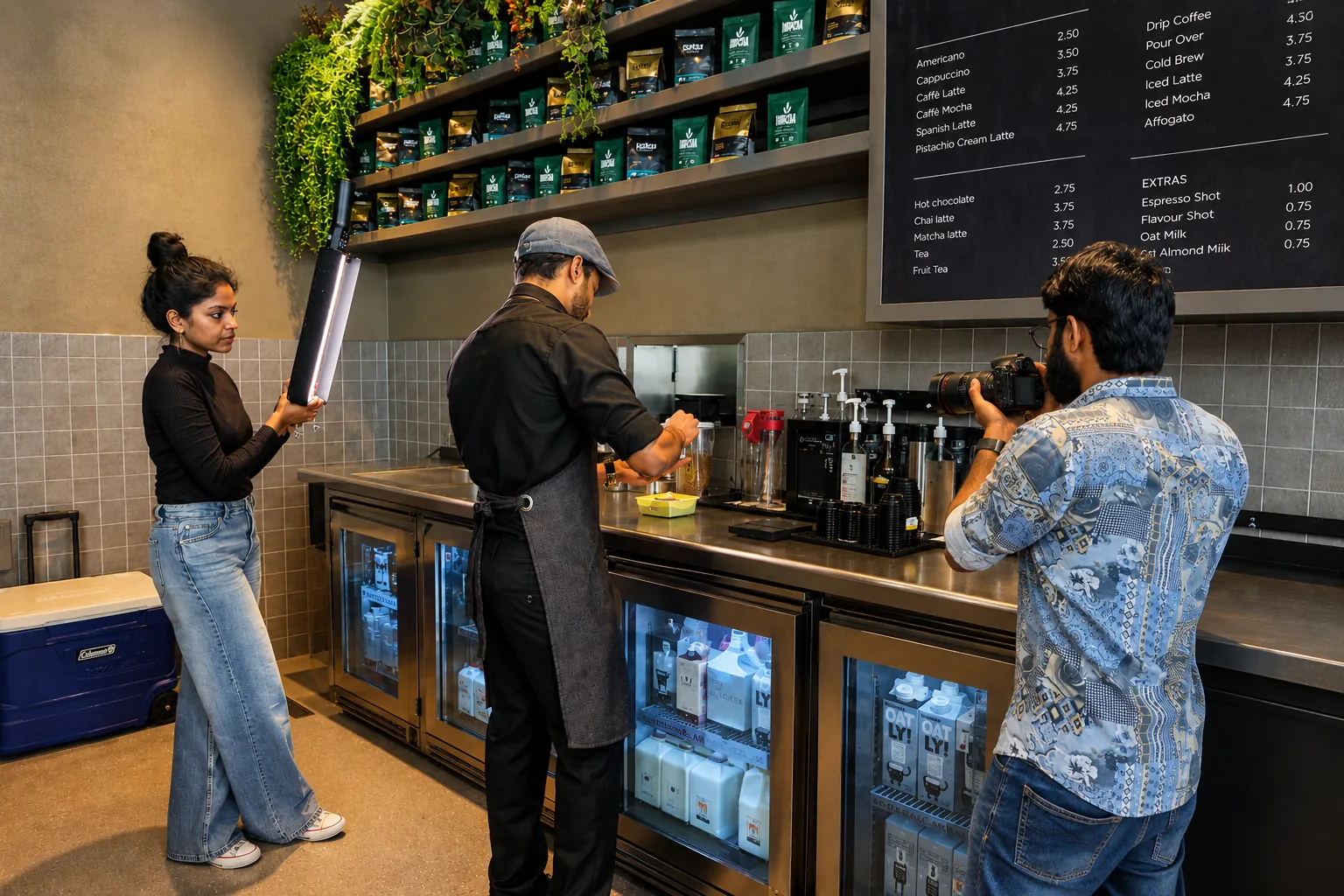
A practical cafe shot list follows one service from preparation to customer decision, rather than collecting disconnected close-ups. Choose a representative item and map the visible story: ingredients or tools, preparation, finishing, handoff, first interaction, and the finished setting. This creates continuity and gives the editor usable transitions.
Plan the sequence in this order:
- Record the location cue that tells viewers where the action happens.
- Capture the key preparation movement, such as pouring, whisking, slicing, steaming, or plating.
- Film the texture-changing moment that makes the item desirable.
- Show the finished item from a clear angle before adding decorative movement.
- Record the handoff or table placement so the product has a human context.
- Capture a final frame that leaves room for the cafe name and action.
Illustrative example: a cafe wants to promote a cardamom latte during the morning service. The input is one barista, one prepared drink, a working espresso station, and a vertical social placement. Film the cup being positioned, the espresso extraction, milk texture, spice finish, handoff, and a clean final hold. Check the result by watching it without sound: the viewer should still understand what is being made, what it looks like, and why the cafe is the place to get it.
Repeat important actions from more than one angle when the schedule allows. A close shot may show texture, while a wider shot proves where the action takes place. Do not overfill the list with generic coffee pours if the cafe’s actual reason to visit is the pastry, seating, service, or a particular house-made detail.
Film food that looks honest and appetising
Good cafe food video makes the product recognisable before it makes the scene dramatic. Keep the food at a realistic serving stage, control reflections on cups and sauces, and remove distracting background items without making the working environment look false. Viewers should be able to trust that the featured item exists and can be ordered.
Prepare the set with simple controls:
- Clean the lens and check focus on the food’s most important detail.
- Remove labels, bins, personal items, and unrelated packaging from the frame.
- Keep replacement portions ready because heat, foam, ice, sauces, and garnishes change quickly.
- Check white balance and exposure when moving between the counter, window light, and seating area.
- Record room tone and clean action sounds if sound will support the edit.
- Leave safe space for captions and platform controls.
Direct staff toward repeatable movements rather than theatrical gestures. A barista can make the drink normally, then repeat the pour at a controlled pace for a close-up. A server can complete the handoff naturally, then hold the final position long enough for a clear frame. This protects authenticity while giving the camera enough time to capture the action.
Review clips during the shoot, not only after the cafe closes. Look for soft focus, blocked hands, steam hiding the product, unreadable labels, awkward pauses, and continuity changes between takes. If a check fails, correct the setup and repeat the action while the food and staff are still available.
Review, publish, and decide when to hire help
A cafe should approve food video against its original customer action, not only against visual quality. Watch the first version with the sound off, then with sound on, and ask whether the featured item, setting, and next step are clear. Check every version on the placement where customers will see it, because cropping and captions can change the message.
Use this final review:
- The first moments identify the food or cafe reason to keep watching.
- The product remains visible long enough to understand its texture and portion.
- Captions, names, prices, and calls to action are accurate.
- The edit does not promise a preparation method or service the cafe cannot repeat.
- The ending gives viewers a practical next step.
- The exported files match the agreed formats and are easy for the team to find.
If the cafe can film safely, repeat the process, and edit consistently, an internal workflow may be suitable for simple recurring clips. Professional help becomes more useful when the cafe needs controlled lighting, multiple deliverables, staff direction, food styling, sound, or a shoot that must happen without disrupting service. A focused production brief makes that decision easier and prevents paying for footage that cannot be used.
For a cafe comparing photography with video, Cafe Photography in Dubai can help clarify when still images may serve the menu or venue better. When the next step is outside the team’s capacity, gather the brief, sample menu, target placements, service constraints, and approval contact before contacting Food On Focus Media. Those details let the conversation begin with the actual customer problem rather than a vague request for content.
Frequently asked questions
How much food videography does a small cafe need?
A small cafe usually needs enough footage to support one clear customer action and the placements it actually uses. Start with one hero item or service moment, then plan reusable cutdowns only if they have a defined destination. More footage is not automatically better if the cafe cannot publish, approve, or keep the content accurate.
Should a cafe film food preparation or the finished dish?
Film both when they support the same decision. Preparation shows freshness, craft, and texture, while the finished dish shows what the customer will receive. If time is limited, choose the stage that explains the cafe’s strongest reason to visit. A preparation sequence without a clear final product can leave the offer unclear.
Can staff create useful cafe food videos themselves?
Staff can create useful recurring clips when the setup is safe, the food is repeatable, and someone can check focus, sound, lighting, and captions. Keep the format simple and use a repeatable shot list. Hire help when filming disrupts service, the product needs careful styling, or the cafe needs several polished deliverables.
What should a cafe prepare before contacting a videographer?
Prepare the featured items, business goal, target audience, filming dates, service restrictions, intended platforms, preferred tone, and approval process. Share any essential brand or menu details and explain what must not appear on camera. A clear brief helps the videographer recommend a suitable scope instead of guessing from a general request.