Let’s talk honestly. If you run a restaurant, café, or cloud kitchen in 2026, this article on F&B content strategy for restaurants speaks directly to what you’re facing.
You’re posting reels.
You’re following trends.
You’re spending on shoots, editors, or social media managers.
And yet, when you look at your business at the end of the day, something doesn’t add up.
The views don’t turn into visits.
The likes don’t turn into orders.
The effort doesn’t reflect on the billing counter.
This blog is not about algorithms.
It’s about reality.
Because in 2026, content still works but only when it’s built for real customers, not vanity metrics.
Posting Every Day Is Not Marketing: A Key Mistake in F&B Content Strategy for Restaurants

Posting content daily has become a comfort habit for restaurants.
It feels productive.
It feels like you’re “doing marketing.”
But here’s the truth:
Posting is just activity. Marketing is direction.
Most restaurants are stuck in a loop:
- Posting because competitors are posting
- Copying reels that worked for other restaurants
- Chasing trends that don’t match their brand or customers
- Hoping one viral video will fix everything
That hope creates noise. Noise doesn’t create footfall.
The trap is that activity feels like progress. A full content calendar looks like a healthy marketing effort, and ticking off a post each day is genuinely satisfying. But the till does not reward effort; it rewards decisions made by real customers. If the daily posting is not shaped by a clear idea of who you are talking to and what you want them to do, you are simply adding to the scroll, not standing out in it. The venues that break the loop are the ones that stop measuring themselves by how much they post and start measuring by how clearly each post helps someone choose them.
Why Your Content Is Not Bringing Orders
Your content is not failing because:
- The food is bad
- The visuals are low quality
- You’re not posting enough
It’s failing because it doesn’t help customers decide. Every customer scrolling your page is subconsciously asking:
- Why should I eat here instead of somewhere else?
- Is this worth my money?
- Will I regret coming here?
- Can I trust this place?
If your content doesn’t answer even one of these questions clearly, people scroll past. In 2026, good-looking food is everywhere. Clarity is rare.
This is the shift most owners miss. When every competitor has sharp photography and trending audio, production quality stops being a differentiator and becomes the baseline. What a customer is short of is not nice images; it is a reason to choose confidently and quickly. The content that converts in a saturated market is the content that removes doubt, answers the quiet questions and makes the decision feel safe. Beauty gets the scroll to pause. Clarity gets the order.
Food Content Is Saturated. Decision-Making Is Not.

Every restaurant now has:
- Clean food shots
- Slow-motion pours
- Trending music
When everything looks good, nothing stands out.
What actually stands out is:
- Clear positioning
- Honest communication
- Familiarity
People don’t choose the best-looking restaurant. They choose the easiest one to trust
Core Principles of F&B Content Strategy for Restaurants in 2026
No theory. No buzzwords.
Just what works on the ground.
1. Stop Posting for the Algorithm. Post for Hungry Humans.

Algorithms change every few weeks.
People don’t.
If a reel:
- Doesn’t explain what you serve
- Doesn’t show what makes you different
- Doesn’t make someone imagine eating there
It won’t convert, no matter how viral it gets. Content should make sense to a hungry person first.
The practical test is simple. Imagine someone who has never heard of you, is hungry right now, and sees your post for three seconds before deciding whether to care. Does the post tell them what the dish is, roughly what it costs, and why it is worth their time? If it only delivers a mood and a trending sound, it entertains without ever doing the one job you needed it to do. The restaurants that win are not the ones chasing the next audio clip; they are the ones whose every post quietly answers a hungry person's questions. That starts with images that actually sell the food, which is why getting the photography right matters as much as the caption. Our guide to menu photography ideas that drive revenue covers how to make each dish earn its place.
2. Every Post Needs One Clear Job
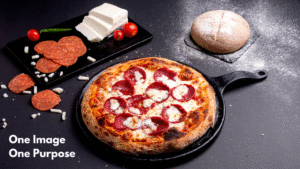
One post. One purpose.
Before posting, ask:
- Is this helping someone discover our restaurant?
- Is this building trust?
- Is this showing what makes us different?
- Is this pushing someone to visit or order?
If the answer is “none,” don’t post it. Random content creates random results.
Giving each post one job also makes your whole feed easier to plan and easier to measure. When a post exists to drive orders, you judge it on orders, not on likes. When it exists to build trust, you judge it on comments, saves and the quality of the conversation. A feed where every item has a clear purpose stops being a scramble for daily content and becomes a set of deliberate moves, each one pulling a specific lever in the business. That clarity is far more valuable than volume, and it is the difference between posting as a habit and posting as marketing.
3. Local Content Beats Viral Content.
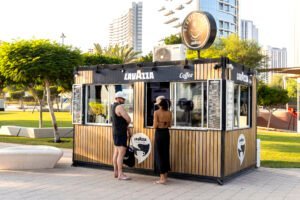
A reel seen by 3,000 people near your restaurant
is better than 300,000 views from people who will never visit.
Local content wins because it:
- Matches real dining habits
- Feels familiar
- Builds recall
Area names, local phrases, real timings, real pricing, these things matter more than trends in 2026.
Local relevance is also where search and social meet. Someone who sees your area mentioned, recognises a nearby landmark, or spots a price in dirhams they can picture spending is far closer to walking in than a distant viewer who simply enjoyed a clip. For delivery-led venues, the same logic applies to your app listings, where a local, appetising image placed next to a competitor's decides the order. Our guide to the photos that sell on Talabat, Deliveroo and noon shows how to make those listings work as hard as your grid.
4. Show Reality, Not Perfection
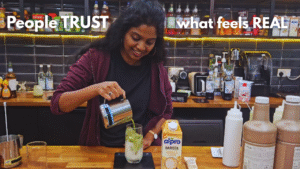
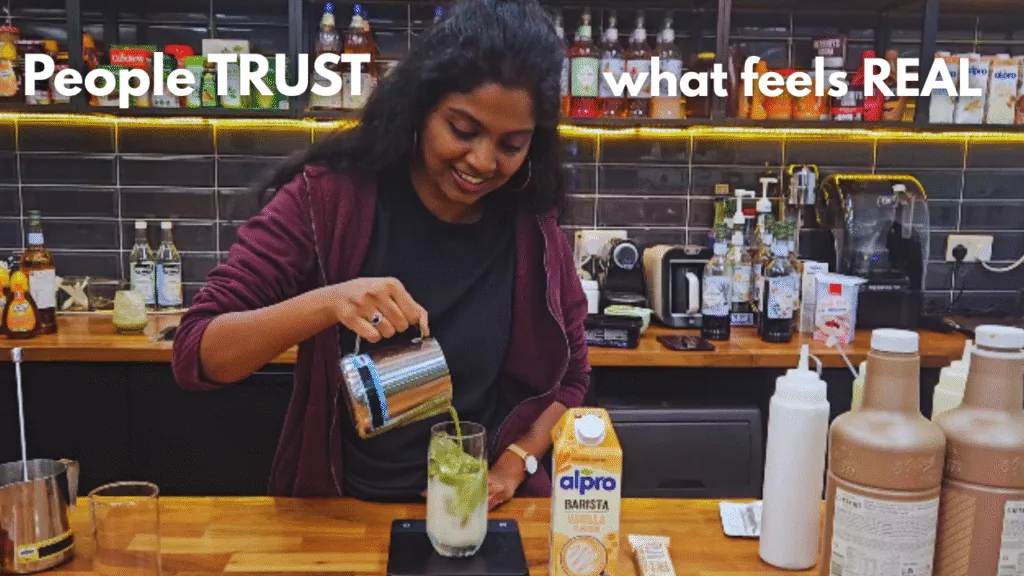
People trust what feels real:
- Kitchen prep
- Real portions
- Actual staff
- Genuine customer reactions
Over-edited, fake-perfect content creates doubt. In 2026, raw beats polished.
Reality does not mean careless. The most effective "real" content is still shot with intent: good light, a clean frame and a genuine moment, rather than a staged one. The point is honesty, not low quality. A diner wants to believe that what arrives at the table will look and feel like what they saw, so the job of your content is to set an expectation you can actually meet. Over-polished imagery that the kitchen cannot match on a busy night does more harm than a slightly plainer photo that tells the truth, because the gap between promise and plate is where trust is lost.
5. Fewer Posts. Clearer Messages.
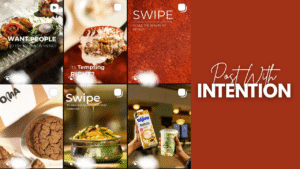
Posting less but with intention works better.
High-performing F&B content usually:
- Hooks attention in the first 3 seconds
- Focuses on one message only
- Ends with a clear next step
Confused content creates confused customers. Confused customers don’t order.
Trying to say three things in one post usually means none of them lands. Pick the single most important idea, build the whole post around it, and trust that the other points can have their own posts later. A feed of focused, single-message pieces is easier to follow and far easier to act on than a stream of busy posts each trying to do everything at once.
6. Be Searchable or Be Invisible
People don’t just scroll. They search.
On Google. On Maps. On Instagram. On AI tools like ChatGPT.
If your content and website don’t clearly explain:
- What you serve
- Who it’s for
- Why it’s worth choosing
…you disappear when intent is high.
Social media creates awareness. Search captures decision-makers. In 2026, you need both.
Being searchable is increasingly about more than Google. People now ask AI assistants where to eat, and those tools pull from clear, well-structured information about your venue: what you serve, where you are, your hours and your prices. A beautiful feed that says none of this plainly is invisible just when someone is deciding. Make sure your website and listings state the basics in plain words, keep your Google Business Profile complete and current, and treat your delivery-app pages as search surfaces in their own right. Awareness without findability leaks customers; the two have to work together.
Why Some Restaurants Are Always Busy

It’s not luck. It’s not just food quality. Busy restaurants are clearer:
- Clear food
- Clear pricing
- Clear positioning
- Clear communication
Their content feels familiar, trustworthy, and easy to choose.
Familiarity is the quiet advantage here. A customer who has seen your dishes, your prices and your room a dozen times over a few weeks walks in already half-decided, because nothing about the place is a gamble any more. That sense of a safe, known choice is built by consistency over time, not by any single viral moment, and it is exactly what a clear, repeated content rhythm produces.
F&B content strategy for restaurants: The Simple Version
- Stop chasing trends
- Start building clarity
- Post with purpose
- Think local
- Show reality
- Be searchable
That’s it.
Turn the Strategy Into a Weekly Plan
Principles only help if they survive contact with a busy week, so it helps to translate them into a simple, repeatable rhythm. You do not need a content team or a wall of spreadsheets. You need a short list of post types, each with a job, that you rotate through so the feed stays balanced instead of drifting into whatever was easiest to film that day.
- One discovery post that clearly shows a hero dish and tells a newcomer what you are and roughly what it costs.
- One trust post that shows reality: the kitchen at work, real staff, a genuine guest reaction or an honest review.
- One difference post that says what you do that the place down the road does not, in plain words.
- One action post that gives a clear reason and a clear way to visit or order this week.
Four purposeful posts across a week will almost always out-earn ten reactive ones, because each is pulling a specific lever rather than adding to the noise. Plan them a week ahead, batch the filming into one short session, and you remove the daily panic that pushes most venues back into posting for the sake of it. If producing even this much alongside a live service is unrealistic, that is the exact gap a content creation partner is there to fill.
What This Looks Like in Practice
Consider two cafes on the same street with similar food. The first posts daily: trending sounds, slow-motion pours, whatever reel format is doing well that week. The views are healthy and the owner feels productive, but the tables stay half full. The second posts four times a week, deliberately. One post shows its best-selling dish clearly, with the price. One shows the owner prepping at six in the morning. One explains, in a sentence, why its coffee is different. One offers a reason to come in before the weekend. The second cafe posts less and reaches fewer people on paper, yet it fills up, because every post answered a question a nearby, hungry person was actually asking.
The lesson is not that the first cafe worked too hard. It is that effort pointed in no particular direction produces motion without movement. Clarity, repeated consistently, is what turns a feed into footfall. None of it requires a bigger budget than the competitor has; it requires deciding what each post is for before you make it.
Measure What Actually Matters
If views are the wrong scoreboard, what should you watch instead? Track the handful of signals that map to the business rather than to vanity. Saves and shares tell you a post was useful enough to keep or pass on. Direction requests and profile taps show intent to visit. The number and recency of your reviews drive local discovery far more than follower count. And if delivery is part of your model, order volume against the days you posted tells you whether content is moving the till at all. Check these monthly, keep what moves them, and quietly drop the formats that only ever bought you views.
Frequently Asked Questions
How often should a restaurant post in 2026?
Three to four purposeful posts a week usually beats daily posting. Consistency and clarity matter far more than volume, and a sustainable rhythm you can keep up outperforms a burst followed by silence.
Why are my reels getting views but no orders?
Views measure attention, not intent. If a reel entertains but never shows what you serve, what it costs or why to choose you, it will not convert however far it travels. Build each post to help a hungry person decide.
Is viral content worth chasing?
Rarely, for a single venue. A smaller reach among people who can actually visit you is worth more than a large reach among people who never will. Local relevance beats raw virality for a restaurant.
Do I still need a website if my Instagram is active?
Yes. Social creates awareness, but search, on Google, Maps and increasingly AI assistants, captures people at the moment of deciding. A clear website and complete listings are where high-intent customers confirm their choice.
Should I show behind-the-scenes content?
It is some of the most effective content you can post. Real kitchens, real staff and genuine moments build the trust that over-polished content erodes, as long as the quality of the image itself stays high.
Where to Take This Next
Strategy is only the starting point. Turning it into a steady stream of content that actually looks the part, week after week, is where most venues run out of time rather than ideas. If you want to go deeper on the pieces this article touched, a few of our other guides pick up where this one leaves off. For getting more from each shoot, see menu photography ideas that drive revenue. For a new venue finding its feet, our how-to guides and insights hub collects the practical pieces in one place. And when the plan is clear but the capacity is not, our F&B content creation services exist to build the library so your team can stay on the floor.
Whatever you do next, hold on to the one idea underneath all six principles: content for a restaurant is a business tool, not decoration. Judge it by whether it brings people in, point every post at that, and the busy weeks take care of themselves.
Final Words
If you’re posting every day but not seeing orders, you’re not failing, you’re posting without a system.
In 2026, content is a business tool, not decoration. If it doesn’t bring people in, it’s not doing its job.
Food on Focus Media works with F&B brands that want content to drive real business, not just engagement.
Planning this for your own brand? See our social media content and management.