Video advertising is no longer a marketing trend. It has become one of the most decisive growth levers for restaurants operating in a digital-first environment.
In markets like Dubai, where customers discover food through screens rather than physical proximity, the way your brand appears in motion often matters more than what your menu says. A static image may attract attention, but a well-executed video can hold it, shape perception, and drive a customer toward action.
This is not a creative observation. It is a behavioral reality.
People tend to engage with and remember video more than static formats, which makes video ads a strong push towards ordering.
For restaurants, this changes the role of content entirely. Video is no longer about storytelling alone. It is about influencing decisions at speed, in environments where attention is limited, and competition is constant.
What Most Video Advertising Content Gets Right and Where It Falls Short
Most existing content around video advertising explains the basics well. It defines formats such as pre-roll, mid-roll, and social video placements, and outlines how video is used to promote products across digital channels.
It also highlights key benefits, such as increased engagement, better brand recall, and improved conversion rates. Many sources correctly point out that video captures attention more effectively and communicates information faster than static formats.
However, most of this content remains generic.
It explains what video advertising is, but not how it should be executed specifically for F&B brands operating on delivery platforms and social media ecosystems. It focuses on formats, but not on performance. It discusses engagement, but not how that engagement translates into actual orders.
That gap is critical.
Because for restaurants, the question is not whether video works. It is whether your video is structured to drive revenue.
The Real Shift: From Content Creation to Conversion Design
Video advertising has evolved from being a branding tool to becoming a conversion system.
Businesses everywhere are putting more of their budgets into video, which shows how central it has become to marketing.Many marketers credit video with increasing sales and improving engagement and customer understanding.
But the insight that matters most for restaurants is not just that video works.
It is how video works.
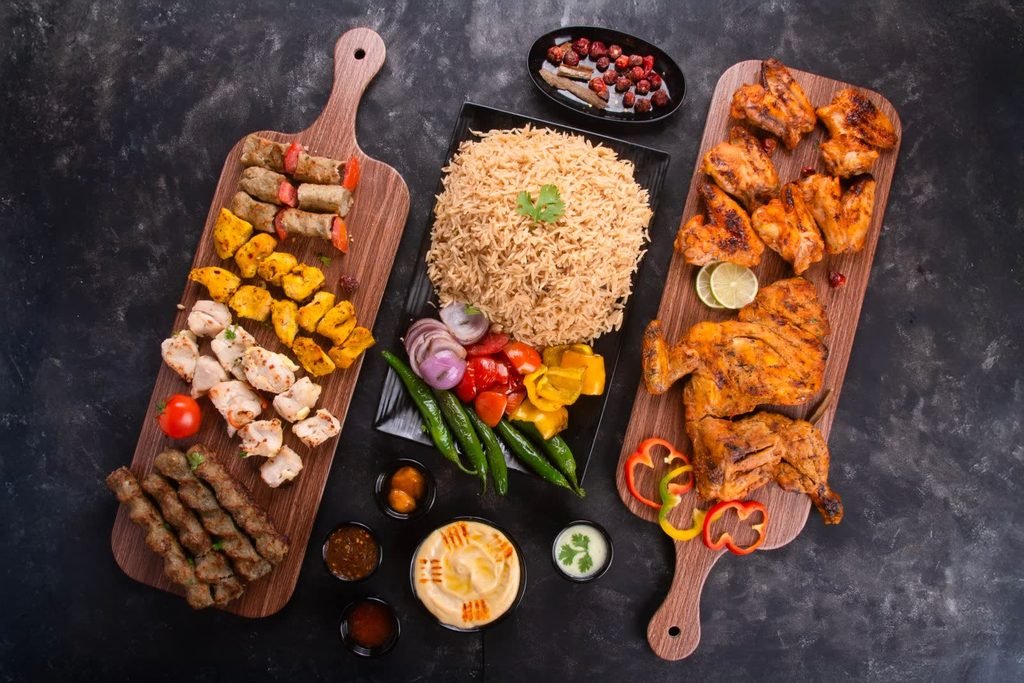
Video compresses multiple layers of communication into a few seconds. It shows texture, movement, portion size, and freshness. It builds desire more effectively than static visuals because it simulates the experience of consuming the product.
This is where most restaurants struggle. They produce video content, but they do not design it for decision-making environments such as delivery apps, Instagram feeds, or paid ads.
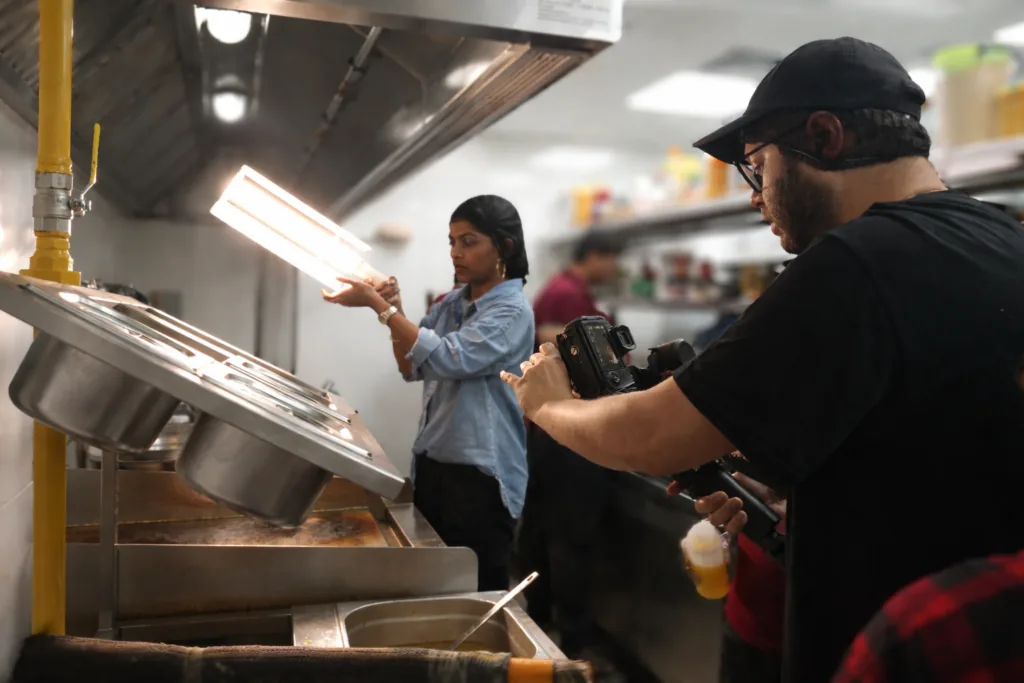
This is where execution becomes the bottleneck, and this is where working with a specialized F&B creative team begins to change outcomes. The focus shifts from producing content to engineering visual triggers that lead to orders.
Why This Matters for Your F&B Brand’s Growth
Video advertising directly impacts core business metrics.
Orders and Conversion Rates
Video reduces uncertainty by showing the product in action, which increases confidence and improves conversion rates.
Pricing Power
When food looks dynamic and premium in video form, customers perceive higher value and are more willing to pay without relying on discounts.
Brand Perception
Video builds a stronger emotional connection than static visuals, shaping how customers remember and talk about your brand.
Platform Performance
Short-form video performs exceptionally well on platforms like Instagram and TikTok, where algorithms favor engaging content.
This is why high-performing F&B brands do not treat video as optional content. They treat it as a primary driver of growth.
Most restaurant owners understand this at a high level. The challenge lies in execution, because creating a video that actually performs requires a combination of creative direction, platform understanding, and commercial intent.
This is where Food on Focus becomes relevant, not as a production vendor, but as a partner that aligns video content with measurable business outcomes.
The Psychology Behind Why Video Advertising Works for Food
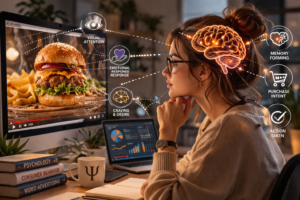
Food is inherently sensory, and video is the closest digital format to replicating that experience.
A well-executed video can:
- Show steam rising from a dish
- Capture the texture of a sauce
- Highlight movement such as pouring, slicing, or melting
These elements trigger appetite and create what can be described as visual craving.
Video tends to improve recall, engagement and purchase intent because it combines motion, sound and storytelling in a way static content cannot.
For restaurants, this means video does not just show food. It makes customers imagine consuming it.
That shift from seeing to imagining is what drives action.
Real-World Scenario: Static vs Video Performance
Consider a simple example.
A restaurant promotes a dessert using a static image. The image is clean and well-lit, but it only communicates appearance.
Now compare that to a short video showing the dessert being cut open, revealing layers, texture, and movement.
The difference is not subtle.
The video creates anticipation. It holds attention longer. It communicates quality more effectively.
This is why video ads often outperform static ads in both engagement and conversion, with nearly half of consumers reporting that they have purchased a product after discovering it through video.
This is not just a creative advantage. It is a commercial one.
What Most Restaurants Get Wrong
Despite the effectiveness of video advertising, many restaurants fail to see results because of how they approach it.
They create videos without a clear objective, focusing on aesthetics rather than outcomes. They produce content inconsistently, which weakens brand identity. They rely on one-time shoots instead of building a continuous content pipeline. They do not optimize videos for platform-specific behavior, leading to poor performance.
Perhaps the most common issue is that videos are created without understanding how customers actually consume content.
Short attention spans, silent viewing, and mobile-first experiences all require specific creative decisions.
This is where most restaurants struggle, and this is where a specialized F&B team becomes valuable. Food on Focus approaches video with a performance-first mindset, ensuring that every piece of content is designed to work in real-world conditions, not just controlled environments.
What High-Performing F&B Brands Do Differently
Restaurants that consistently outperform competitors treat video differently.
They create content specifically for platforms, understanding that a reel, an ad, and a menu video serve different purposes. They maintain consistency in style and quality, which strengthens brand recognition. They plan content strategically, focusing on high-impact dishes and campaigns.
Most importantly, they connect video production with business goals.
This is why their content does not just generate views. It generates results.
Brands that work with specialized teams like Food on Focus tend to achieve this alignment faster because the process integrates creative execution with marketing strategy.
Types of Video Advertising That Work for Restaurants
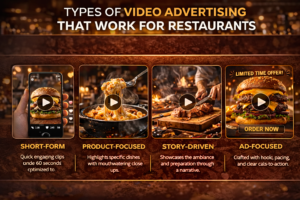
To understand how to use video effectively, it is important to recognize the formats that drive results.
Short-form videos are particularly powerful because they align with how users consume content today. These videos are typically under 60 seconds and are optimized for quick engagement.
Product-focused videos highlight specific dishes, emphasizing texture, portion size, and presentation.
Story-driven videos build brand identity by showcasing the experience behind the food, including preparation and ambiance.
Ad-focused videos are designed for performance, with clear hooks, pacing, and calls to action.
Each format serves a different purpose, but the underlying principle remains the same.
The video must be designed to influence a decision.
When Should You Invest in Video Advertising
There are specific moments when video becomes essential.
When launching a new restaurant, and needing strong first impression.
When scaling and looking to improve ad performance.
When experiencing low conversions despite good traffic.
When rebranding and trying to shift perception.
At these points, the issue is rarely awareness alone. It is how effectively the brand communicates value.
This is where video advertising becomes a growth lever rather than a marketing experiment.
Why Execution Is the Real Differentiator
Most restaurants already understand that video is important.
But understanding does not create results.
Execution requires:
- Strategic planning
- Creative direction
- Platform-specific optimization
- Consistent production
Without these elements, even high-quality videos fail to deliver meaningful impact.
This is why many brands invest in video but do not see returns. They focus on production without aligning it with performance.
This is where Food on Focus operates differently. The approach is not centered on creating more content, but on creating content that drives measurable outcomes.
The Bigger Insight: Video Is Not Optional Anymore
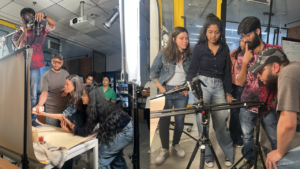
The role of video in marketing has moved from optional to essential.
Consumers prefer video, engage with it more, and act on it more frequently. Businesses that adopt video effectively see improvements in awareness, engagement, and sales, while those that do not risk falling behind.
For restaurants, this shift is even more pronounced because food is inherently visual and experiential.
If your brand is not leveraging video effectively, you are not just missing an opportunity.
You are losing ground.
FAQs
Why is food photography important for restaurants
Food photography creates the first impression and influences customer decisions, especially on delivery platforms where visuals determine whether a user clicks or scrolls past.
Does it increase orders?
Yes. Strong visuals, including video, tend to increase engagement and conversions compared with static formats.
Cost in Dubai
Costs vary depending on scope, production quality, and complexity, but should be evaluated based on return in terms of conversions and brand positioning.
Improving delivery conversions
Focus on high-quality visuals, clear presentation, and platform-optimized content that communicates value instantly.
Need for branding
Strong branding ensures consistency and recognition, helping customers remember and trust your restaurant in a crowded market.
Planning this for your own brand? See our food video production.