
In Dubai's fiercely competitive restaurant scene, a professional photographer isn't a luxury—it's your most powerful sales tool. High-quality food photography is that critical first impression, the one that convinces customers to choose your menu over countless others and directly drives online orders and foot traffic.
Why Great Food Photography Is Your Strongest Sales Tool
In Dubai’s bustling food and beverage market, your menu’s first interaction with a potential customer almost always happens on a screen. Before they can smell the spices or hear the sizzle, they see a photo. That visual handshake on platforms like Talabat, Deliveroo, or your own Instagram feed is where the sale is won or lost.
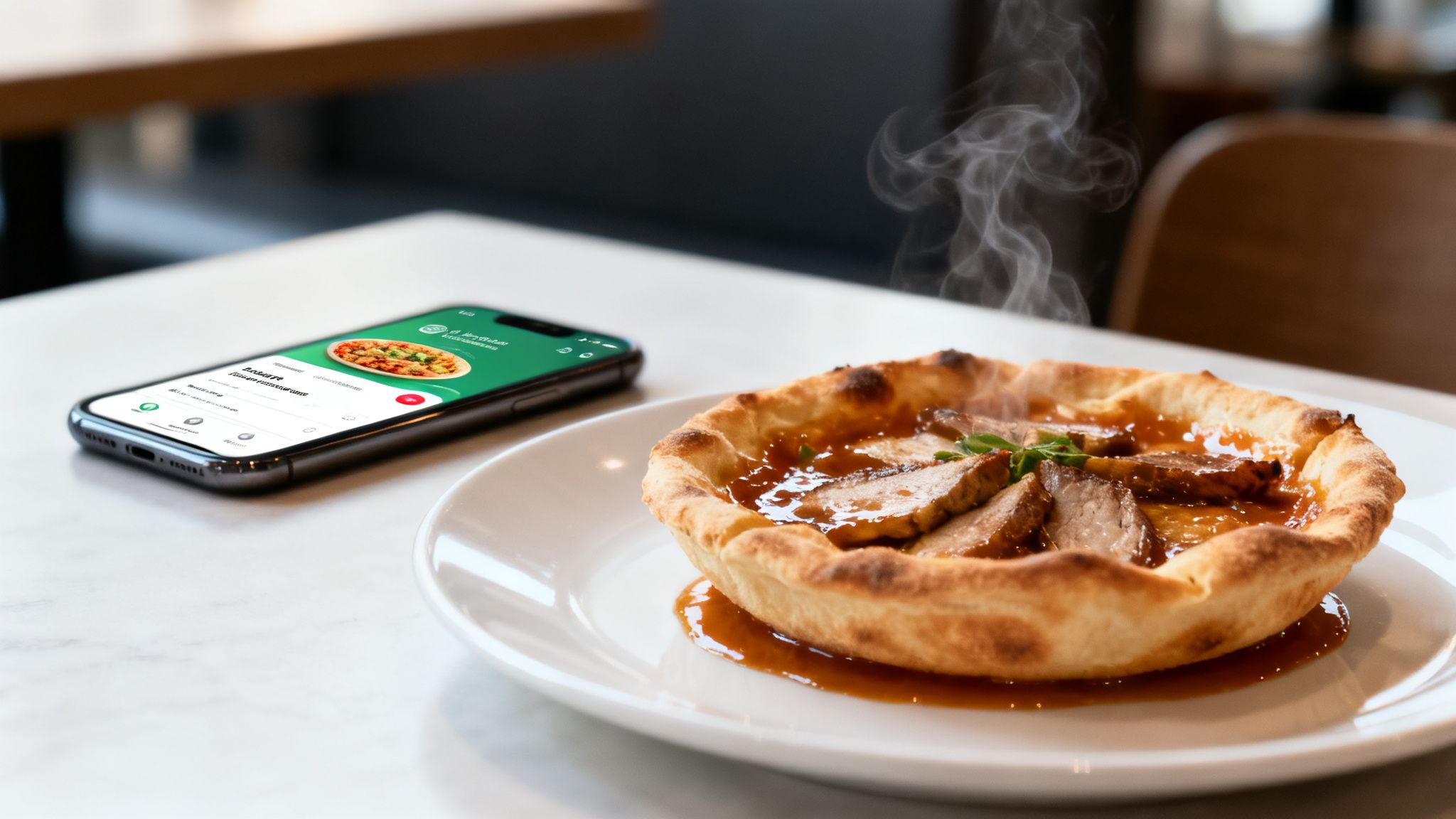
This isn’t just about making food look appetising; it’s about triggering a psychological response. A professionally shot image does more than just document a dish—it tells a story of flavour, texture, and quality that a simple phone snapshot never could.
The Science of Selling with Sight
Great food photography taps directly into the brain's reward centres. When a customer sees a juicy burger with glistening sauce or a perfectly flaky pastry, it activates the same parts of the brain associated with actual taste and desire. This visual feast creates an immediate, undeniable craving.
This effect is magnified in the crowded digital marketplace. On delivery apps, where dozens of restaurants are competing side-by-side, listings with professional photos get significantly more clicks and conversions. Your images aren’t just pictures; they are silent salespeople working for you 24/7.
A skilled professional photographer in Dubai understands how to use light, shadow, and styling to transform a simple menu item into a must-order dish. This strategic visual marketing is an investment in your bottom line, not just an operational expense.
Translating Clicks into Customers
Let's imagine a real-world scenario for a cloud kitchen. Two brands offer a similar chicken biryani at the exact same price. One uses a basic, poorly lit photo, while the other displays a vibrant, detailed image captured by a pro. Which one gets the order? The second one, almost every single time, because the photograph instantly communicates superior quality and taste.
The investment pays for itself in multiple ways:
- Increased Online Orders: Compelling images directly boost sales on third-party delivery platforms.
- Stronger Brand Identity: Consistent, high-quality photos build a perception of professionalism and excellence.
- Attracts Foot Traffic: Enticing social media posts can convince diners to visit your physical location.
Ultimately, hiring a professional photographer is one of the smartest business decisions you can make. For a deeper look at the numbers, you can learn more about why professional food photography in Dubai is worth the investment and see how it builds a brand that truly stands out.
How to Evaluate a Photographer's Portfolio
Scrolling through a photographer’s Instagram is one thing, but really digging into their portfolio requires a more critical eye. You’re not just looking for pretty pictures; you’re looking for a visual partner who understands the specific language of food. A true food photography specialist will have a portfolio that goes way beyond generic, well-lit shots.
First thing to look for? Consistency. Does every image, no matter the dish or setting, have a cohesive and professional feel? This shows control and a deliberate style, not just a few lucky shots. A pro in Dubai will show they can master different lighting, whether it’s capturing the bright, airy vibe of a café or the moody ambience of a fine-dining spot.
Beyond the Pretty Picture
Next, it’s time to look closer at the details that separate an amateur from an expert. Pay close attention to texture. Can you almost feel the crunch of fried chicken, see the glossy sheen on a chocolate ganache, or notice the delicate steam rising from a bowl of soup? Capturing these details isn’t easy; it takes serious lighting skills and a deep understanding of how to make food look completely irresistible.
Food styling is the other big piece of the puzzle. Great styling should feel both aspirational and authentic. It shouldn't be cluttered or use props that distract from the main event—your food. Ask yourself: do these styling choices actually complement the cuisine and fit my brand’s vibe? A real expert can make a simple plate of hummus look elegant and a gourmet dessert feel approachable.
When you're reviewing a portfolio, your goal is to confirm one thing: can this photographer consistently produce high-quality work that aligns with my brand's unique identity? Look for proof they can handle different types of food and shoot effectively for everything from high-resolution print menus to bite-sized social media content.
To help you spot the difference between a polished professional and someone who’s still learning the ropes, here’s a quick-reference table.
Portfolio Red Flags vs Green Flags
| Area of Evaluation | Green Flag (Sign of a Pro) | Red Flag (Cause for Concern) |
|---|---|---|
| Lighting | Lighting is intentional, shaping the food and setting a clear mood. | Flat, harsh, or inconsistent lighting. Food looks washed out or has weird shadows. |
| Food Styling | Props and garnishes enhance the dish and feel authentic to the brand. | Overly cluttered scenes, distracting props, or styling that looks dated or fake. |
| Focus & Sharpness | Images are crisp and sharp where it counts, highlighting key textures. | Soft focus, blurry details, or images that aren't sharp enough for professional use. |
| Colour & Editing | Colours look natural and appetising. Editing enhances the food, not overpowers it. | Over-saturated colours, weird tints (e.g., greyish meat), or heavy-handed filters. |
| Consistency | The entire portfolio has a cohesive, high-quality feel, even with varied styles. | A mix of amazing shots and mediocre ones. The quality feels hit-or-miss. |
| Versatility | Shows a range of different shots: menu, lifestyle, close-ups, and action shots. | Portfolio only contains one type of shot (e.g., all top-down) or one style of food. |
Think of this table as your gut-check. If you’re seeing more red flags than green, it’s probably best to keep looking.
A Practical Checklist for Your Review
To give your evaluation some structure, here are the key questions to ask yourself while browsing a candidate’s work. This will help you move past a simple "I like it" and make a more strategic choice. A great way to set a benchmark for quality is to check out the work of established food photographers in Dubai to see what top-tier work looks like.
- Lighting and Mood: Is the lighting deliberate? Can they create different moods, like bright and fresh versus dark and dramatic?
- Technical Skill: Are the images sharp? Are the textures and details crystal clear? Is the colour grading natural and appetising?
- Styling Expertise: Does the food styling actually make the dish look better, or is it a distraction? Does it fit the type of cuisine being shot?
- Brand Alignment: Can you honestly picture your own food shot in this style? Does their work resonate with your restaurant’s brand and who you're trying to attract?
- Versatility: Does the portfolio show a good range of work? Look for simple menu shots, lifestyle images with people, and detailed close-ups.
Answering these will give you a much clearer idea of whether a photographer has the specialised skills needed to make your menu shine.
Key Questions to Ask Before You Hire
You’ve found a few photographers whose portfolios look promising and match your brand’s feel. Now comes the most important part: the conversation. This isn't just about checking their rates and if they're free next Tuesday. This is your chance to really understand their process, their professionalism, and whether they'll be a good fit for your team.
A true professional will welcome your questions. In fact, they’ll expect them. They see this conversation as the foundation for a great shoot, making sure everyone is on the same page before a single photo is taken. This is how you separate the seasoned specialists from the hobbyists.
Probing Their Process and Professionalism
First, dig into their pre-production planning. A fantastic photoshoot doesn’t just happen; it’s built on meticulous preparation. Ask them how they develop a shot list or create a mood board to nail down the creative vision. A pro will have a clear, structured answer.
Here are a few essential questions to get the ball rolling:
- What’s your experience with food and prop styling? Do they handle it all themselves, or do they bring in a dedicated stylist?
- How do you typically work with chefs and marketing teams on set? Their answer reveals a lot about their ability to collaborate in a busy kitchen without getting in the way.
- Can you walk me through what a typical shoot day looks like with you? This gives you a peek into their workflow and organisation.
The image below breaks down the key visual elements—lighting, styling, and texture—that you should have already spotted in their portfolio. Now’s the time to discuss how they’d apply these skills to your project.
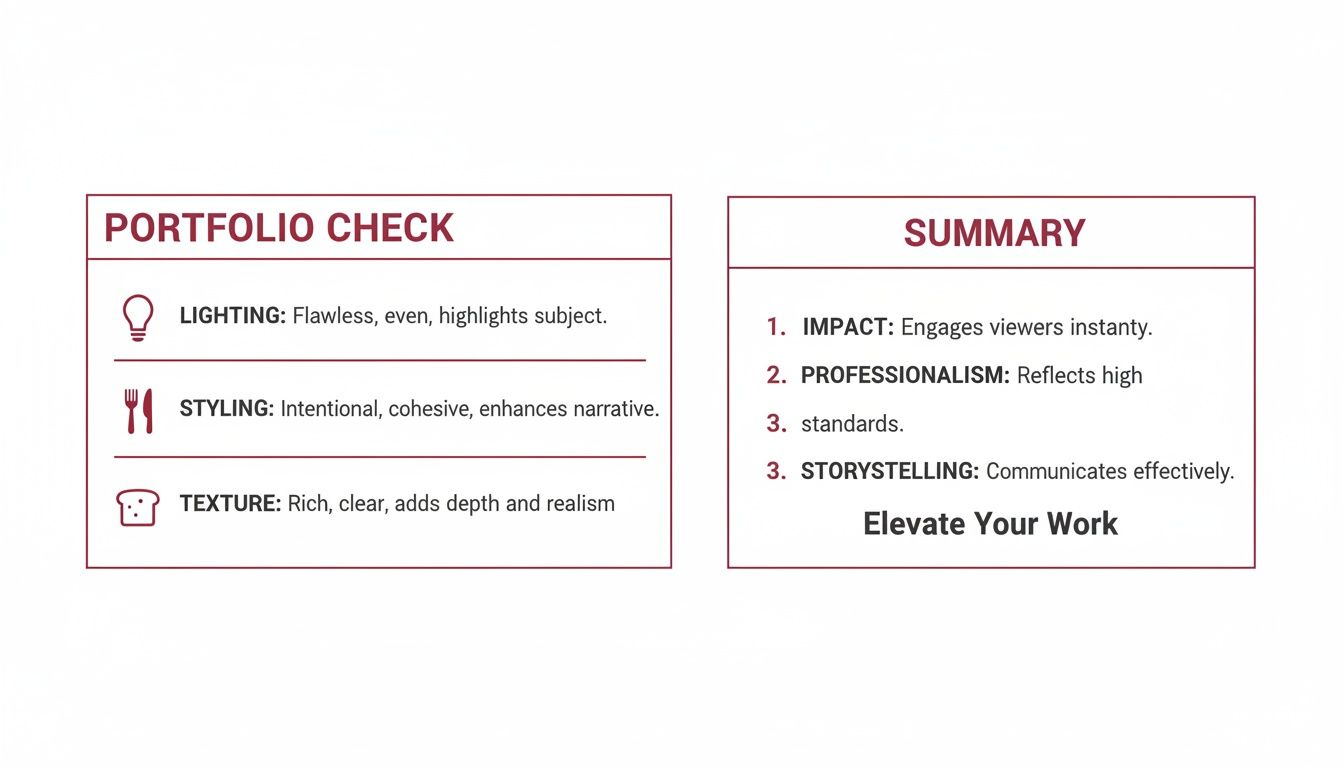
This is a good reminder that a real expert consistently nails all three of these areas to create food photos that don't just look good but actually drive business.
Clarifying Deliverables and Usage Rights
Nothing sours a great collaboration faster than a misunderstanding about deliverables and image rights. Get total clarity on this—in writing—before you sign anything. You need to know exactly what you’re paying for and exactly how you’re allowed to use the final photos.
Make sure you ask these specific questions:
- What are the exact deliverables? Get specific about the number of edited images, file formats (hi-res for print, lo-res for web), and any different crops.
- What’s your turnaround time for the final edited photos?
- What usage rights are included in your fee? Spell it out. Can you use the photos on social media? Your website? Print menus? Paid advertising? Are the rights forever (perpetual) or for a limited time?
Remember, when you hire a photographer, you are typically licensing their images, not buying the copyright outright. Understanding the scope of this license is non-negotiable and protects both your investment and their creative work.
The value a seasoned pro brings often justifies a higher price tag. While an early-career photographer might earn around AED 36,625, the top specialists command much higher fees because they have a proven track record of delivering commercial value. Photography is a lucrative profession here in the UAE, but experience makes all the difference.
Ultimately, a skilled photographer is a key player in your brand's success. If you're looking to build a full marketing strategy, our guide on finding the right restaurant marketing agency in Dubai can help you put all the pieces together.
Understanding Photography Pricing in the Dubai Market
So, what does it actually cost to hire a professional photographer in Dubai? Let's break it down. The first thing to realise is that pricing isn't a simple one-size-fits-all number. It’s built around the scope of your project, how complex the shoot is, and where you plan to use the final images. Getting a handle on these models is the key to budgeting effectively and recognising the real value you’re getting.
Most photographers here structure their fees in one of three ways: by the hour, as a half-day or full-day package, or on a per-image basis. Hourly rates are great for smaller, quicker jobs, like snapping a few new dishes for your menu. For something more extensive, like building a whole visual library for a new restaurant launch, a full-day package almost always offers better value.
What's Included and What Costs Extra?
A standard quote will nearly always cover the photographer's time on-site plus a specific number of professionally edited photos. This basic editing, sometimes called "clean-up," involves tweaks to colour, brightness, and cropping to make sure every shot looks polished and professional.
But there are a few other things that usually count as add-ons, and they will definitely affect your final bill. It’s good to know what these are so you can ask about them upfront.
- Advanced Retouching: This is a step beyond the basics. Think complex tasks like removing tiny imperfections, merging different shots into one perfect image, or making significant colour changes.
- Prop and Food Styling: While some photographers can handle simple styling, a dedicated food stylist is a whole other pro. They're the ones who source the perfect props, backgrounds, and artfully arrange every single ingredient to make your dishes look incredible.
- Usage Rights: Your initial fee gets you a specific licence to use the photos. If you're planning on plastering those images across massive advertising campaigns—like billboards or magazine ads—you’ll need to purchase extended or even unlimited usage rights.
It is absolutely crucial to get a detailed breakdown of costs before you commit. A transparent quote tells you exactly what you’re paying for, prevents any nasty budget surprises down the line, and makes sure the photographer’s services are perfectly aligned with what you need.
Comparing Different F&B Scenarios
The investment you’ll need to make can vary wildly depending on your business. A cloud kitchen that just needs clean, straightforward menu shots for Talabat has completely different needs from a fine-dining spot planning a big lifestyle campaign.
Let's take the cloud kitchen, for example. They might go for a per-image package, focused on getting 20 perfect product shots against a simple, clean background. The fine-dining restaurant, on the other hand, would need a full-day shoot involving models, detailed styling, and a much more diverse shot list, which justifies a comprehensive package price.
This trend towards valuing complete, all-in-one services is happening everywhere. Just look at the global wedding photography market, which is valued at USD 25.05 billion. It shows a huge preference for full-coverage packages, a pattern that mirrors the F&B world's growing demand for complete visual storytelling. You can read more about these professional photography market trends.
Ultimately, picking the right pricing model all comes down to your goals. For a deeper look at the different service levels available, check out our complete guide to photography in Dubai to find the perfect fit for your brand.
How to Prepare for a Successful Photoshoot
A great photoshoot doesn't just happen on the day. The magic is really in the prep work done long before the camera even comes out of the bag. Nailing down the details beforehand is the secret ingredient that saves you time, prevents expensive mistakes, and frees up your professional photographer in Dubai to focus on being creative, not managing chaos.
Simply put, the groundwork you lay is directly tied to the quality of your final photos.
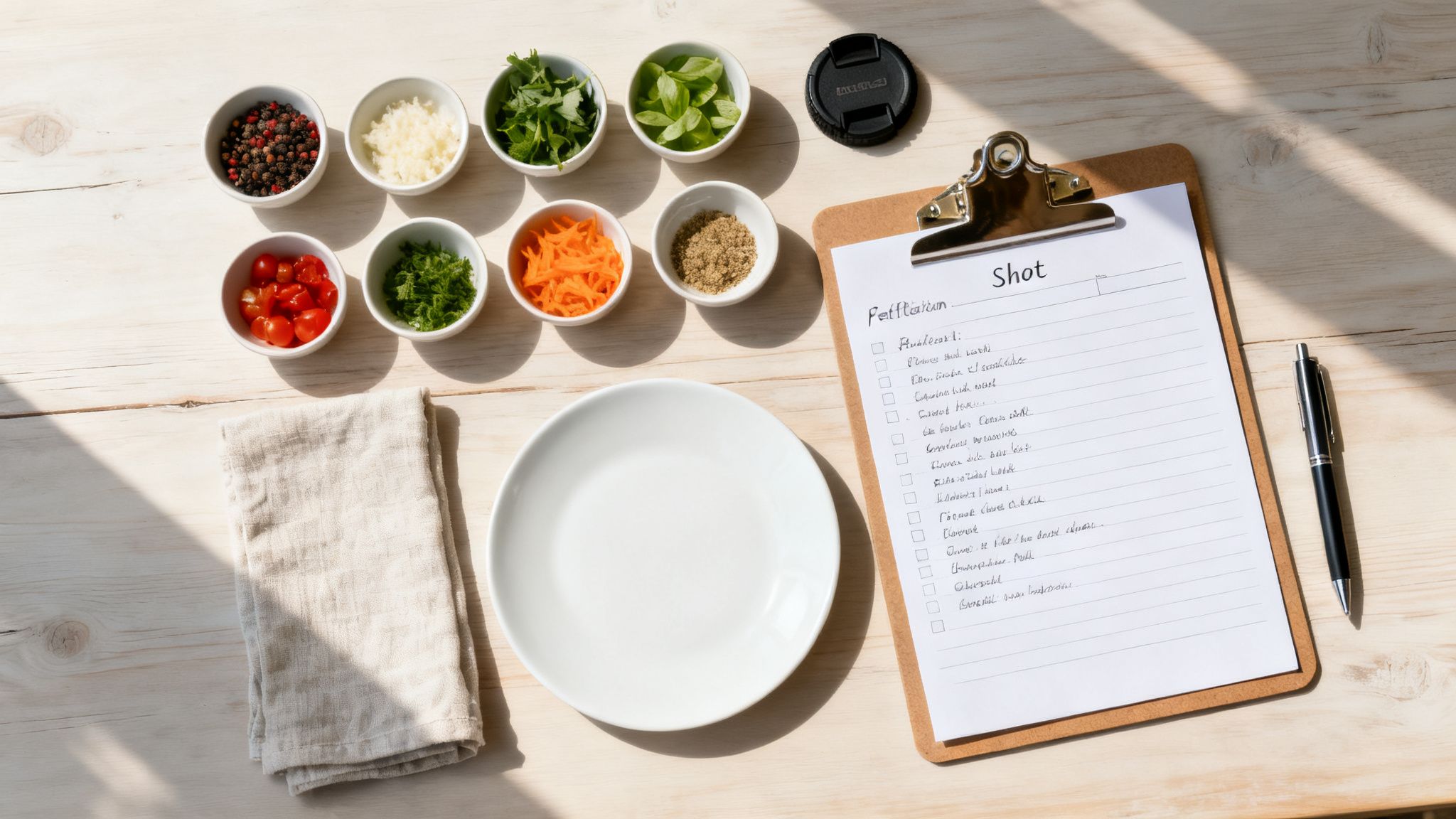
The single most crucial piece of this puzzle is your creative brief. This isn't just a list of dishes you want to shoot; it's your vision translated onto paper. It needs to clearly map out the mood you're going for, who you're trying to reach with these photos, and exactly where they’ll be used—whether it's for vertical Instagram stories, your printed menu, or a massive banner on your website homepage.
A solid brief becomes the roadmap for the entire project. From there, you and your photographer will build out a detailed shot list. Think of this as the step-by-step game plan for the day, ensuring every single image you need gets captured and nothing gets missed.
Crafting the Perfect Shot List
Your shot list needs to be hyper-specific. "Burger" isn't going to cut it. Get granular.
Instead, try something like: "Hero shot of the Signature Wagyu Burger on a dark slate plate, top-down angle, with a side of truffle fries slightly out of focus in the background." See the difference? That level of detail removes all the guesswork.
Make sure your shot list includes these key details for every item:
- Dish Name: Be precise (e.g., "Saffron Risotto with Pan-Seared Scallops").
- Shot Angle: Call it out—top-down, 45-degree, or straight-on.
- Orientation: Is this for a vertical story or a horizontal web banner?
- Styling Notes: Mention any must-have props, backgrounds, or specific garnishes.
This kind of collaborative planning is what separates a good shoot from a great one. When the kitchen team knows exactly what to prep and when, you avoid frustrating delays and food waste. It's a fundamental part of the process we dive into in our guide to the essentials of food and photography.
Pro Tip: On the day of the shoot, assign one person from your team to be the single point of contact. This person will be responsible for approving dishes before they hit the set and making quick decisions on the fly. It keeps things moving smoothly and efficiently.
On-Set Logistics and Ingredient Prep
Finally, let's talk about the food itself. Your photographer needs ingredients that are ready for their close-up. This means having the absolute freshest herbs, perfectly ripe garnishes, and backup components prepped and standing by.
Make sure your kitchen team understands that these dishes are for the camera, not for service. This shifts their focus from speed to visual perfection, which makes all the difference.
The demand for world-class visual content is only getting bigger. Just look at the UAE's digital camera market, which is projected to hit USD 59.79 million by 2031. This trend isn't just about cameras; it shows that businesses are waking up to the fact that professional imaging is a massive competitive advantage. Getting your prep right ensures you see the best possible return on that investment.
Got Questions? Let's Clear a Few Things Up
Even with the best plan in the world, hiring a creative professional always brings up a few questions. Getting straight answers to these common queries is the key to making sure your collaboration with a professional photographer in Dubai is smooth, efficient, and free of last-minute headaches. It’s all about building confidence and making sure you’re both on the same page.
Who Actually Owns the Photos?
This is probably one of the most important questions to ask, and the answer is pretty standard across the industry. The photographer almost always keeps the copyright to the images they create. Think of it as their intellectual property—the art they produced.
So, what are you, the client, actually buying? You're purchasing a licence to use those images. The crucial part is understanding what that licence covers. Can you use them on your website and social media? Of course. But what about paid ads, printed menus, or billboards? A professional contract will spell this out clearly, defining the approved platforms and the duration (like for two years, or forever). Never just assume you have free rein to use the photos anywhere you want.
Always get the usage rights in writing. A solid contract protects everyone and makes sure there are no awkward conversations down the line about how you can use the final images to market your business.
How Long Will I Be Waiting for the Final Pictures?
Turnaround times can really vary depending on how busy the photographer is and the size of your project. A quick, simple shoot might be done and dusted in a few business days. But a massive project with tons of images needing detailed retouching could easily take a couple of weeks.
Always ask for a delivery timeline before the shoot. A pro will be able to give you a clear estimate for two main stages:
- The Proofing Gallery: This is a batch of low-resolution, unedited shots for you to pick your favourites from. This usually lands in your inbox within 2-3 days of the shoot.
- The Final Edited Images: After you've made your selections, the final high-resolution, polished photos are typically delivered within 7-14 business days.
If you're on a tight deadline for a new menu launch or a marketing campaign, bring it up right at the start. Many photographers can offer a faster turnaround for an extra fee.
My Restaurant Is a Bit Small and… Not That Photogenic.
We hear this all the time, but it’s exactly the kind of problem a skilled photographer is paid to solve. You’re not just hiring someone to click a shutter; you’re hiring their eye for light, composition, and angles to create a specific mood, no matter the space.
A great food photographer essentially brings a portable studio to you. They come armed with specialised lighting, diffusers, and reflectors to control the entire scene. They can make a dim corner look bright and airy or create a dramatic, moody shot right in the middle of a chaotic kitchen.
They're also masters of perspective. Using the right lenses and clever framing, they can make even the tiniest spot feel inviting. The real focus will always be on your incredible food, using props and backgrounds to build a little world inside each photograph. Don’t let your space hold you back from getting images that make your dishes look amazing.
What if I Just Need a Few Photos?
This is completely normal. Many F&B businesses, especially new cloud kitchens or cafes just tweaking their menu, don't need a massive, all-day shoot. Most photographers get this and offer flexible packages for smaller jobs. You can often hire them on a per-image or hourly basis.
It's a great approach because it's both cost-effective and efficient. You get the exact same professional quality, just scaled down to fit your needs. Be direct about what you’re after—something like, "I need five killer hero shots for my new Deliveroo menu"—and the photographer can give you a precise quote. This way, you pay for exactly what you need without ever compromising on the quality that gets you more orders.
Ready to create stunning, sales-driving visuals for your menu? The expert team at Food On Focus Media specialises in producing scroll-stopping food photography that captures the essence of your brand and converts viewers into customers. Let's tell your culinary story together. Learn more at https://www.foodonfocus.com.