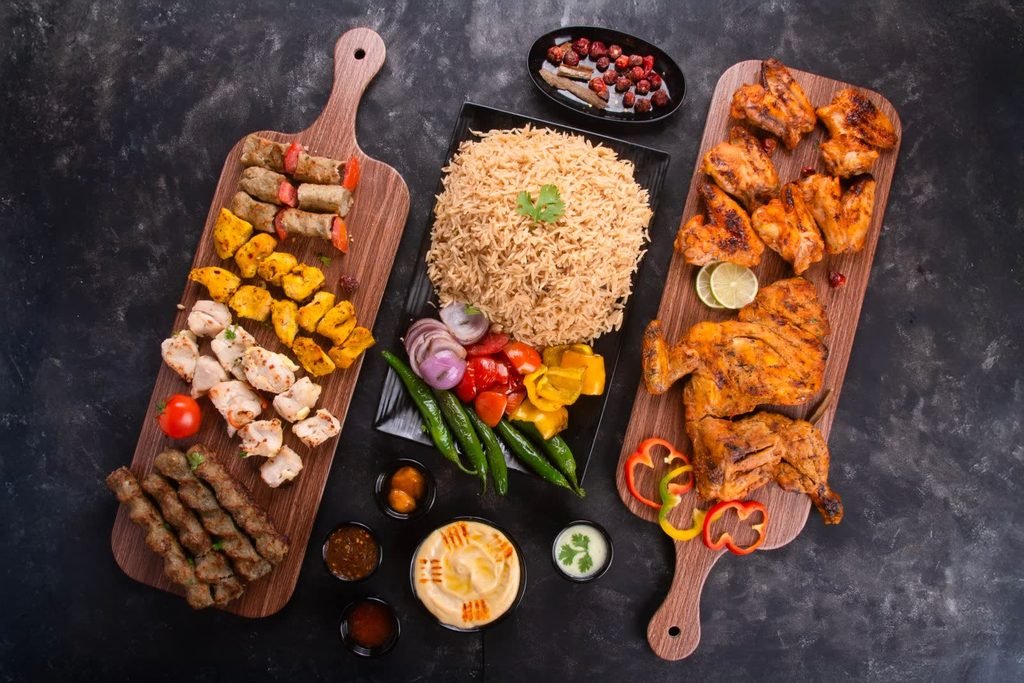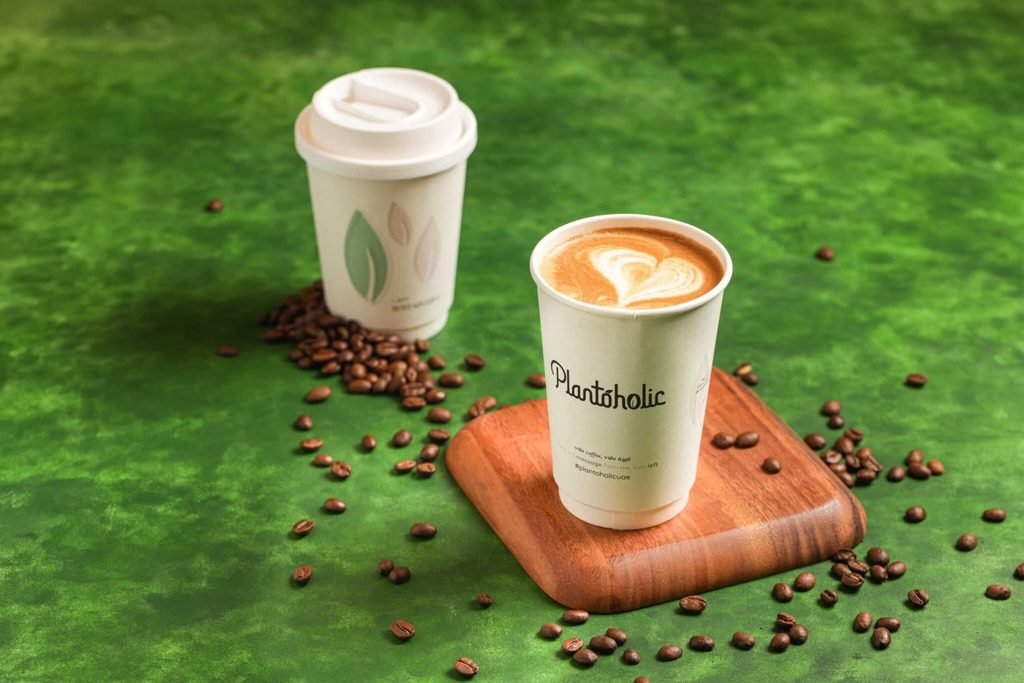
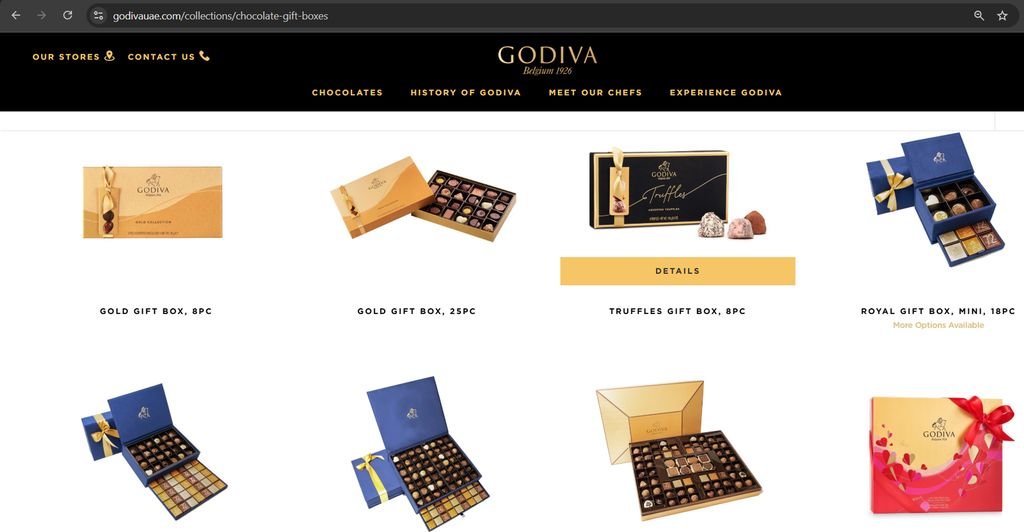
A restaurant shoot and a marketplace shoot look similar in the studio and behave completely differently once the images are uploaded. A plate styled for Instagram will be rejected as a main listing image. Not downranked. Rejected, and in some cases the listing itself stops appearing in search until a compliant image replaces it.
If your brand sells through Amazon.ae, noon, Carrefour's online store, Talabat Mart or any other UAE marketplace, your product photography has a rulebook that your social photography does not. This is what that rulebook actually says, and what it means for food and drink specifically.
The rule that costs brands the most
Amazon publishes its image requirements openly. The one that catches most F&B brands is the background. The main image must sit on a pure white background, and Amazon is specific about what "white" means: RGB 255, 255, 255.
That is the exact value, not an approximation. This is why shooting inside a white lightbox is not enough on its own. A lightbox gives you a very light grey, usually somewhere in the 240s, because the surface is lit rather than emitting. The camera records what it sees, and what it sees is not 255. The background has to be taken to true white in post, cleanly, without eating the edges of the product.
That single detail is responsible for a large share of rejected uploads, and it is invisible until the upload fails.
The published specification
These are Amazon's stated requirements for product images, taken from their seller documentation. Other UAE marketplaces run comparable rules, so a set shot to this standard usually travels.
| Requirement | Specification |
|---|---|
| Image size | 500 to 10,000 pixels on the longest side. 1,000 pixels or more enables zoom |
| Resolution | At least 72 dpi |
| Main image background | Pure white, RGB 255, 255, 255 |
| Product size in frame | The product fills 85% of the image |
| Framing | The entire product is in frame. Nothing is cropped |
| Quantity shown | One unit, shown once. Not front and back in the same image |
| Text and graphics | No text, pricing, borders, watermarks or logos on the main image |
| File format | JPEG, TIFF, PNG or non-animated GIF. JPEG preferred |
Amazon also states that if no main image meets the requirements, the product listing may be temporarily removed from search until a compliant one is provided. That is the part worth repeating to whoever signs off the budget: a non-compliant photograph is not a cosmetic problem, it is a listing that stops being found.
The 85% rule is where food gets difficult
Filling 85% of the frame is straightforward for a box or a bottle. It is harder for food, because the thing you are selling and the thing that looks appetising are often not the same object.
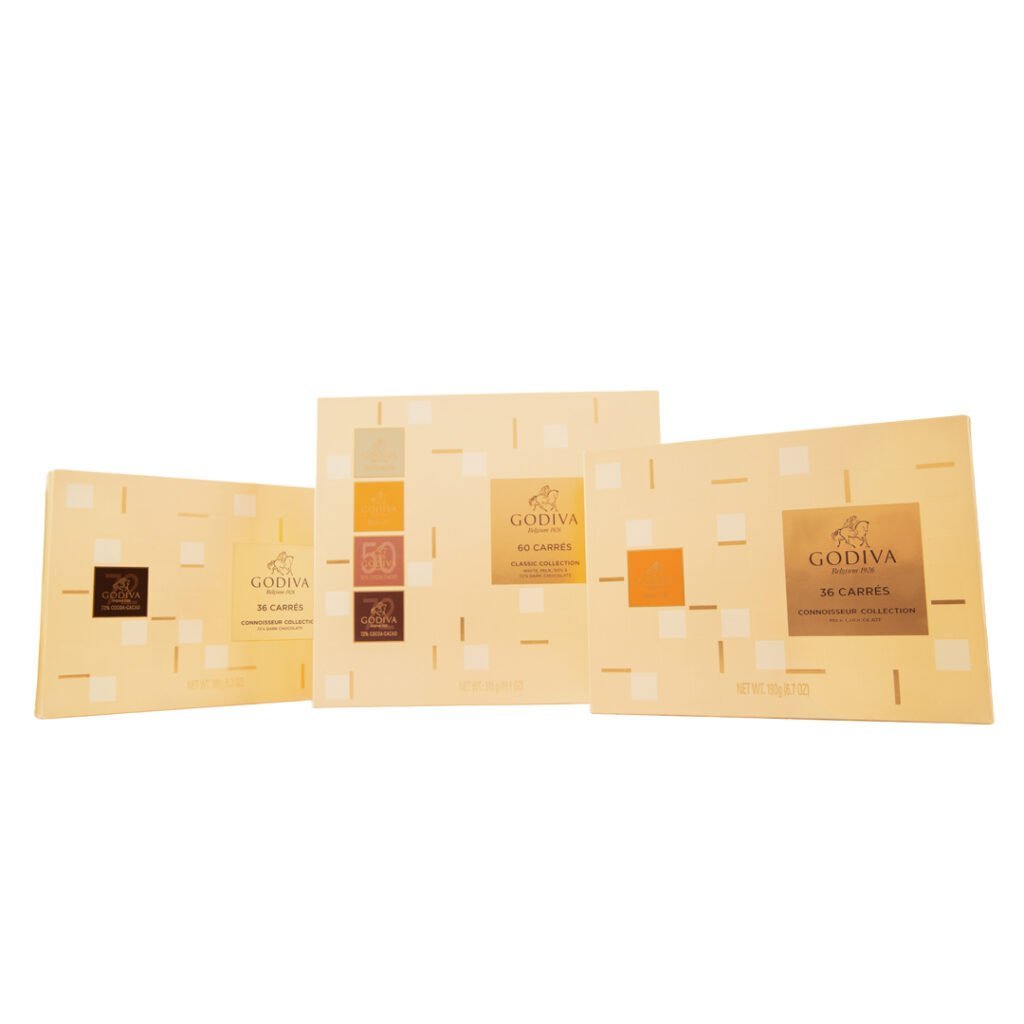
A tub of ice cream is a cylinder with a label. At 85% of frame on white, it is a cylinder with a label. The scoop, the texture, the condensation on the lid, the reason anyone wants it, all of that belongs in the secondary images, not the main one. Brands that try to make the main image do both jobs usually end up with an image that is rejected and an image that does not sell.
The sequence that works is simple. The main image proves what arrives. The images after it do the persuading.
What the other images are for
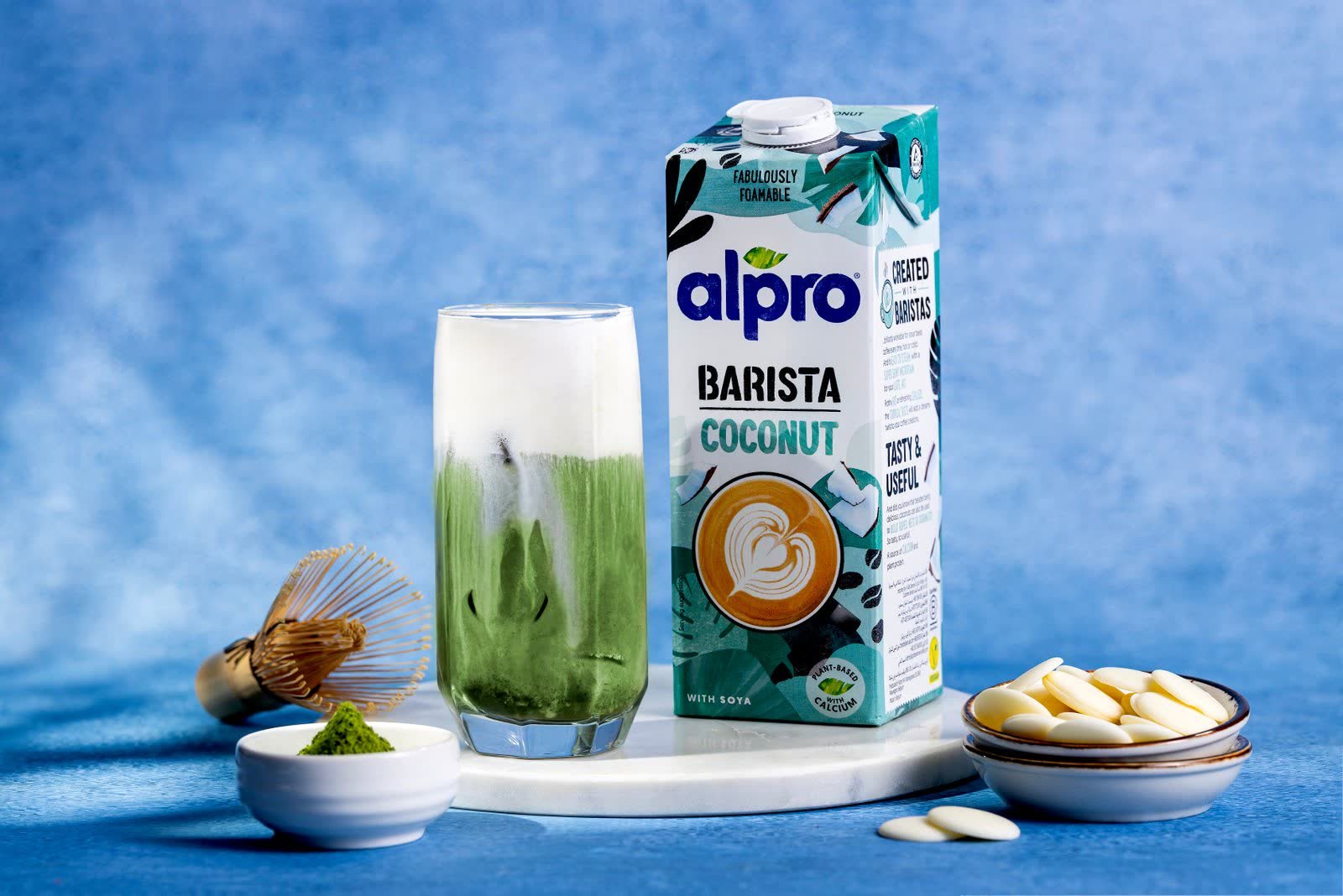
Most listings allow several images beyond the main one, and these have far more freedom. For food and drink, the ones that earn their place are:
- Scale. A hand, a spoon, a standard cup. Shoppers consistently misjudge size from a white-background image, and size complaints drive returns and poor reviews.
- The product out of its packaging. The pour, the scoop, the slice. This is the shot that does the selling.
- Back of pack. Ingredients and nutrition, legible at the size it will actually be viewed. Photograph it properly rather than cropping it out of the main shot.
- In use. On a breakfast table, in a lunchbox, in a glass with ice. Context tells the shopper when they would buy it.
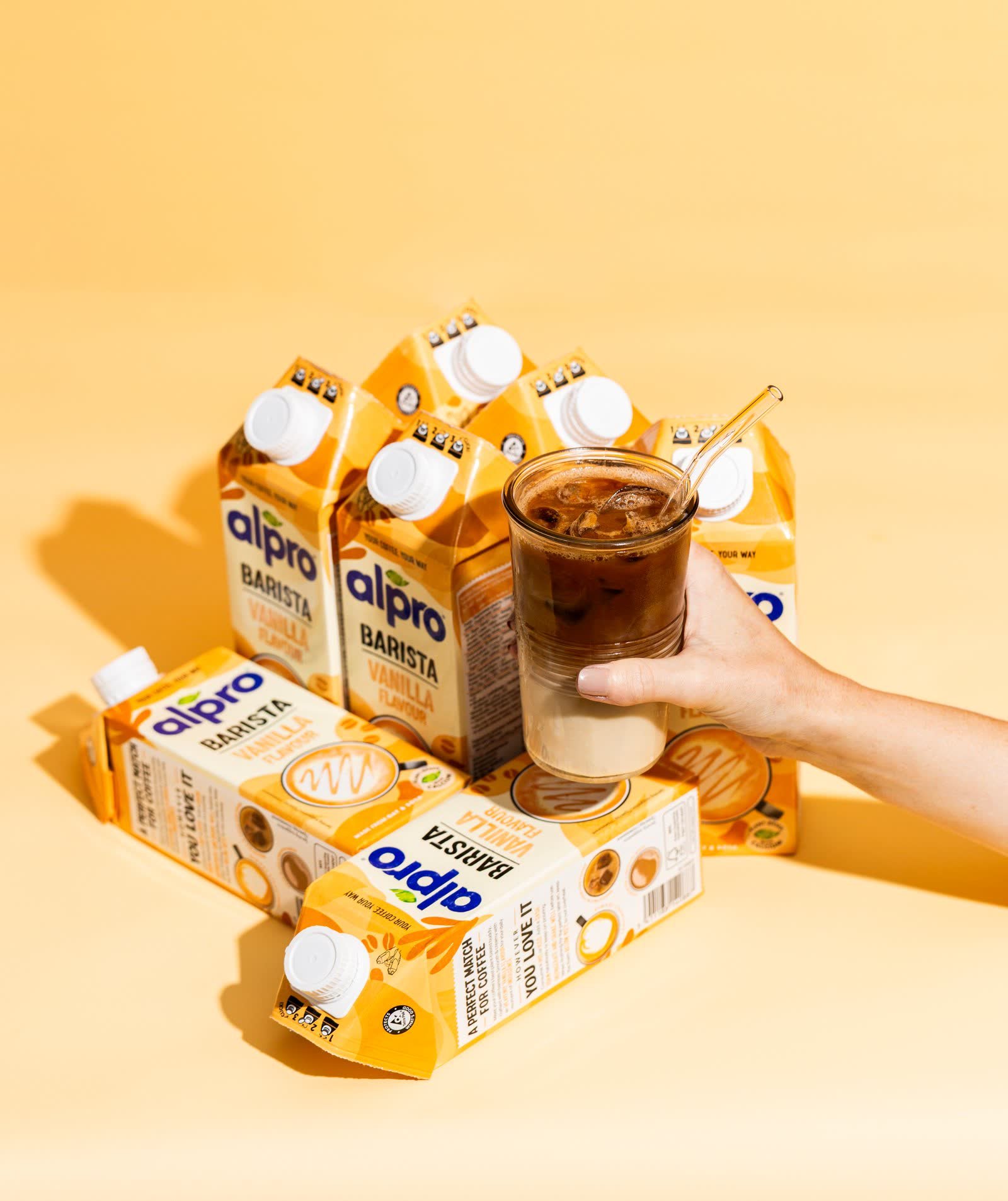
- Range shot. If you sell variants, one image showing the full range stops a shopper leaving to find the flavour they wanted.
What is different about food on a white background
Shooting food to a marketplace specification is a different discipline from shooting it for a menu, and a few problems come up every time. If you also sell through delivery apps, our companion guide covers photo requirements for Talabat, Deliveroo, Careem and noon Food.
Chilled and frozen products fight you. Condensation forms within a minute or two under lights, then the pack starts to slump. The shot has to be set up completely before the product leaves the chiller, and you work with duplicates so the hero stays cold until the moment it is needed.
Reflective packaging picks up the room. Foil lids, glossy pouches and anything with a metallic finish will mirror the softbox, the ceiling and occasionally the photographer. Getting a clean white background behind a reflective surface without a halo is lighting, not retouching.
Transparent packaging needs the background built, not removed. A clear bottle on white shows the white through the liquid. If the background is cut out carelessly, the product goes hollow. Anything in glass or clear PET has to be lit so the cutout is possible at all.
The product has to be the product. Marketplace rules require the image to represent what actually arrives, at real scale, quantity and colour. Food styling that improves the product rather than presenting it is a compliance problem as well as a trust problem.
Shooting once for retail and social
Most F&B brands we work with need both, and running two separate shoots for the same product is the most common waste we see. It is avoidable with planning rather than cleverness.
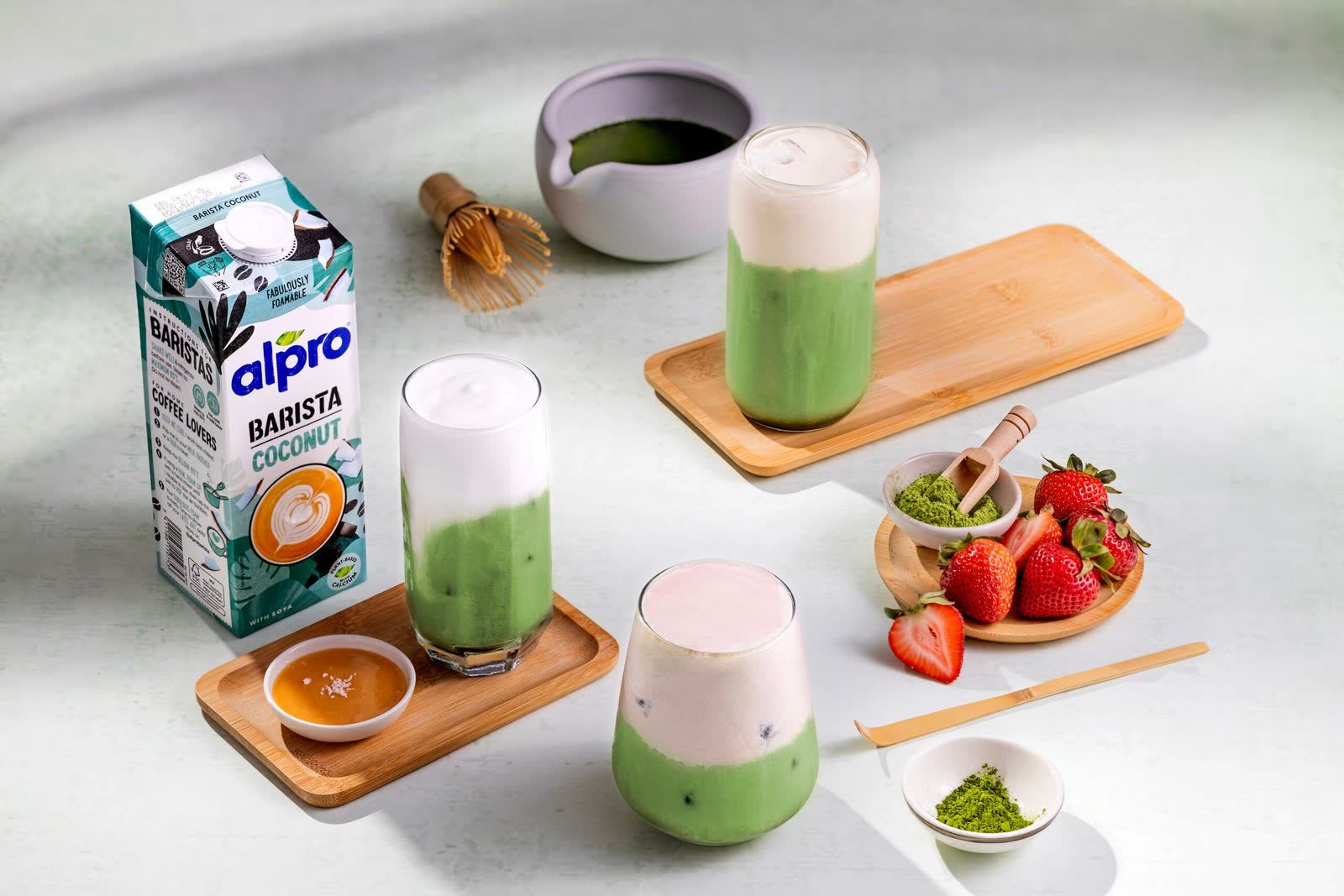
Shoot the compliant white-background frames first, while the product is at its best and the set is clean. Then move the same product onto the styled set for the lifestyle and social frames. One product, one session, two very different sets of deliverables. The order matters: white background first, because styling leaves crumbs, fingerprints and sauce on packaging that then has to be retouched out of a shot where nothing is allowed to be wrong.
A brief that gets usable files back
Before any marketplace shoot, settle these. They determine the shot list, and changing them afterwards means reshooting.
- Which marketplaces the images are for, since the strictest one sets the standard for the main image
- Every SKU and variant, including sizes and flavours, with physical samples of each
- Whether the packaging is final artwork or pre-production, because a label change means a reshoot
- Which images are compliance frames and which are selling frames
- Output sizes and file naming, ideally matching whatever your listing team or distributor uses
- Who signs off, and by when, while the product samples are still fresh
Frequently asked questions
Can I use the same photos for my menu and my Amazon listing?
Not for the main image. Menu photography is styled, cropped and lit for appetite, and a marketplace main image has to be a single unit on a pure white background with nothing else in frame. Your menu shots can often be reused as secondary listing images, where lifestyle photography is allowed.
Why does my white background keep failing the upload?
Almost always because it is not pure white. Amazon requires RGB 255, 255, 255, and a background that looks white to the eye is usually a light grey straight out of camera. It has to be taken to true white in editing.
How many images should a food listing have?
One compliant main image is the minimum. Beyond that, use the slots you are given. Scale, product out of pack, back of pack and an in-use shot cover the questions a shopper would otherwise leave to find the answer to.
Do I need new photography if my packaging changed?
Yes, for the main image. The image has to represent the product that arrives, so a label or format change makes the existing main image inaccurate. Lifestyle images where the pack is not the subject can often continue.
Does this apply to restaurants on delivery apps?
Delivery platforms have their own image rules, and they are closer to menu photography than to retail listings. The principle carries over though: the platform decides what a compliant image is, and an image that breaks the rules costs visibility rather than just looking worse.
Where to start
If you are already listed and unsure whether your images comply, the quickest check is your main image: open it, sample the background with a colour picker, and see whether it reads 255, 255, 255. Then look at how much of the frame the product fills. Those two checks catch most of what gets listings suppressed.
If you would rather hand it to someone who shoots to these rules every week, that is what our marketplace and retail listing photography service does.
If you are launching into UAE marketplaces, build the compliance frames into the same shoot as everything else. It costs very little extra on the day and saves a reshoot you will otherwise discover you need the week you go live.
Planning this for your own brand? See our F&B product photography.