
In Dubai’s packed dining scene, stunning visuals aren’t just a nice-to-have; they’re your most powerful sales tool. Strategic food and photography goes way beyond taking pretty pictures. It’s about crafting a powerful, flavorful narrative for your brand—one that builds desire and influences diner decisions long before they ever walk through your door.
The Secret Ingredient to F&B Success in Dubai
In a city defined by fierce competition and visual storytelling, standing out is everything. Every restaurant, café, and cloud kitchen is fighting for the same diner’s attention online. That battle is almost always visual, waged on platforms like Talabat, Deliveroo, and Instagram, where a single, mouthwatering image is the difference between a quick scroll and a sale.
Your photography isn’t just another asset anymore; it’s the primary language your brand speaks.
This guide is your playbook for turning your menu into a visual feast. We’re skipping the basic tips and diving straight into a complete walkthrough of how to plan, produce, and use imagery that actually converts. It’s about understanding that every single photo needs a purpose—whether that’s spotlighting a high-margin dish, telling your unique brand story, or just making someone stop dead in their tracks and say, “I need to eat that.”
A well-executed photo doesn’t just show food; it communicates an experience. It promises quality, evokes emotion, and builds trust with potential customers before they’ve even tasted a single bite.
We’re going to walk through the entire process, from start to finish:
- Developing a clear creative brief that ties your photography goals to real business objectives.
- Creating a menu-driven shot list to make sure your most profitable items get the five-star treatment they deserve.
- Deploying your final images across digital platforms for maximum impact and a solid return on your investment.
Think of this as your roadmap for turning hungry scrollers into loyal, paying customers. As you’ll see, the investment in high-quality visuals pays for itself over and over again. To dig deeper into this, you can learn more about why professional food photography in Dubai is worth the investment and how it directly impacts your bottom line. This strategic approach ensures your visuals don’t just capture attention—they drive real business growth.
Planning Your Photoshoot for Maximum Conversions
A successful photoshoot begins long before the camera shutter ever clicks. This is the pre-production stage, and frankly, it’s where the magic really happens. This is where we turn a simple photo session into a strategic, conversion-driving campaign. A detailed brief is the foundation of any great project involving food and photography, making sure every single image has a clear commercial purpose.
This process is what separates visuals that just look good from visuals that actively drive your business goals.
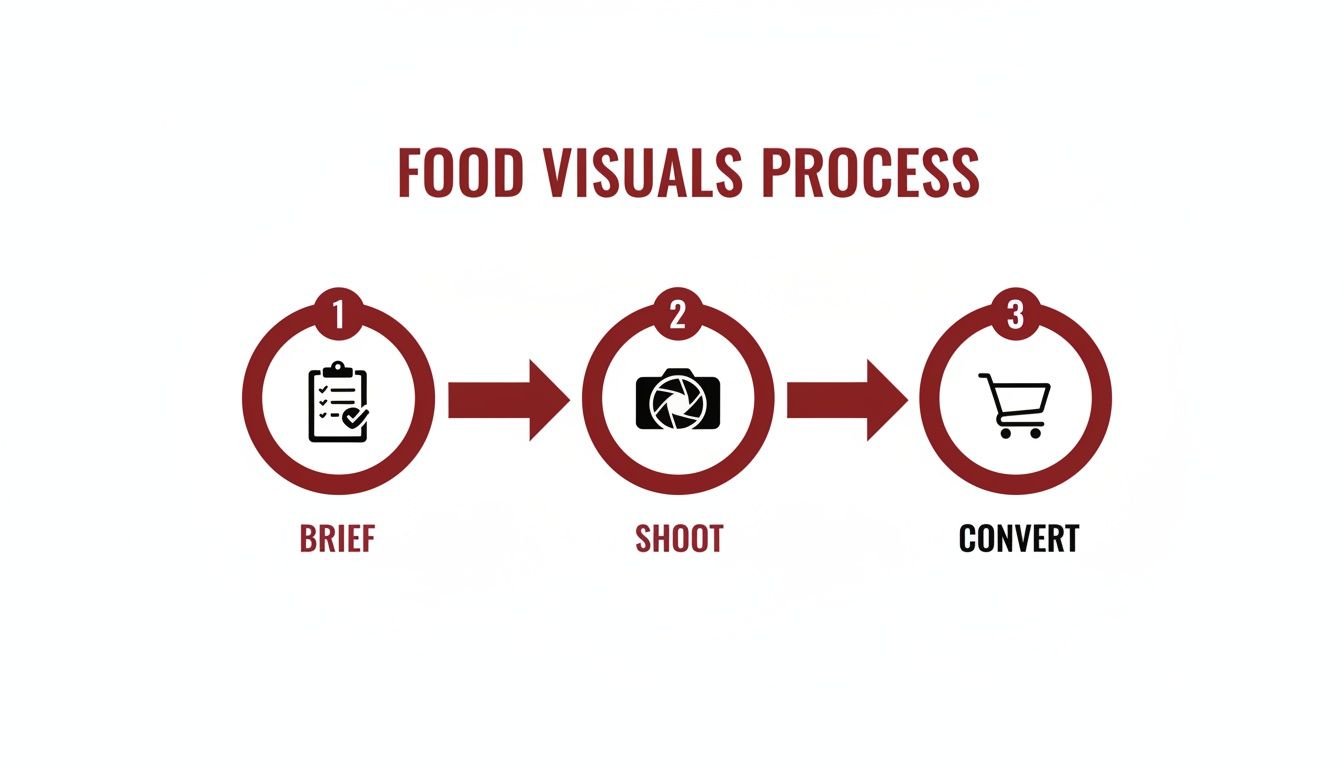
This flowchart nails it: there’s a direct line from a smart brief to the final shot and, most importantly, to getting a customer to act. When a shoot is well-planned, it directly influences sales because every asset is crafted with a specific outcome in mind.
Build a Comprehensive Creative Brief
Your brief is so much more than a list of dishes to shoot. Think of it as the strategic roadmap for the entire project. This document needs to clearly spell out your brand’s story, who you’re trying to reach, and the specific feelings you want your photos to evoke. Is your restaurant a luxurious fine-dining spot in DIFC, or a cozy, artisanal café in Jumeirah? The answer changes everything.
Your brief should tackle these critical questions head-on:
- Brand Story: What’s the core narrative? Are you family-friendly, unapologetically modern, rooted in tradition, or pushing the culinary envelope?
- Target Audience: Who are you talking to? A photo that grabs a young, trend-focused crowd will look completely different from one aimed at corporate clients.
- Mood & Style: Define the aesthetic you’re after. Using words like “bright,” “airy,” “dramatic,” “rustic,” or “minimalist” gives your photographer clear creative direction to run with.
A strong brief gets the entire creative team—from the chef to the stylist and photographer—aligned on a single vision. It’s your best defense against costly misunderstandings on set and ensures the final images perfectly reflect your brand’s identity and hit your business goals.
Create a Menu-Driven Shot List
Let’s be honest: not all dishes are created equal when it comes to profitability. A strategic shot list prioritizes items based on menu engineering principles, focusing your investment where it will deliver the highest returns. Instead of trying to shoot everything, you need to concentrate on your stars.
Organize your list by focusing on these heavy hitters:
- High-Margin Items: These are the dishes that make you the most money. Giving them the visual spotlight can directly boost your bottom line. It’s that simple.
- Signature Dishes: What is your restaurant known for? These iconic items build brand recognition and should always be the heroes of your visual library.
- Best-Sellers: Your crowd-pleasers are proven winners. Fresh, high-quality images keep them looking irresistible and can attract new customers searching for a reliable choice.
This approach is especially critical in the bustling UAE culinary scene, where professional food photography has become a key differentiator. It’s no surprise that skilled photographers command annual salaries between AED 100,000 and AED 200,000—their value is undeniable. Businesses from cloud kitchens to high-end restaurants are investing heavily in pro shoots because a single stunning image on Instagram can increase reservations by up to 30%.
By carefully planning your brief and shot list, you ensure every photo is a calculated move designed to capture your brand’s unique essence and drive sales. For a deeper dive, check out our guide on how to choose the right dish to make food look irresistible on camera.
Executing a Flawless On-Set Workflow
Once you’ve got a solid plan, it’s time to bring it to life on set. This is where all that meticulous preparation meets creative energy. A well-managed workflow is what separates a chaotic, stressful day from one that produces a library of scroll-stopping assets for your brand.
The energy on a professional shoot is focused and collaborative. It’s less of a scramble and more like a well-rehearsed performance.
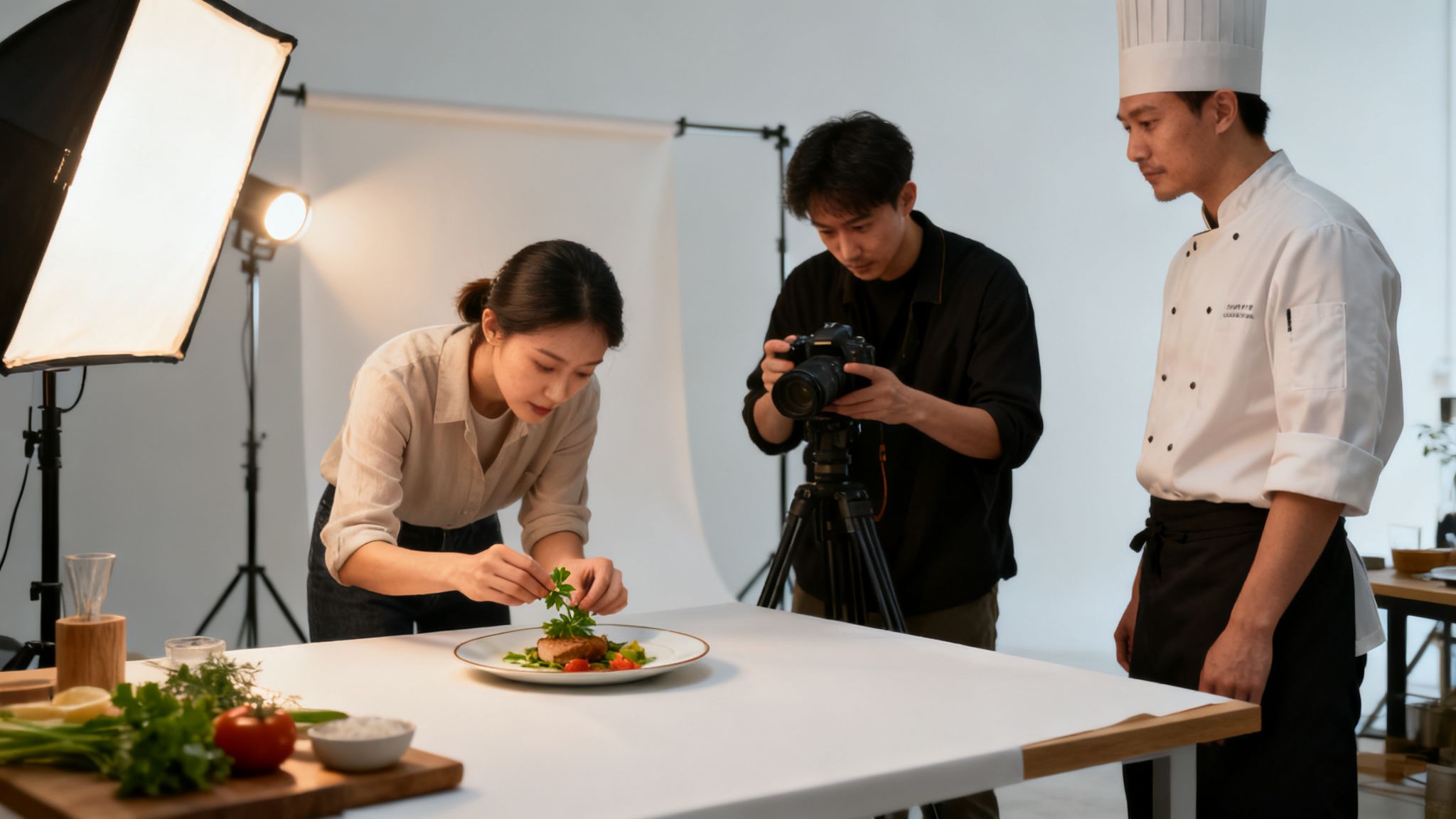
Everyone has a clear role, from the photographer dialing in the technical details to the food stylist making sure every single garnish is picture-perfect. That synergy is the secret sauce to getting consistently brilliant results.
The Art of Food Styling and Lighting
Food styling is the quiet magic of making food look its absolute best for the camera. It’s so much more than just nice plating; it’s a collection of subtle techniques used to bring out texture, color, and shape. A good stylist might use tweezers to place one sesame seed just so, or a tiny spray bottle to give greens that fresh, dewy look.
Lighting, on the other hand, is what sets the entire mood. It’s the difference between a dish feeling bright and airy or cozy and dramatic.
- Natural Light: There’s nothing like the soft, diffused daylight from a window to create a clean, inviting feel. This look is perfect for breakfast menus, health-conscious cafes, or any dish you want to feel fresh and wholesome. Lighting from the side is a classic technique that creates beautiful, soft shadows, adding depth and dimension.
- Artificial Light: This is where the real control comes in. Studio strobes and continuous lights let you craft the exact mood you’re after. Want dramatic, moody shots with deep shadows that highlight the texture of a perfectly seared steak? This is how you do it. It’s ideal for a fine-dining spot, a steakhouse, or a decadent late-night dessert menu. This controlled environment is a specialty for professionals offering top-tier photography in Dubai, since it guarantees consistency no matter the time of day.
The goal is to make the food look not just delicious, but aspirational. A skilled stylist knows the tricks to keep a burger looking juicy and irresistible hours into a shoot—a critical skill when you have an entire menu to get through.
Managing On-Set Dynamics and Roles
A smooth photoshoot depends entirely on everyone knowing their part. When a set is disorganized, you get wasted time, cold food, and a frustrated team. With food losing its camera-ready appeal by the minute, efficiency is everything.
To keep things on track, a clear division of labor is a must. Here’s a simple checklist breaking down who does what to ensure a smooth, productive shoot.
Photoshoot Role and Responsibility Checklist
This table outlines the key players and their contributions, ensuring everyone works in harmony to capture the perfect shot.
| Role | Primary Responsibilities | Key Contribution |
|---|---|---|
| Photographer | Manages lighting, camera settings, angles, and composition. Leads the creative direction of the shot. | Translates the brief’s vision into a final, high-quality image. |
| Food Stylist | Prepares, plates, and styles the food. Manages props and ensures the dish looks perfect on camera. | Makes the food look irresistible and ensures visual consistency. |
| Chef/Kitchen Team | Prepares dishes according to the shot list, timing the cooking perfectly for when the set is ready. | Ensures food is fresh and prepared to brand standards for each shot. |
| Client/Art Director | Provides feedback, approves shots in real-time, and ensures the images align with the brand’s goals. | Acts as the final decision-maker, guaranteeing brand alignment. |
This collaborative engine is what powers every great food photo. When the chef, stylist, and photographer are all in sync, you can move through multiple dishes efficiently without ever sacrificing quality. This organized approach ensures your investment in professional food and photography delivers the best possible return, turning what could be a stressful day into a creative and productive success.
From Raw Images to Polished Assets
The real magic in food photography doesn’t end when the camera shutter clicks—that’s actually where it begins. Post-production is the bridge between a great shot and an outstanding, conversion-ready marketing asset. This isn’t about heavy-handed filters or fake-looking alterations. It’s a process of careful refinement, of enhancing what’s already there to make your dishes look utterly irresistible.
It all starts with small but critical adjustments. Color correction is essential for making ingredients look vibrant and true-to-life. Think about coaxing out the deep red of a ripe tomato or ensuring the greens in a salad look crisp and garden-fresh. Exposure adjustments are just as vital, setting the entire mood of the photo and deciding whether a dish feels bright and airy or rich and dramatic.
These subtle tweaks, when done right, make a world of difference in how people perceive your food online.
Crafting a Cohesive Brand Style
Consistency is everything when it comes to building a strong visual identity. When a potential customer is scrolling through your Instagram or browsing your menu on Talabat, they should instantly recognize your brand. That recognition is built by applying a consistent editing style to every single photo.
This doesn’t mean every image looks identical. Instead, it’s about establishing a signature aesthetic through a unified approach to a few key elements:
- Color Palette: Do your images have warm, golden undertones, or a cooler, more modern feel? Sticking to a defined palette makes your entire digital presence look professional and put-together.
- Contrast and Brightness: Deciding on a consistent level of contrast—whether you’re going for a soft, dreamy look or something sharp and bold—helps define your brand’s personality.
- Mood: Your editing should always connect back to the brand story you defined in your creative brief. A high-end restaurant’s photos will have a polished, refined feel, while a casual eatery might go for something more natural and relaxed.
A consistent editing style does more than just make your feed look pretty. It builds brand trust and makes your business instantly recognizable in a crowded digital space, turning casual viewers into loyal followers.
Nailing the Technical File Delivery
Once the edits are locked in, the final step is prepping the images for all the different places they’ll live online and offline. This technical part is absolutely crucial for performance and quality. A massive, high-resolution file is perfect for a printed menu, but it will slow your website to a crawl, frustrating visitors and tanking your SEO.
Your photographer should deliver a final set of images in various formats, each one optimized for a specific purpose. If you want to dive deeper into how these assets fit into your wider strategy, you might find our guide on professional content production helpful. It’ll ensure you always have the right tool for the job.
Typically, your final asset package should include:
- High-Resolution JPEGs: These are your go-to for print materials like menus, flyers, and any large-format displays where image quality is non-negotiable.
- Web-Optimized JPEGs: These smaller files are compressed to load lightning-fast on your website and third-party delivery apps without any noticeable drop in quality.
- PNGs with Transparent Backgrounds: Incredibly versatile, these are perfect for layering images onto different backgrounds for promotional graphics or website banners, giving your design team maximum creative freedom.
Maximizing Your Visuals for Business Growth
So, you’ve got a library of incredible food photos. That’s a huge win. But here’s the thing: those stunning images are just an expense until you put them to work. The real challenge—and where the magic happens—is turning those assets into tools that actually generate revenue.
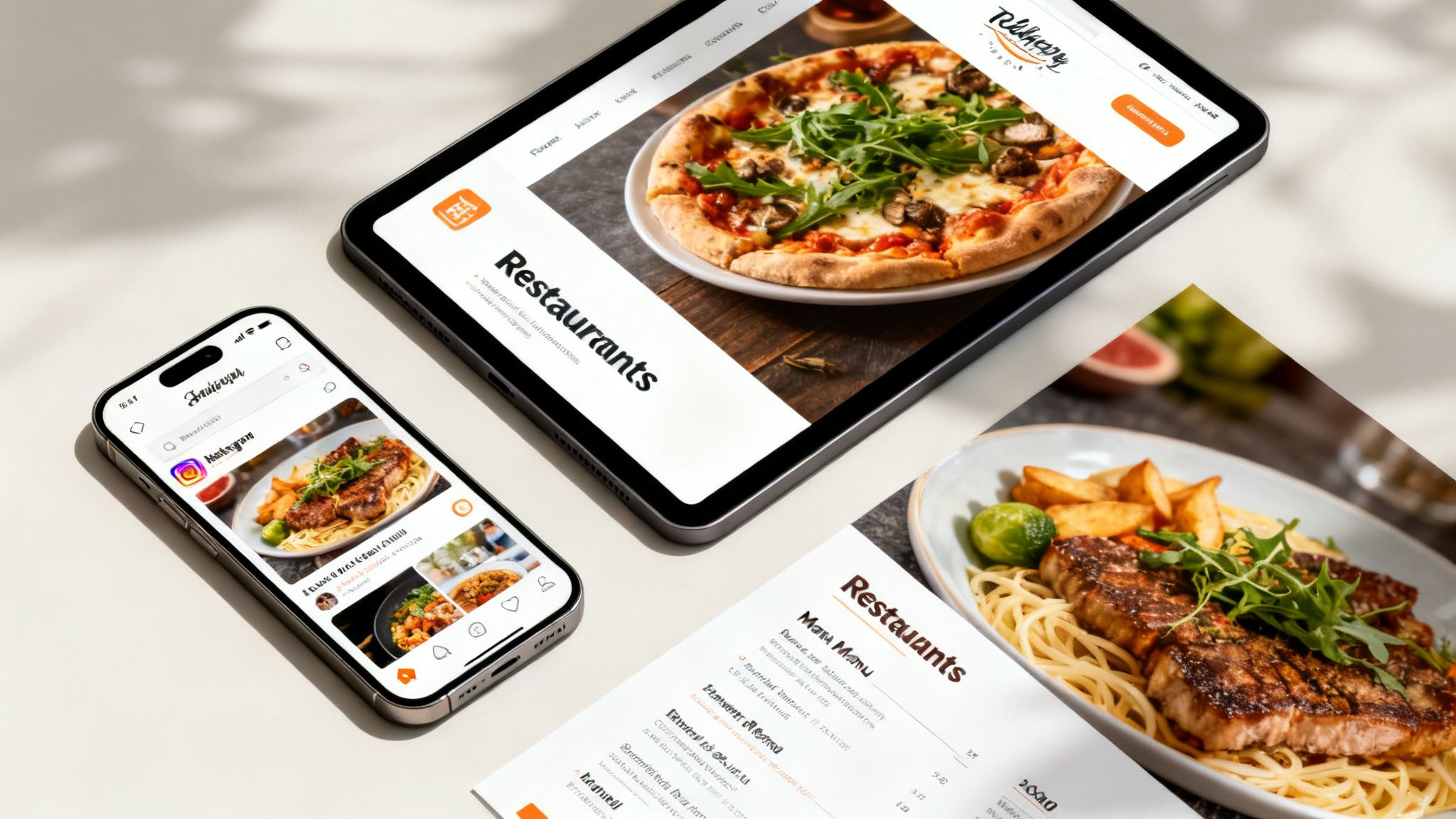
This is the final, crucial step: deploying your visuals with a clear purpose. Every photo should be fueling sales across every customer touchpoint, from your website and social feeds to third-party delivery apps like Talabat and Deliveroo. Think of these channels as different stages where your photos have a specific job to do: turn a casual scroll into a confirmed order.
Deploying Assets Across Digital Channels
Your hero shots deserve to be seen everywhere, but a one-size-fits-all approach just won’t cut it. You have to tailor how you present them for each platform.
- Your Website: This is your digital storefront, so make it count. Use your absolute best, high-quality images for the homepage banner and online menu. Just make sure they’re optimized to load fast—slow speeds are a surefire way to lose a hungry customer.
- Social Media: Instagram is a visual battlefield. Your hero shots need to be repurposed into formats that grab attention, like carousels, Reels, and Stories. Don’t just post the picture; pair it with a caption that tells a story about the dish or shares a behind-the-scenes moment.
- Third-Party Platforms: On an app like Talabat, that main dish photo is your number one salesperson. It needs to be bright, clear, and uncluttered, making the food look irresistible on a tiny screen. This is often the final moment of decision for a customer, so make it a strong one.
Treat your photo collection like a strategic toolkit. Each image has a role, whether it’s to grab attention on a busy feed, provide detail on your website, or close the deal on a delivery app.
A/B Testing and Optimising for Conversions
Don’t just post your photos and hope for the best. You need to figure out what actually connects with your audience, and A/B testing (or split testing) is the perfect way to do it. It’s all about finding out which images drive the most engagement and sales.
Let’s say you’re running a paid ad for your signature burger. You could test two completely different images: one could be a super tight close-up showing off that juicy patty, while the other features the burger as part of a fully styled meal with fries and a drink.
By tracking metrics like click-through rates and conversions, you’ll get hard data on what your customers really respond to. This data-driven approach takes the guesswork out of your visual strategy and helps you get a much better return on your investment.
The power of great visuals is undeniable in the UAE’s F&B ecosystem. You see it everywhere, especially at massive events like Gulfood 2026, the world’s largest annual food and beverage sourcing event held at the Dubai World Trade Centre. For local restaurants, cafes, and cloud kitchens, high-impact photography isn’t a luxury; it’s a non-negotiable part of business. It’s what fuels successful campaigns on Talabat and creates those stunning, Godiva-inspired social feeds.
In Dubai’s visually-driven dining culture, superior photography is directly linked to stronger online conversions and, ultimately, your profitability. You can find more insights on the significance of visuals at Gulfood and how it shapes the market.
Ultimately, by strategically deploying, testing, and repurposing your visuals, you ensure that every dirham invested in professional food photography pays dividends, builds your brand, and boosts your bottom line.
Your Questions on Food Photography Answered
Investing in professional photography can feel like a big leap, especially in a market as competitive as Dubai. I get it. F&B owners often have very practical questions about the costs, the time commitment, and whether it’s all really worth it.
So, I’ve pulled together the most common questions we hear to give you clear, straightforward answers. Think of this as your cheat sheet for planning a visual strategy with confidence.
How Much Should I Budget for Professional Food Photography in Dubai?
This is usually the first question, and for good reason. A realistic budget is your starting point.
In the UAE, you can expect professional food photography to range from AED 1,500 to AED 5,000 for a standard 3-4 hour shoot. This typically covers about 10 dishes, breaking down to roughly AED 150-500 per hero shot. This isn’t just for someone clicking a button; it’s an investment in expertise—styling, lighting, and post-production—that makes images pop off the screen.
And it works. Studies in the region have shown that powerful, professional visuals can boost online orders by 25-40%. For more details on the numbers, you can check out this breakdown of food photography costs and returns.
How Long Does a Typical Restaurant Photoshoot Take?
Time is precious in a busy kitchen. A standard menu photoshoot usually takes between 3 to 5 hours. That window gives us enough time for the careful setup of lighting and props and the detailed food styling needed to make every dish look its absolute best.
An experienced crew generally works at a pace of about 15-20 minutes per dish. This rhythm keeps things flowing smoothly, allowing the kitchen to plate each item right when the set is ready, so we can capture it at peak freshness. If your project is more ambitious and includes lifestyle shots or video clips, you might be looking at a full-day shoot of 6-8 hours. It’s always a good idea to chat with potential food photographers in Dubai to see how they structure their day to fit your needs.
Can I Use My Own Props for the Photoshoot?
Yes, absolutely! In fact, I strongly encourage it.
Using your restaurant’s own cutlery, branded napkins, and unique crockery is one of the smartest ways to keep the final images authentic to your brand. It closes the gap between what customers see online and what they experience when they walk through your door.
Bringing your own props into the shoot is a powerful way to infuse your brand’s personality directly into the photography. It ensures every visual feels genuinely yours and strengthens brand recall.
Just make sure to discuss this with your photographer beforehand. They can offer advice on which pieces will look best on camera and can supplement your items with props from their own collection to complete the scene perfectly.
Ready to turn your menu into a visual feast that actually drives sales? The team at Food On Focus Media lives and breathes this stuff. We mix culinary know-how with creative storytelling to produce bold, mouthwatering content for restaurants across the UAE.
Let’s bring your food to life. Get in touch with us today!