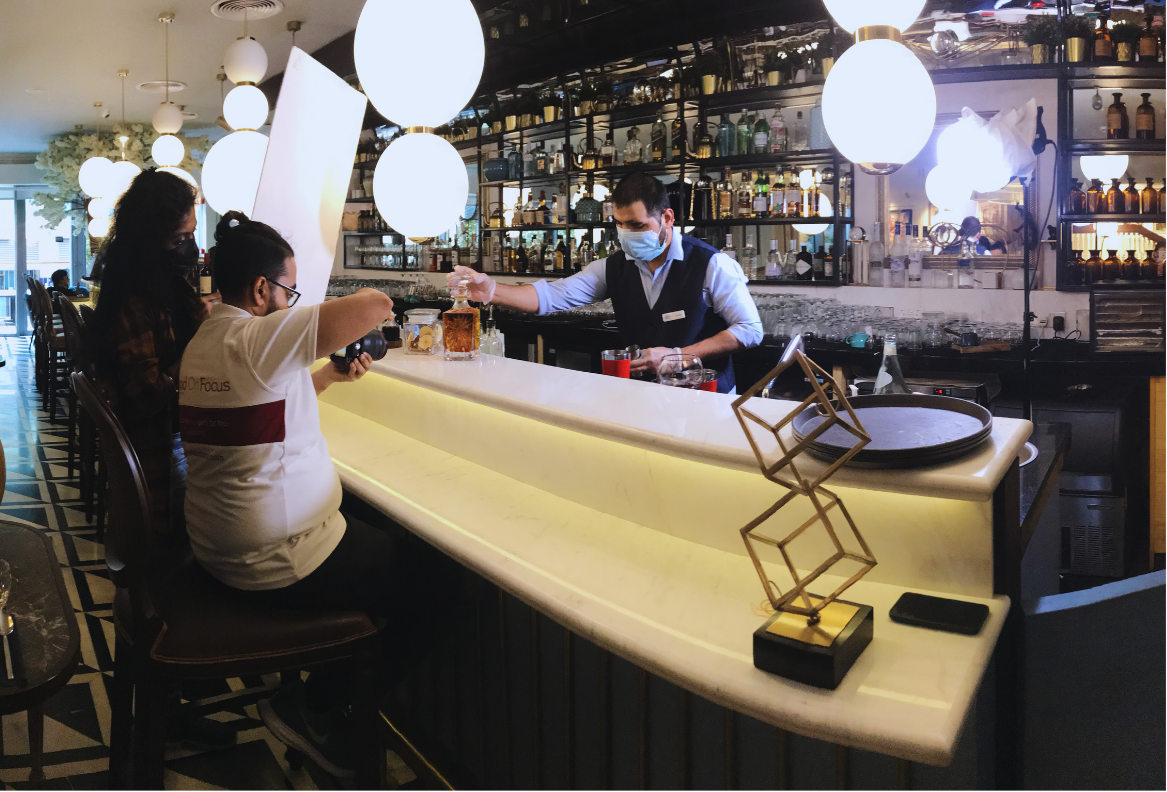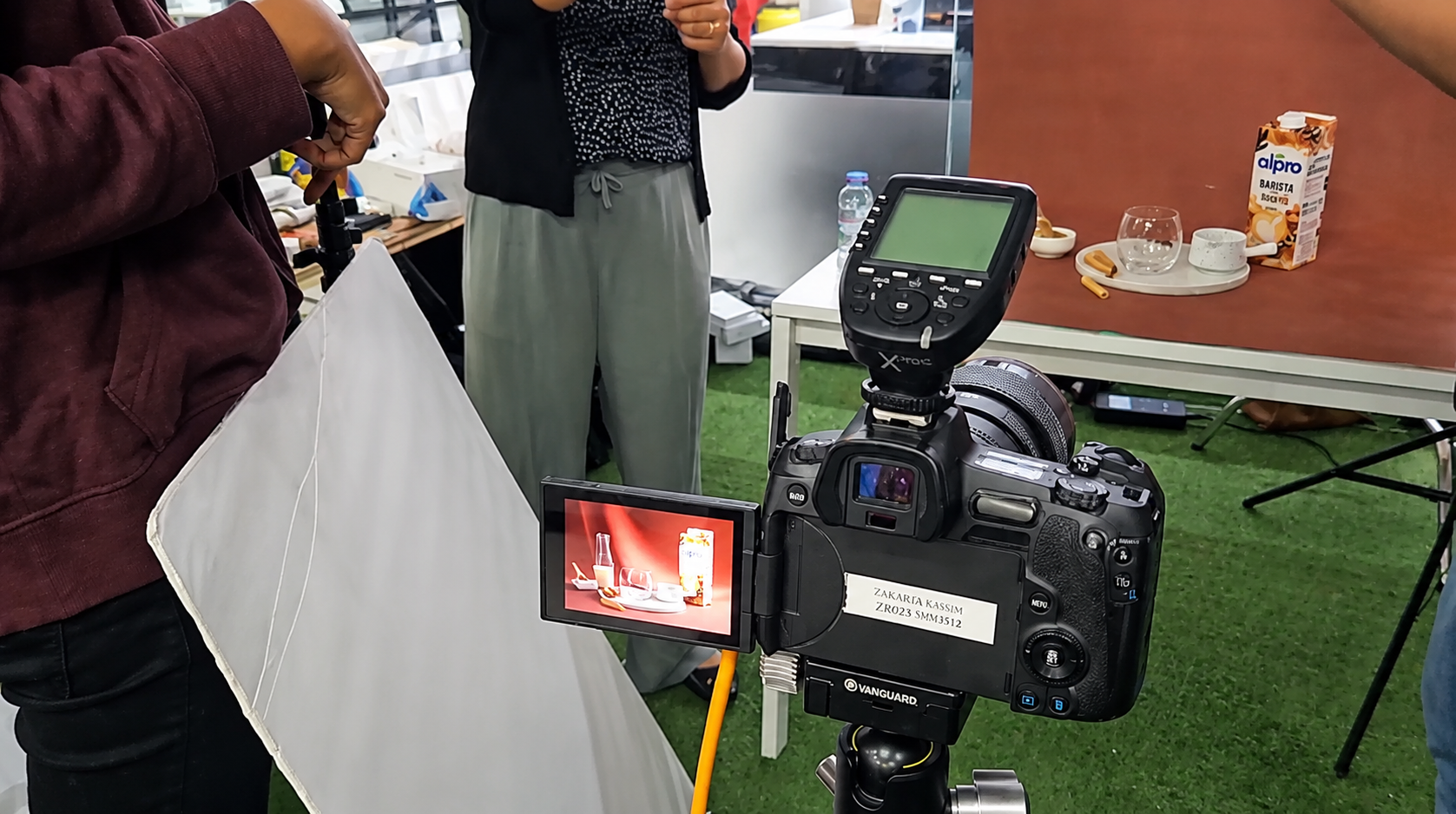
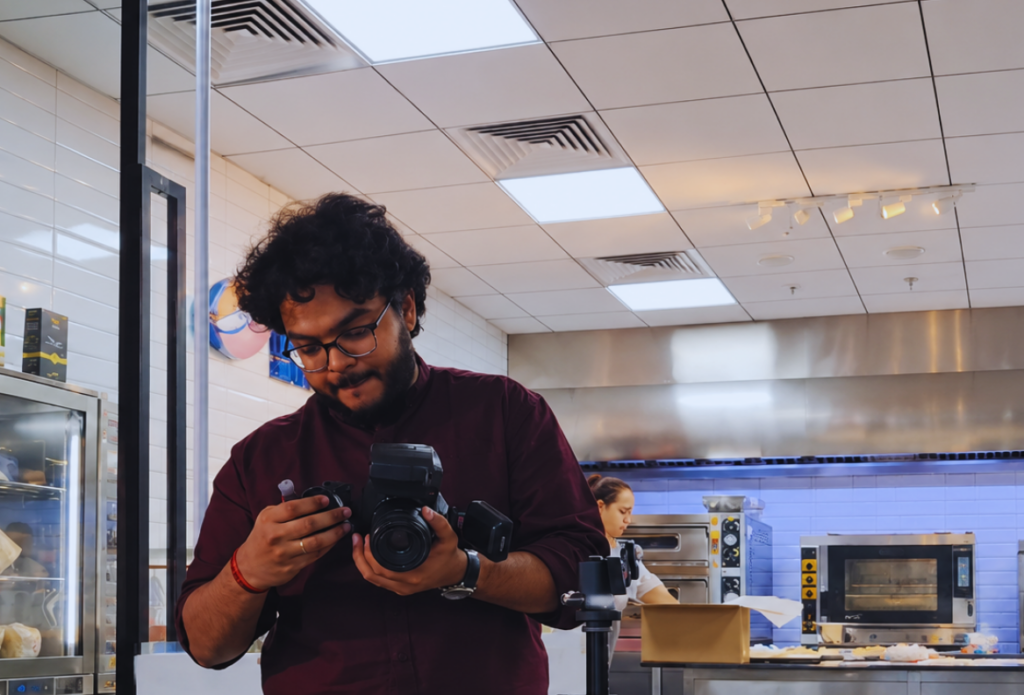
Every restaurant owner in Dubai knows the feeling of watching orders arrive from Talabat, Deliveroo, Careem and now Keeta, yet very few stop to ask why one listing quietly outsells another that serves almost identical food at a similar price. The answer is rarely the recipe and almost never the discount. It is the photograph. Food photography for delivery apps in Dubai has become one of the biggest factors influencing whether customers tap on your restaurant or keep scrolling. On a delivery app, the customer never smells your kitchen, never sees your dining room and never speaks to your staff. The only version of your restaurant they meet is a thumbnail on a phone screen, and that single image is doing the work that your entire front of house used to do.
This is the uncomfortable truth behind modern food and beverage growth in the Emirates. Great food does not sell if it does not look irresistible online and nowhere is that more literal than on a delivery platform, where the decision to order is made in seconds by a hungry person scrolling through dozens of competing tiles. Food photography for delivery apps in Dubai has quietly become one of the highest leverage investments a restaurant can make, because it sits directly on the path between a browsing customer and a paid order. This article looks at how those visuals actually influence behavior, where most restaurants get it wrong, what the strongest brands do differently, and how to think about the numbers so that your photography becomes a growth channel rather than a line item.
Why Delivery Apps Turned Food Photography into a Sales Engine
The UAE online food delivery market reached roughly 2.5 billion US dollars in 2024 and is projected to approach 4 billion by 2030, with smartphone penetration above 99 percent and nearly half the population ordering through apps. What this means in practice is that the delivery app is no longer a side channel that supports the dine-in business. For a growing number of cloud kitchens and casual concepts, it is the business, and the storefront is a scrollable grid of images rather than a physical location on Sheikh Zayed Road.
Inside that grid, human attention behaves in a very specific way. Research consistently shows that people process visual information far faster than text, which is why a photograph registers appetite and desire before a written description has even been read. On a delivery app this speed advantage becomes decisive, because the customer is comparing many options quickly and the image is the first, and often the only, thing that earns a pause. A study frequently cited across the industry found that around 75 percent of consumers say restaurant photos influence their dining decisions, ranking visuals above both written descriptions and reviews in the ordering process.
The business implication is direct. When a strong photograph stops the scroll, it buys you the two or three seconds you need for the price, the name and the description to do their job. When a weak photograph fails to stop the scroll, none of the rest matters, because the customer has already moved to a competitor. This is why the platforms themselves reward good imagery. Deliveroo states openly that restaurants with hero images rank higher in its search results, which means photography is not only influencing the customer directly but also influencing how often you are shown at all. The outcome compounds. Better visuals earn more visibility, more visibility earns more orders, and more orders earn stronger placement, so the gap between a well shot menu and an amateur one widens over time rather than staying fixed.
What Strong Delivery Visuals Actually Do to Conversion and Order Value
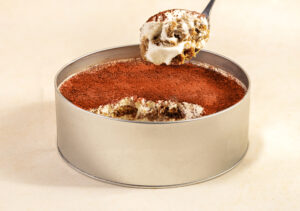
It helps to separate the two jobs a delivery photograph performs, because restaurants often optimize for the wrong one. The first job is conversion, meaning the percentage of people who see an item and add it to the basket. The second job is order value, meaning how much each converted customer is willing to spend. Photography influences both, but through different mechanisms, and understanding the difference is what turns a shoot into a strategy.
On conversion, the numbers reported across the sector are strikingly consistent. Analyses of delivery platforms have found that professional images can lift orders by around 35 percent, and platform data has shown individual menu items with photos generating substantially more monthly sales than the same items listed without a picture. The reasoning is behavioral rather than aesthetic. A photograph removes risk. When a customer can see the portion, the ingredients and the presentation, the uncertainty that normally causes hesitation disappears, and hesitation is the single biggest silent killer of delivery orders. People are far more willing to try an unfamiliar restaurant or an unfamiliar dish when a clear image tells them exactly what will arrive at their door.
On order value, the mechanism is perception. Higher color saturation, controlled lighting and clean composition make food read as fresher and more premium, and that perceived quality gives you room to hold or raise a price without resistance. A dish that looks carefully made justifies a carefully set price. The same plate photographed under harsh light on a cluttered surface looks cheaper, and a cheap looking plate quietly caps what customers believe it is worth. This is the part most operator’s underestimate. Photography is not only pulling more orders through the funnel but also protecting your margin at the top of it, which matters enormously in a market where the easy alternative is to keep discounting.
This is precisely where execution begins to separate winners from everyone else. Shooting a menu so that every dish converts and every category holds its price is a discipline, not a lucky afternoon with a camera, and it is the point at which many restaurants realize they need a specialized food and beverage creative partner rather than a generalist photographer. A team that understands delivery behavior, platform ranking and menu economics will frame each dish around the order it is meant to produce, which is a different brief entirely from taking a nice picture of food.
The Platforms Are Not the Same, and Your Photography Should Not Be Either
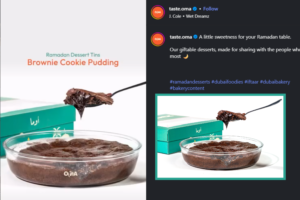
A frequent and expensive mistake is treating Talabat, Deliveroo, Careem and Keeta as a single audience. They are not. They attract different customers, carry different average order values and enforce different image standards, and a restaurant that shoots one generic set of photos for all of them is leaving both orders and margin on the table.
Talabat dominates the market, holding somewhere around 70 percent of order volume in the UAE, with a lower average order value that reflects its broad, everyday audience. Visibility here is a volume game, so your hero image and your top selling items need to be unmistakable at thumbnail size, bold and legible on a small screen where subtlety is lost. Deliveroo sits in the premium segment with an average order value close to double that of Talabat, which means presentation carries more weight and refined, elegant imagery earns its keep. Careem operates as an integrated super-app where food is one service among many, and Keeta, backed by Meituan, entered Dubai in late 2025 and is buying growth aggressively through a founding vendor programme, which makes early, well-presented listings a genuine visibility opportunity while competition on the platform is still forming.
The specifications matter as much as the strategy, because a technically wrong image is rejected or cropped badly regardless of how good the food looks. The table below summarizes the practical standards restaurants should shoot to across the major UAE platforms.
| Platform | Position and audience | Practical image guidance |
| Talabat | Market leader, high volume, lower average order value | Bold, legible thumbnails; no white or grey cover backgrounds; single dish per item photo, no text overlays |
| Deliveroo | Premium segment, higher average order value | Hero images at least 1920 x 1080 (16:9); items at least 1200 x 800 (3:2, crops to 1:1); JPEG only; no people or watermarks |
| Careem | Integrated super-app, mixed audience | Follow Deliveroo-level specs for compatibility; keep dishes centered for safe cropping |
| Keeta | New 2025 entrant, aggressive growth | Match Deliveroo specs until published; strong early listings capture cheap visibility |
A safe universal standard is to shoot hero images at a minimum of 1920 by 1080 pixels in a 16:9 ratio, keep menu items centered with margin so a 1:1 crop never cuts the dish, and export as JPEG under 5 megabytes. Shooting to these specifications once means a single library can be deployed cleanly across every platform, while still allowing you to lead with warmer, casual framing on Talabat and more refined framing on Deliveroo. Getting this right at the point of capture is far cheaper than reshooting later, and it is exactly the kind of platform fluency a specialized food and beverage team builds into the brief before anyone picks up a camera.
What Most Restaurants Get Wrong with Delivery Photography
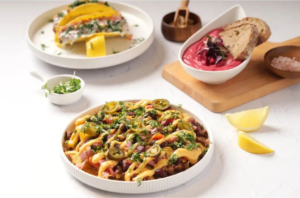
If the upside is this clear, why do so many delivery listings still look flat, inconsistent and forgettable. The answer is that most restaurants approach photography as an event rather than a system, and the gaps that follow are remarkably predictable.
They rely on amateur or phone visuals
The most common error is trusting a smartphone snap taken in kitchen lighting. The problem is not resolution, since modern phones capture plenty of detail. The problem is that good delivery photography depends on controlled light, considered angles and styling that survives compression to a small thumbnail, and none of that happens by accident under fluorescent strips at the pass. Amateur images read as amateur, and on a platform where the photo is the product, an amateur photo quietly signals an amateur kitchen even when the food is excellent.
They shoot once and never again
A second frequent mistake is treating photography as a one-time launch task. Menus change, seasons change, best sellers shift and platforms adjust their layouts, yet the photo library stays frozen from opening week. Over time the listing drifts out of step with the actual menu, new dishes launch with no image at all, and the brand looks neglected. Delivery photography is a living asset that needs refreshing, not a box ticked once.
They have no visual consistency
When individual dishes are photographed at different times, in different styles, on different backgrounds, the menu looks like a collage assembled by strangers. Inconsistency erodes trust because the customer cannot form a coherent impression of the brand, and a brand they cannot picture is a brand they do not remember. Recall is what brings the repeat order, and inconsistency is quietly expensive precisely because its cost never appears on any invoice.
They ignore platform optimization
Finally, many restaurants shoot attractive images that are wrong for the platform, using unsupported ratios, cluttered compositions that vanish at thumbnail size, or cover photos on backgrounds the platform rejects. A beautiful photograph that breaks the platform rules or disappears on a phone screen delivers no orders, and effort spent on imagery that the platform will not showcase is effort wasted. This is the through line across all four gaps. Each one is a failure of execution and strategy rather than a failure of the food, and this is exactly where a specialized food and beverage creative team changes outcomes, because it closes these gaps deliberately rather than hoping they do not appear.
What High-Performing F&B Brands Do Differently
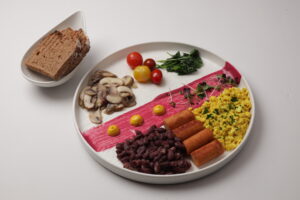
The restaurants that consistently win on delivery apps in Dubai are not necessarily the ones with the biggest budgets. They are the ones that treat visuals as a performance system, and their habits are learnable.
They shoot for conversion first, framing every image around the order it is meant to produce rather than around how pretty it looks in isolation, which means the hero image is engineered to stop the scroll and the top sellers are styled to be irresistible at thumbnail size. They enforce consistency, so that every dish shares a visual language of light, angle and background that makes the whole menu feel like one confident brand. They produce platform-specific content, adapting framing and mood to Talabat, Deliveroo, Careem and Keeta rather than forcing one set of images everywhere. And they think strategically about sequencing, leading each category with its strongest performer and using photography to steer customers toward the high margin dishes rather than leaving the basket to chance.
Underneath all four habits sits a single idea. High performers treat the delivery listing as a conversion funnel that photography is engineered to move people through, not as a gallery. That shift in mindset, from decoration to performance, is the real difference, and it is the operating principle behind how a specialized partner like Food on Focus approaches a delivery shoot, building the visual strategy backwards from the orders and margin the menu is meant to generate.
Same Dish, Different Photo, Different Result: Three Realistic Scenarios
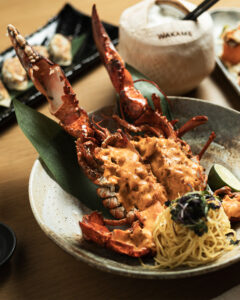
The influence of delivery photography is easiest to feel through concrete situations that any operator in Dubai will recognize.
Consider two cloud kitchens on Talabat selling an almost identical chicken shawarma at the same price. One lists it with a dim phone photo taken on a steel counter, the other with a clean, warm, professionally styled image that shows the filling and the char. Same food, same price, yet the second kitchen steadily wins the order because the first never earns the pause it needs. The dish did not change. The photograph did, and with it the conversion rate on that single item.
Consider a casual restaurant that upgrades its Deliveroo menu from mixed, inconsistent images to a cohesive, premium set. Because the plates now read as more refined, the brand is able to hold a slightly higher price point without losing volume, and the perceived quality lifts the whole listing rather than one dish. Better visuals did not just raise conversion, they widened the pricing power of the entire menu, which is where the return quietly multiplies.
Finally, consider a brand running paid promotions on a delivery platform. The advertising spend is identical, but the creative differs. Strong, appetizing imagery lowers the cost of every acquired order because more of the people who see the promoted tile actually convert, while weak imagery burns the same budget for fewer baskets. Photography here is not decorating the campaign, it is deciding the campaign’s efficiency, and the difference shows up directly in the return on ad spend.
Why This Matters for Your F&B Brand’s Growth
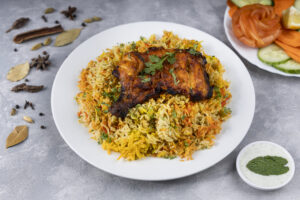
Pulling these threads together, delivery photography influences almost every metric that decides whether a food and beverage brand grows or stalls in Dubai. It lifts conversion, because a clear, appetizing image removes the risk that causes customers to hesitate and moves more of them from browsing to buying. It raises average order value, because considered presentation supports considered pricing and reduces the reflex to compete only on discount.
It strengthens brand perception and recall, because a consistent visual identity turns a one-time customer into someone who recognizes and returns to your listing, and recall is what converts a delivery app from a slot machine into a dependable revenue stream. It improves platform visibility, because algorithms such as Deliveroo’s reward strong imagery with higher ranking, which means better photography earns you more impressions before a customer have done anything at all. And it makes every dirham of marketing work harder, because the same promotion converts more efficiently when the creative is strong. Seen this way, food photography for delivery apps is not a cost center sitting next to the real business. It is one of the highest leverage growth levers available, precisely because it sits at the exact moment of decision, and improving it improves everything downstream at once.
When to Bring in a Specialized F&B Creative Agency
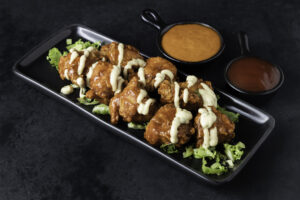
Photography is not something every restaurant needs to outsource at every moment, but there are clear points where specialized help changes the trajectory rather than simply ticking a task off a list.
- At launch, when you are opening a new concept or cloud kitchen and the delivery listing is your first and most important storefront, so a weak start is expensive to recover from.
- During a rebrand, when the identity is shifting and every dish needs to be recaptured in the new visual language consistently rather than piecemeal.
- While scaling, when you are adding locations, virtual brands or platforms and need a coherent, repeatable visual system rather than a scramble of ad hoc shoots.
- When conversions are low, and healthy traffic to your listing is not turning into orders, which usually points to the visuals rather than the menu.
- When ad performance is weak, and paid promotions are spending without returning, because stronger creative is often the fastest way to lift return on ad spend.
These are the moments when a specialized food and beverage creative partner earns its place, because the work is no longer about a single photograph but about a visual system engineered for conversion, consistency and platform performance. Food on Focus works with restaurants, cafes and cloud kitchens at exactly these inflection points, treating the delivery listing as a growth asset to be optimized rather than a gallery to be filled.
Frequently Asked Questions
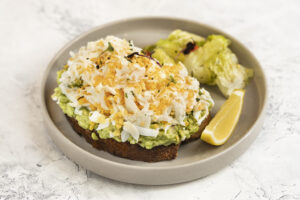
Why is food photography important for delivery apps in Dubai?
On a delivery app the photograph is the product, because the customer cannot see, smell or taste your food and decides in seconds from a thumbnail. Around 75 percent of consumers say restaurant photos influence their choice, and platforms such as Deliveroo rank listings with strong hero images higher, so good photography drives both direct conversion and visibility.
Does professional food photography actually increase delivery orders?
Yes. Analyses across delivery platforms show professional images can lift orders by roughly 35 percent, and items with photos consistently outsell the same items listed without a picture. The mechanism is risk reduction: a clear image tells the customer exactly what will arrive, which removes the hesitation that quietly kills orders.
How much does food photography cost in Dubai?
As a general guide, professional food photography in Dubai often runs between roughly AED 1,500 and AED 4,400 for a shoot of around ten dishes, though this varies with styling, usage rights and the number of platforms you are shooting for. You should verify current rates directly, as pricing changes over time. The more useful question is return: even a modest lift in conversion or order value across a delivery menu tends to outweigh the shoot cost quickly.
How do I improve conversions on Talabat and Deliveroo?
Shoot to each platform’s standards, lead every category with its strongest performer, keep a single consistent visual style across the whole menu, and make sure hero images and best sellers are unmistakable at thumbnail size. Refresh the library when the menu changes rather than leaving it frozen from launch.
Can I use the same photos across every delivery platform?
You can share a well shot library if you capture at safe universal specifications, such as 1920 by 1080 in 16:9 with dishes centered for a clean 1:1 crop, exported as JPEG. Even so, the strongest brands adapt framing and mood by platform, leading with warmer casual images on Talabat and more premium presentation on Deliveroo.
Take an Honest Look at Your Own Listing
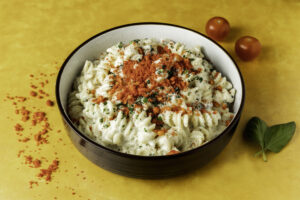
Open your restaurant on Talabat and Deliveroo right now, on your phone, the way a customer would. Scroll your own menu and ask a simple question of each image. Would this photograph stop me, reassure me and make me want to order, or would I keep scrolling to the next tile. Look at whether your hero image earns the pause, whether your dishes read clearly at thumbnail size, and whether the menu feels like one confident brand or a collage of unrelated pictures.
If the honest answer is that your visuals are not doing that work, then your photography is quietly costing you orders every single day, and no discount will fix a listing that fails to convince. When you are ready to turn your delivery presence into a genuine conversion engine, Food on Focus can help you audit what you have and build the visual system your menu deserves.