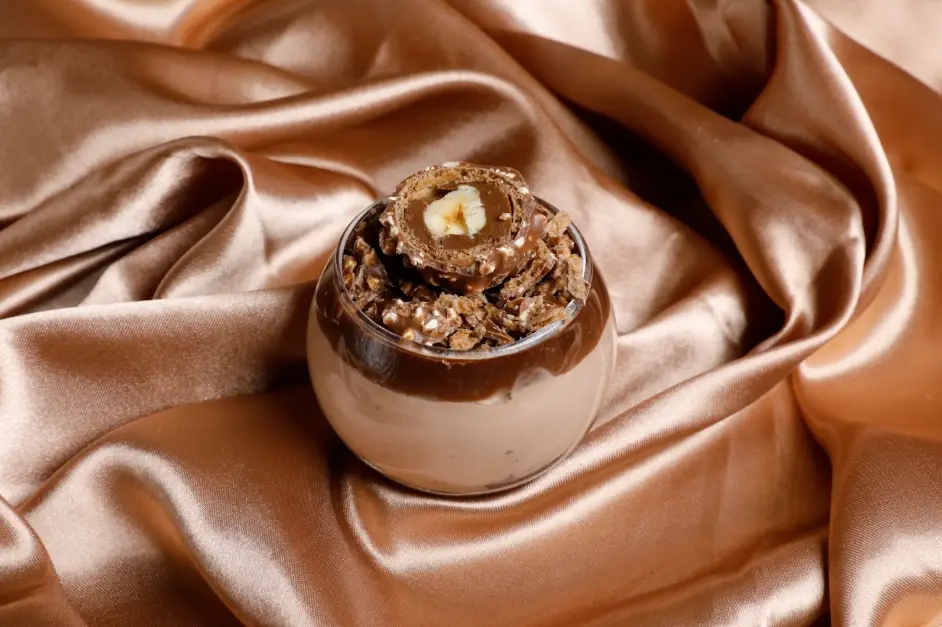

In a city where a new restaurant seems to open every week and a delivery app holds the attention of millions of hungry residents, the hardest part of running an F&B business in Dubai is no longer cooking well. The harder challenge is being chosen. Long before a guest tastes your signature dish, they have already judged it on a screen, scrolling past a grid of competitors, deciding in a fraction of a second whether your food looks worth their money. This is the uncomfortable truth that many operators discover only after months of underwhelming sales: in today’s market, food does not sell because it tastes good. It sells because it looks irresistible online, and that distinction is exactly where professional food styling and photography in Dubai becomes a commercial decision rather than a creative luxury.
This guide is written for restaurant owners, cafe founders, cloud kitchen operators and marketing heads who suspect, correctly, that their visuals may be quietly costing them revenue. It moves past the usual surface-level advice about lighting and angles and instead looks at how images influence customer behavior, platform performance and brand perception, and what genuinely high-performing F&B brands do differently. The aim is simple. By the end, you should be able to look at your own menu photography and delivery thumbnails and assess, with honesty, whether they are working for your bottom line or against it.
Dubai Diners Eat with Their Eyes First, and the Screen Is the New Storefront
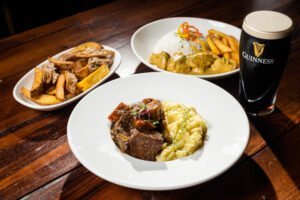
Consider how a typical ordering decision now unfolds. A resident in Marina opens a delivery aggregator at nine in the evening, hungry and impatient, and is presented with dozens of restaurants offering broadly similar cuisines at broadly similar prices. They do not read every menu. They do not compare ingredient sourcing or chef credentials. They scroll, and they react to images. A burger that looks glossy, layered and freshly assembled earns a tap, while the same burger photographed under flat lighting on a cluttered tray is scrolled past without a second thought. The food on both plates may be identical in the kitchen, yet only one of them converts into an order.
This behavior is not vanity, and it is not unique to Dubai, but it is amplified here. The emirate has an unusually digital, image-driven dining culture, a high concentration of visually sophisticated consumers and a hospitality scene where Instagram-worthiness has become a genuine competitive factor. Diners are trained by years of polished content from hotels, luxury brands and influencers to expect a certain standard, and anything that falls below it reads as cheaper, less trustworthy and less appetizing. The implication for operators is direct. Your photography is not decoration sitting on top of your product. It is the first and often the only version of your product that a customer experiences before paying, which makes it one of the highest-leverage assets in your entire business.
The business outcome of getting this right compounds over time. Stronger visuals lift the click-through rate on every platform where your food appears, which means more of the traffic you already pay for or earn organically actually converts. That improvement does not require a new location, a bigger menu or a heavier discount. It requires a better representation of what you already sell, which is precisely why visual quality is one of the most cost-efficient growth levers available to an F&B brand in this market.
Styling and Photography Are Two Disciplines, and Most Brands Underestimate the First
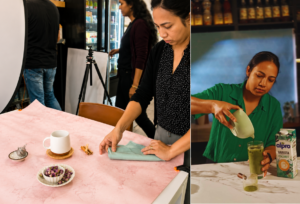
There is a common misconception that food photography is simply a matter of owning a good camera. In reality, the image that makes a dish look irresistible is the product of two distinct crafts working together. Food styling is the discipline of preparing and arranging food so that it performs for the camera, understanding that cooking for a lens is fundamentally different from cooking for a plate. A stylist knows how to keep a scoop of ice cream from collapsing under studio lights, how to make grilled meat read as juicy rather than dry, how to build a burger so that every layer is visible, and how to choose props, surfaces and garnishes that frame the hero without distracting from it. Photography is the discipline of capturing that styled subject with the right light, angle, depth and composition so that texture, colour and freshness translate convincingly to a screen.
When these two crafts are treated as one casual task handed to whoever on the team owns the newest phone, the result is predictable. The food looks like food, but it does not look crave-worthy, and crave-worthy is the entire point. This is where execution quietly breaks down for a large number of restaurants, because they invest heavily in recipe development and ingredient quality and then allow all of that effort to be flattened by an amateur image. A specialized F&B creative team closes that gap by bringing styling and photography together with intent, which is the core of how Food on Focus approaches a shoot. The objective is never simply a pretty picture. It is an image engineered to make a specific audience, on a specific platform, want to order.
What Most Restaurants Get Wrong with Their Visuals
Across the Dubai F&B landscape, the same visual mistakes appear again and again, and they share a common root. They are symptoms of treating photography as a one-off cost to be minimized rather than a performance asset to be managed. Understanding these patterns is the first step to escaping them.
Relying on amateur visuals
The most frequent error is using images shot quickly on a phone in service conditions, with harsh overhead lighting, inconsistent white balance and busy backgrounds. These images may be acceptable for a casual social post, but on a delivery platform where they sit directly beside professionally produced competitors, they signal a lower-tier experience. Customers cannot taste the difference in that moment, so they judge entirely on what they can see, and amateur visuals lose that comparison before it begins.
Shooting without a strategy
Even when restaurants hire a photographer, many do so without a clear brief tied to business goals. They produce a folder of attractive images with no thought to which dishes drive the most margin, which platforms the images must serve, or what action each image should prompt. A shoot without strategy generates content, but it does not reliably generate orders, because the images were never designed around the decisions a customer actually makes.
Inconsistent branding
A second common failure is visual inconsistency. One dish is photographed on marble, another on dark wood, a third against a white background, with different lighting and editing styles across the menu. The effect is a feed and a menu that feel disjointed, which erodes the sense of a coherent brand. Strong brand recall depends on repetition of a recognizable look, and inconsistency actively prevents that recognition from forming.
Treating photography as a single event
Many operators shoot once at launch and then never again, allowing the same tired images to represent the brand for years while the menu evolves, seasons change and platform standards rise. Visual content has a shelf life. A brand that refreshes its imagery in line with new dishes and campaigns stays current, while one that froze its photography at opening slowly looks dated, which subtly tells customers the business itself may be stagnant.
Ignoring platform optimization
Finally, restaurants frequently use the same image everywhere, ignoring that a delivery thumbnail, an Instagram grid post and a printed menu each demand different framing, crop and composition. An image that works beautifully full-bleed on a website can become an unreadable, cluttered square at thumbnail size on an aggregator. When visuals are not adapted to the environment in which a customer sees them, even good photography underperforms. This is consistently where outcomes are lost, and it is one of the first things a specialized F&B creative team corrects.
What High-Performing F&B Brands Do Differently
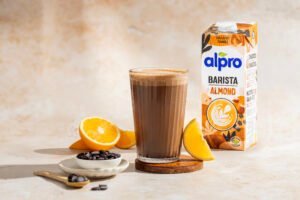
The restaurants and cloud kitchens that consistently win attention in Dubai are rarely the ones with the largest marketing budgets. They are the ones that treat visuals as a system rather than a series of disconnected tasks. Several habits separate them from the rest.
They build every shoot around conversion rather than aesthetics alone. Before a single dish is plated for the camera, the strongest brands decide which menu items deserve hero treatment based on margin and popularity, which platform each image must serve, and what feeling the image should provoke. The photograph becomes a tool with a job to do, and that clarity of purpose is what turns an attractive image into a profitable one.
They enforce consistency as a deliberate brand decision. High performers maintain a defined visual language, a recognizable combination of lighting, color palette, surfaces and styling that repeats across every dish and every channel. That repetition is what allows a customer to recognize the brand instantly, even before reading the name, and recognition is the foundation of recall, loyalty and the ability to charge a premium.
They produce platform-specific content rather than one-size-fits-all images. The leading brands understand that a vertical, motion-led clip suits social discovery, a clean and appetizing crop suits a delivery thumbnail, and a richer, more atmospheric composition suits a website or a print menu. They shoot with these destinations in mind, so each image is optimized for the exact moment a customer encounters it.
They think strategically and plan visual content as part of campaigns, launches and seasonal moments rather than reacting at the last minute. This forward planning is demanding to sustain in-house, which is precisely why many ambitious operators partner with a dedicated creative team. Food on Focus works with brands in this way, treating imagery as an ongoing growth function tied to the calendar of the business rather than a task that gets squeezed in whenever there is time.
Three Real-World Scenarios That Show Visuals Moving Revenue
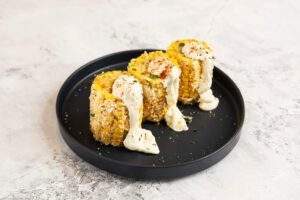
The argument that visuals drive revenue can feel abstract until it is grounded in the kinds of situations operators encounter every day. The following scenarios are illustrative rather than drawn from a specific client, but they reflect patterns that are well understood across the industry and easy to recognize from your own experience.
The same dish, two very different sales outcomes
Imagine a cloud kitchen listing a chicken biryani on a delivery app using a quick phone snapshot taken under kitchen lights. The rice looks flat, the colors are muted and the portion appears smaller than it is. A few streets away, a competitor lists a comparable biryani shot professionally, with steam suggested, garnish placed with intent and warm light bringing out the spice. The recipes might be equally good, yet the second listing earns far more taps, because customers are not comparing flavor at that stage. They are comparing images, and the better image wins the order. The dish did not change. Only its representation did, and that representation is what the customer actually paid to act on.
Better visuals supporting a higher price
Consider a cafe that wants to raise the price of its signature dessert but worries customers will resist. When the dessert is photographed casually, the higher price feels unjustified, because the image communicates something ordinary. When the same dessert is styled and shot to look genuinely special, with careful attention to texture and craft, the elevated price suddenly reads as appropriate. Premium visuals give customers permission to pay a premium, because perceived value is built largely through the eyes. This is one of the most direct ways photography influences not just how many units sell, but the margin on each one.
Stronger creative improving advertising efficiency
Picture a restaurant running paid social and aggregator ads with mediocre imagery. The ads reach plenty of people, but the click-through and conversion rates stay stubbornly low, so the cost of every acquired order climbs. Replacing the weak creative with professionally produced, platform-optimized images can lift engagement on the same spend, lowering the effective cost per order without touching the media budget. In this scenario the visuals are not a cost center. They are the variable that decides whether the advertising budget works hard or works poorly and improving them is often the fastest route to better return on ad spend.
Why This Matters for Your F&B Brand’s Growth
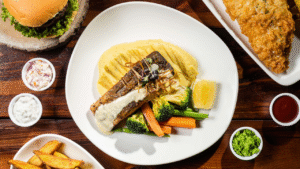
When visuals are treated as a serious performance asset, the impact reaches almost every metric an F&B operator cares about. The connection is not vague brand sentiment. It is a chain of cause and effect that runs straight to revenue.
Orders rise because stronger images lift the conversion rate at the exact moment of decision. On a delivery platform, where customers choose between options on visual impression alone, a more appetising thumbnail captures a larger share of the same passing traffic, which means more orders from an audience you are already reaching. The same effect plays out on social media, where compelling food content earns the saves, shares and taps that translate into footfall and delivery demand.
Conversion rates improve across the funnel, not just at the thumbnail. Better visuals reduce the hesitation that causes a customer to abandon a menu halfway through, because each dish reassures rather than disappoints. A coherent visual experience from advert to listing to checkout keeps momentum intact, and momentum is what turns interest into a completed order.
Pricing power grows because perceived value is built visually. A brand whose imagery looks considered and premium can hold higher price points without resistance, since customers read quality into the presentation before they ever taste the food. This is one of the rare levers that improves margin and demand at the same time, rather than trading one for the other.
Brand perception strengthens because consistent, high-quality visuals signal a business that takes itself seriously. Customers extend the standard they see in your photography to assumptions about your hygiene, your service and your reliability, fairly or not. Visual quality therefore shapes trust, and trust shapes the willingness to order a first time and return a second.
Platform visibility increases as a downstream effect of all of the above. Delivery aggregators and social algorithms reward listings and posts that earn engagement, so content that makes people tap, save and order tends to be shown to more people. Better visuals improve engagement, improved engagement improves reach, and improved reach delivers more orders without additional spend. This compounding loop is why the brands that invest seriously in imagery often pull away from competitors who do not, and it is the strategic case for treating professional food styling and photography in Dubai as a growth investment rather than an expense.
When Should You Work With an F&B Creative Agency
Not every business needs an external creative partner at every moment, but there are clear inflection points were specialist support shifts from helpful to decisive. Recognizing these moments helps you invest at the time it will return the most.
A launch is the most obvious one. When you open a new restaurant, cafe or cloud kitchen, your visuals are the first impression every potential customer receives, and there is no second chance to make a strong one. Entering the market with professionally styled, platform-ready imagery means you compete on equal visual footing from day one rather than spending your opening months looking like the weaker option beside established players.
A rebrand is another. If you are refreshing your identity, repositioning towards a more premium audience or changing your menu meaningfully, your imagery must move with you. Outdated visuals attached to a new direction create a confusing, half-finished impression, and a specialized team ensures the visual story matches the strategic one.
Scaling is a third. As you add locations, expand onto more delivery platforms or grow a cloud kitchen network, maintaining visual consistency across everything becomes genuinely difficult in-house. This is the point at which a structured creative partner protects your brand from fragmenting as it grows, keeping every touchpoint recognizably yours.
Persistently low conversions are a clear signal. If you are reaching customers but not converting them, whether on delivery apps or social media, weak visuals are one of the most common and most fixable causes. Before assuming the problem lies in price or product, it is worth examining whether your images are genuinely making the food look worth ordering.
Poor advertising performance is the final trigger. When paid campaigns underdeliver despite reasonable targeting and budget, the creative is frequently the limiting factor. Upgrading the imagery that sits inside your ads can improve results without increasing spend, which is exactly the kind of problem a dedicated F&B creative team is built to solve. Food on Focus tends to add the most value at precisely these moments, when better visuals translate most directly into measurable commercial improvement.
Visuals as a Growth Partnership, not a Photography Transaction
The thread running through everything above is that imagery is a business function, not a creative afterthought. The brands that understand this stop asking how cheaply they can get photos taken and start asking how much revenue their visuals can be made to generate. That reframing changes who they work with and how they work, because a one-time shoot from a generalist cannot deliver an ongoing, conversion-focused visual strategy.
This is the role Food on Focus is built to play. As a specialized F&B creative and consulting agency based in Dubai, the focus is not simply on producing beautiful food photography and videography, although that is the visible output. The deeper work is connecting those visuals to performance, helping restaurants, cafes and cloud kitchens improve delivery conversions, strengthen social engagement, build brand recall and reduce their dependence on constant discounting. The orientation is towards outcomes, treating styling, photography and creative direction as instruments of growth rather than ends in themselves, which is what separates a strategic partner from a vendor who simply hands over a folder of images.
Frequently Asked Questions
Why is food photography important for a restaurant?
Food photography is important because customers decide what to order based on how the food looks long before they taste it, especially on delivery apps and social media. Professional images make dishes appear more appetizing, raise click-through and conversion rates, and build the perception of quality that supports both trust and higher pricing. In a competitive market like Dubai, strong visuals are often the deciding factor between being chosen and being scrolled past.
Does professional food photography actually increase orders?
In most cases, better visuals do lift orders, because they improve the conversion rate at the point where customers choose between similar options on appearance alone. A more appetizing thumbnail captures a larger share of the traffic you already receive, so orders can rise without any increase in marketing spend. The exact improvement varies by brand, platform and starting point, so it is best measured against your own current performance rather than assumed from a fixed figure.
How much does professional food styling and photography cost in Dubai?
Pricing in Dubai varies widely depending on the number of dishes, whether styling is included, the location, and the experience of the team, so most reputable providers quote per project rather than advertising a single fixed rate. Rather than choosing on headline price alone, it is more useful to weigh the cost against the commercial return, since stronger visuals can improve conversions and pricing power across every platform. For an accurate figure tailored to your menu and goals, it is best to request a custom quote based on your specific scope.
How can I improve my delivery platform conversions?
The fastest visual improvements usually come from replacing amateur thumbnails with professionally styled, appetizing images, ensuring each one is cropped and composed specifically for the aggregator rather than reused from elsewhere, and keeping a consistent look across your whole menu. Prioritizing your highest-margin and most popular dishes for hero treatment tends to deliver the strongest return. Beyond visuals, clear menu structure and accurate descriptions support the images, but the photograph is what earns the initial tap.
Does my F&B business really need branding, or just good photos?
Good photos help, but without consistent branding they remain isolated images rather than a recognizable identity. Branding is what ties your visuals together into a coherent look that customers remember and associate with a certain standard, which is what builds recall, loyalty and the ability to command a premium. The strongest results come from treating photography and branding as parts of the same system rather than separate purchases.
Take an Honest Look at What Your Visuals Are Telling Customers
Before your next campaign or menu update, take a moment to audit your own imagery with a critical eye. Open your delivery listings as a hungry customer would, scroll your social feed beside a stronger competitor, and ask yourself whether your photographs genuinely make your food look worth ordering, or whether they are quietly undercutting the quality your kitchen works so hard to deliver. Look for the tell-tale signs discussed throughout this guide, the flat lighting, the inconsistent styles, the thumbnails that disappear beside sharper rivals, and consider how many orders those gaps might be costing you each week.
If that honest review leaves you suspecting your visuals are holding your growth back, that is the moment to treat imagery as the strategic asset it is. Food on Focus works with F&B brands across Dubai to turn underperforming visuals into a genuine driver of orders, conversions and brand value, and a conversation about your current photography is a low-risk first step towards understanding what better could look like for your business.