
In Dubai’s cut-throat F&B scene, your venue’s atmosphere is your biggest magnet. Long before anyone tastes your food, they experience your space through photos. That makes your choice of an interior photographer in Dubai one of the most critical business decisions you’ll make.
Scroll-stopping images aren’t just pretty pictures; they build your brand, pull in the right kind of customers, and drive actual foot traffic through your doors.
Why Great Interior Photos Are Your Secret Weapon in Dubai
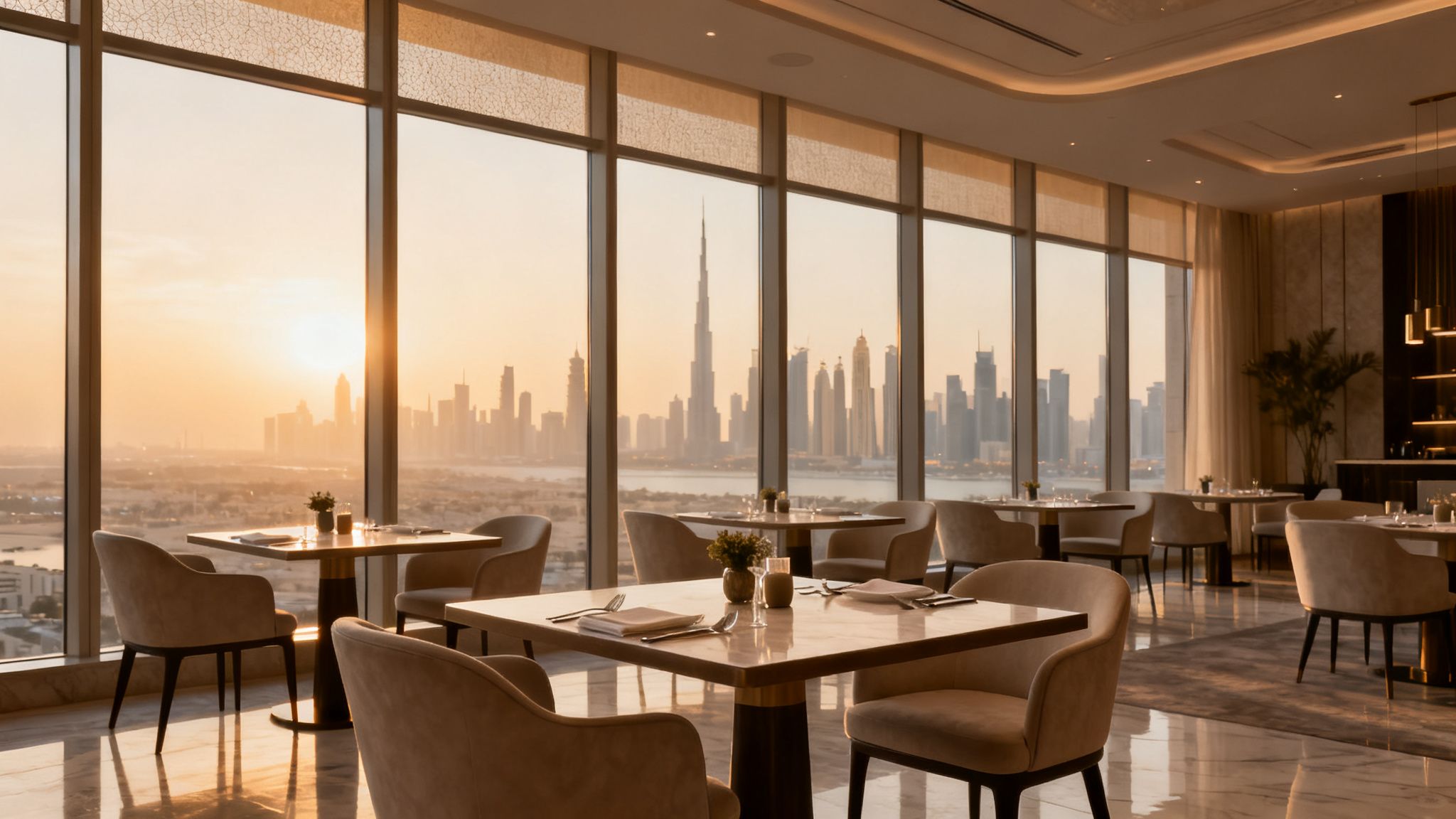
In a city defined by breathtaking design and world-class experiences, the visual story you tell is everything. Your restaurant’s interior is more than just four walls and some furniture; it’s a carefully crafted environment that sets the mood, justifies your pricing, and creates an unforgettable vibe. Professional photography is the bridge connecting that real-world experience to potential customers browsing online.
Stand Out in a Booming Market
Dubai is in the middle of an unprecedented design and real estate boom. This surge means more competition than ever, making it vital for your restaurant to visually cut through the noise. It’s no exaggeration—the emirate is set to account for a massive 51.74% of the entire UAE interior design market by 2025.
The growth is staggering. In the first quarter of 2025 alone, Dubai registered 45,474 residential deals valued at AED 142.7 billion—a jaw-dropping 22% jump in volume. With so many high-end spaces opening up, diners have endless choices. Standout photography isn’t just nice to have anymore; it’s essential.
Your potential customers decide whether to visit based on the feeling your photos give them. A professional interior photographer doesn’t just capture a room; they capture an invitation.
The Power of Visual Storytelling
High-quality interior photos do more than just show what your restaurant looks like. They communicate your brand’s soul. Are you a bright, airy café perfect for a morning coffee, or a moody, intimate spot for a romantic dinner?
An expert interior photographer in Dubai knows how to use light, composition, and styling to translate that vibe into images that connect with your ideal customer. This is how you attract the right crowd before they’ve even glanced at your menu.
These visual assets become the foundation of your entire marketing strategy, playing several key roles:
- Dominate Social Platforms: On visual-first platforms like Instagram, compelling interior shots are your number one tool for getting discovered and driving engagement.
- Elevate Your Website and Listings: Professional images instantly upgrade your online presence, from your official website to listings on Zomato and Google Maps.
- Justify a Premium Position: High-end photography signals quality and helps justify premium price points, reinforcing the value you offer from the very first glance.
- Fuel PR and Media Features: Stunning photos are non-negotiable for securing features in blogs, magazines, and other media outlets, massively expanding your reach.
Bottom line? Investing in professional photography is one of the smartest moves you can make to capture attention and get people through the door. For more on this, check out our comprehensive guide to photography in Dubai.
Finding and Choosing Your Ideal Photographer
Knowing where to find a top-tier interior photographer in Dubai can feel like searching for a needle in a haystack. A quick Google search will throw a thousand names at you, but the real pros—the ones who truly get F&B spaces—are usually found elsewhere. To find a creative partner who clicks, you need to look beyond the usual channels.
Start by digging into platforms where creative talent is already curated for you. Niche directories and design-focused publications are great, but Instagram is often a goldmine if you use it smartly. Look for photographers who are tagged by respected Dubai interior design firms, architects, and F&B brands you admire. Their work has already been vetted by the best in the business.
Reading a Portfolio Like an Expert
Once you’ve got a shortlist, it’s time to put on your critic’s hat. A portfolio is way more than just a collection of pretty pictures; it’s a visual CV that shows you everything from technical skill and artistic vision to their ability to tell a brand’s story. Don’t just skim—really analyse each photo.
Start with the lighting. Dubai’s intense sun is a massive challenge, often creating harsh shadows or blown-out, sterile-looking highlights. A skilled interior photographer in Dubai knows how to tame that light, whether it’s by manipulating natural brightness or subtly adding their own to create a balanced, inviting mood. The photos should feel bright and airy or cosy and intimate, matching the venue’s vibe—but never poorly lit.
Next, look at the composition. Are the lines straight? Architectural photography is all about precision. Crooked walls or weirdly distorted perspectives are a major red flag. A great photographer will show you they can capture both the grand, wide-angle shots that set the scene and the tight, detailed shots that highlight the unique textures, materials, and decor that give your space its soul.
A great portfolio shows you not just what a space looks like, but how it feels. It should tell a story, capturing the mood and energy you’ve worked so hard to create.
To help you get forensic with your review, use this checklist. It’s designed to help you spot the difference between a good photographer and the right photographer for your brand.
Portfolio Review Checklist for Interior Photographers
Use this checklist to critically assess a photographer’s portfolio and see if their style and skill align with your brand’s vision.
| Evaluation Criteria | What to Look For | Red Flags to Avoid |
|---|---|---|
| Lighting Mastery | Balanced, natural-looking light. Soft shadows that add depth, not distraction. Consistent lighting across different shots of the same venue. | Harsh, blown-out highlights. Dark, gloomy corners. Unnatural-looking artificial light. Inconsistent brightness. |
| Composition & Angles | Straight vertical lines (walls, doors). A mix of wide, medium, and detailed shots. Creative angles that feel intentional and show off key features. | Distorted or leaning walls (bad perspective control). Only wide shots with no detail. Awkward or uninspired framing. |
| F&B Experience | Specific examples of restaurants, cafés, or bars. Shots that capture the dining atmosphere, not just empty rooms. Skillful handling of reflective surfaces like glass and steel. | Portfolio is only residential or corporate spaces. Food or drinks look out of place or poorly styled. Glare and distracting reflections are visible. |
| Styling & Staging | Tables are set intentionally. Decor looks natural and inviting. The space feels alive, even if it’s empty of people. Attention to small details like straightened chairs and clean surfaces. | Cluttered or messy backgrounds. Empty, sterile-looking spaces with no personality. Props that look cheap or out of place. |
| Post-Processing | Colours look true-to-life and vibrant. Images are sharp and clear. A consistent editing style across the entire portfolio. | Over-saturated or unnatural colours. Images that look blurry or soft. A mix of different editing styles that feel disjointed. |
After going through this, you should have a much clearer idea of who makes the cut. The goal isn’t just to find someone who takes nice photos, but to find someone whose visual language speaks for your brand.
Essential Questions to Ask Potential Photographers
An impressive portfolio is a great start, but it’s only half the story. The right photographer needs experience that’s specific to the unique chaos of an F&B environment. Before you make any decisions, get them on a call and come prepared with some targeted questions.
Here are a few questions I always recommend asking:
- Have you photographed restaurant or café interiors before? F&B spaces come with their own set of challenges—think managing reflections on glass and shiny kitchen equipment, working around service hours, and making sure any food or drinks in the shot look natural and delicious.
- How do you approach balancing wide shots with detailed vignettes? This question reveals whether they think like a storyteller. You need someone who understands the importance of showing the overall layout and the little details that define your brand’s character.
- Can you walk me through your process for a typical F&B shoot? Their answer will tell you a lot about their planning, on-site workflow, and how they collaborate with clients to get the shot list ticked off.
- How do you handle styling for a shoot? Do they work with professional stylists, or do they manage it themselves? This is a big one. Good styling can be the difference between a nice photo and a stunning one.
Their answers will quickly tell you if they have the right kind of expertise. To dig even deeper, check out our detailed advice on what to look for when hiring a professional photographer in Dubai. Taking the time to properly vet your options ensures you end up with a true creative partner, not just another supplier.
Creating a Photography Brief That Gets Results
So, you’ve found a photographer you’re excited about. Great! But the work doesn’t stop there. A fantastic photoshoot never happens by accident; it’s born from a clear, detailed photography brief. This document is your game plan, the single most important tool to make sure you and your photographer are on the same page before a single photo is taken.
Think of the brief as the bridge between your business goals and the photographer’s creative execution. It’s what turns a vague idea into an actionable plan for your interior photographer in Dubai. It cuts out the guesswork and prevents those frustrating miscommunications that lead to disappointing results.
Simply saying “make it look luxurious” is a recipe for disaster. What does that even mean? Instead, a brief that says, “we want a bright, opulent feel with a focus on our brass fittings and velvet textures” gives the photographer something concrete to work with. The more detail you provide upfront, the smoother the entire process will be—from getting an accurate quote to the final image delivery.
Defining Your Brand and Mood
Before you even start thinking about specific shots, you need to zoom out. What’s the story you’re trying to tell? Your brief should kick off with the big picture: your brand’s personality and the exact feeling you want the images to capture.
Is your café a cosy, rustic escape filled with the scent of coffee and baked bread? Or is it a sleek, minimalist hub for Dubai’s creative crowd? Is your restaurant a high-energy spot for social gatherings, or an intimate, fine-dining destination for special occasions?
This context is everything. It shapes every creative choice the photographer makes, from the lighting setup to the composition of each shot. Be sure to also include a little about your target audience. Who are you talking to? A photo designed to attract a family for a casual weekend brunch will look completely different from one aimed at young professionals for after-work cocktails.
A simple mood board is the perfect way to bring this vision to life. Pull together 5-10 inspiration images from Pinterest, Instagram, or design magazines that nail the vibe you’re after. Visuals often communicate more than words ever can.
Building a Smart Shot List
Once the mood is set, it’s time to get specific. A shot list is basically a detailed checklist of every single photograph you absolutely need. This isn’t about killing creativity; it’s about making sure your marketing needs are covered so the photographer has the freedom to improvise on top of the essentials. A great list will always balance wide, scene-setting shots with intimate, detailed close-ups.
Here’s a simple way to break it down:
- Establishing Shots: These are the big, wide-angle views that capture the entire space, its layout, and the overall atmosphere. Think shots of the main dining area from a few different angles, the entrance, or any standout architectural features.
- Medium Shots: Now, zoom in a bit. Focus on smaller zones within the space, like a beautifully set table for four, the bar area glowing during golden hour, or a comfy little seating nook that just begs people to sit down. These shots feel personal and inviting.
- Detail Shots (Vignettes): This is where you get up close and personal. Highlight the textures and unique elements that define your brand. It could be your custom tilework, the weave of your linen napkins, a one-of-a-kind light fixture, or your branded coffee cups.
A great shot list is like a film script. The wide shots set the scene, the medium shots introduce the experience, and the detail shots reveal the personality and plot twists.
In Dubai’s dynamic F&B scene, design choices are increasingly tied to real business outcomes. Smart furnishing and multi-use layouts can directly boost guest experience and even command a 15–30% rent uplift. Your photography needs to showcase these strategic design choices, effectively turning them into powerful marketing assets. You can learn more about how Dubai’s design trends are driving measurable results.
While your photographer focuses on the space, don’t forget that the food itself is a huge part of your restaurant’s story. If you need someone to capture your culinary creations, you might be interested in our guide on how to find the best food photographers in Dubai. A well-planned brief ensures all your visual elements—from the decor to the dishes—work together perfectly.
Handling the Logistics of a Dubai Photoshoot
You’ve got a solid brief in hand, which is fantastic. Now it’s time to get into the on-the-ground practicalities. In Dubai, a bit of forward planning is the difference between a smooth, stress-free shoot day and a complete logistical nightmare. Trust me, overlooking these steps is a common mistake that leads to frustrating—and expensive—delays.
Arranging a shoot with an interior photographer in Dubai isn’t just about scheduling; it often means navigating a layer of permissions, especially if your restaurant is in a major mall or a master-planned community.
Navigating Photography Permits
If your restaurant is inside a big hub like Dubai Mall, Mall of the Emirates, or a community managed by a developer like Emaar or Nakheel, you will almost certainly need a photography permit. These are not optional. Trying to shoot without one is the fastest way to get your session shut down by security.
The process usually involves an online application through the management’s portal. Be ready to provide a few key documents:
- Trade Licence: A copy of your business’s trade licence is pretty much always required.
- Photographer’s Details: You’ll need the name and Emirates ID of your photographer and any assistants joining them.
- Shoot Plan: A quick description of what you’re shooting, including the date, time, and how you plan to use the images.
Lead times can vary, so it’s smart to apply at least one to two weeks in advance. Please, don’t leave this to the last minute. This one simple step ensures your photographer can actually do their job without being interrupted.
Plan for permissions as carefully as you plan your shot list. In Dubai, access is everything, and having the right paperwork means your creative team can focus on getting stunning shots instead of dealing with security.
This visual flow shows the three core pillars of an effective photo brief brand identity, mood, and a detailed shot list.
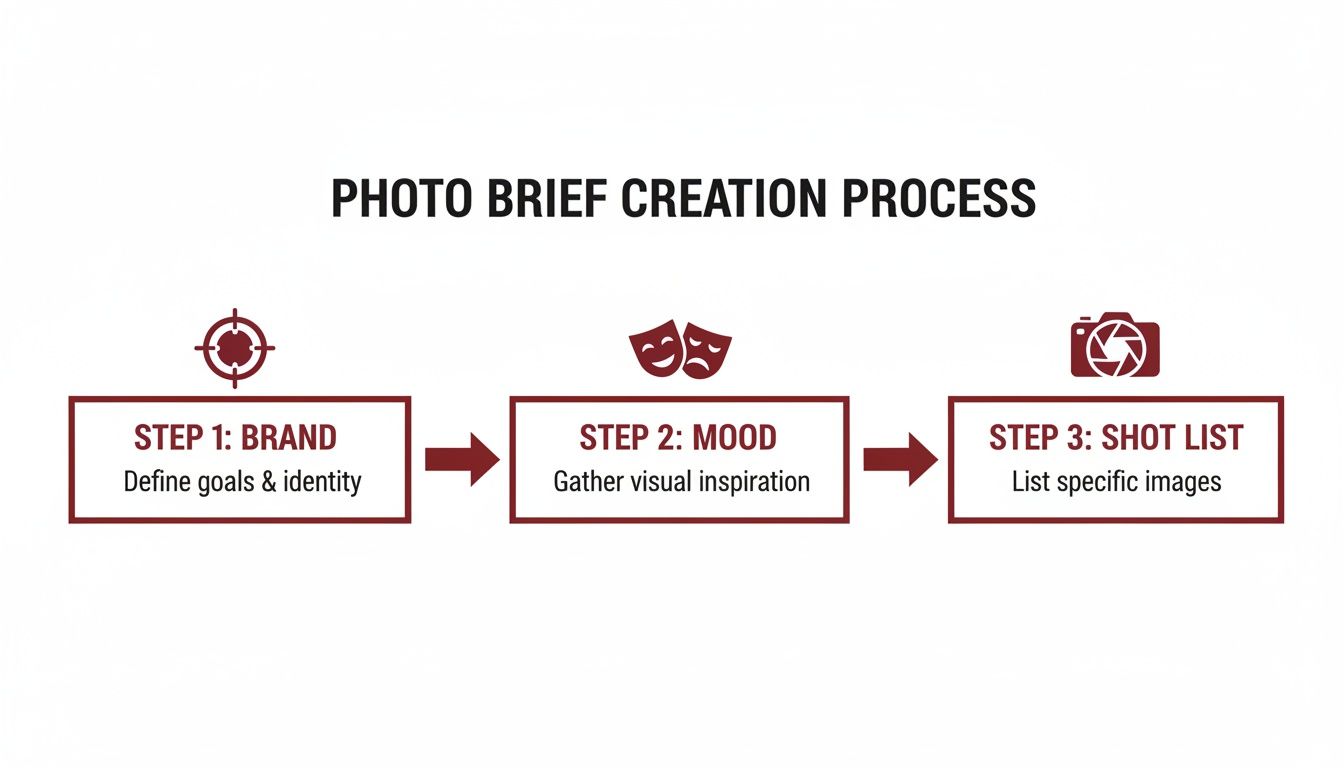
Starting with a clear understanding of these elements ensures the final images perfectly align with your marketing goals.
Your Essential Pre-Shoot Checklist
Beyond the permits, a well-organised pre-shoot checklist is your best friend. It helps prevent that last-minute chaos we all want to avoid. The day before the shoot, just run through these essential tasks. It’ll set everyone up for success.
- Coordinate with Staff: Make sure your team knows the schedule. Brief them on the plan so they can assist without disrupting the shoot or accidentally wandering into a shot.
- Schedule Around Peak Hours: Plan the shoot for your quietest time. An empty or nearly empty restaurant gives the photographer the freedom to get the best angles without customers in the way. Early mornings are usually perfect for this.
- Deep Clean Everything: The camera sees everything. Arrange for a proper, deep clean of the entire space the day before. Windows, floors, surfaces, and upholstery need to be spotless.
- Declutter and Prep: Get rid of anything that doesn’t need to be there—cleaning supplies, extra menus, stacked chairs. Have any props or styling elements you want to use ready to go.
Organising a shoot involves a lot of moving parts, from the creative side to all this logistical planning. If you feel you need support that goes beyond just the photography, exploring the services of full-service media production companies in Dubai can offer a much more integrated and seamless solution.
Styling Your Space to Create an Irresistible Vibe
An empty restaurant is just a room. A styled restaurant tells a story.
This is the make-or-break step where you stop thinking about the physical space and start thinking about the visual experience. It’s about making your venue look alive, intentional, and completely irresistible for the camera. Any decent interior photographer in Dubai can capture a well-lit room, but it’s the thoughtful styling that creates an atmosphere that pulls people in.
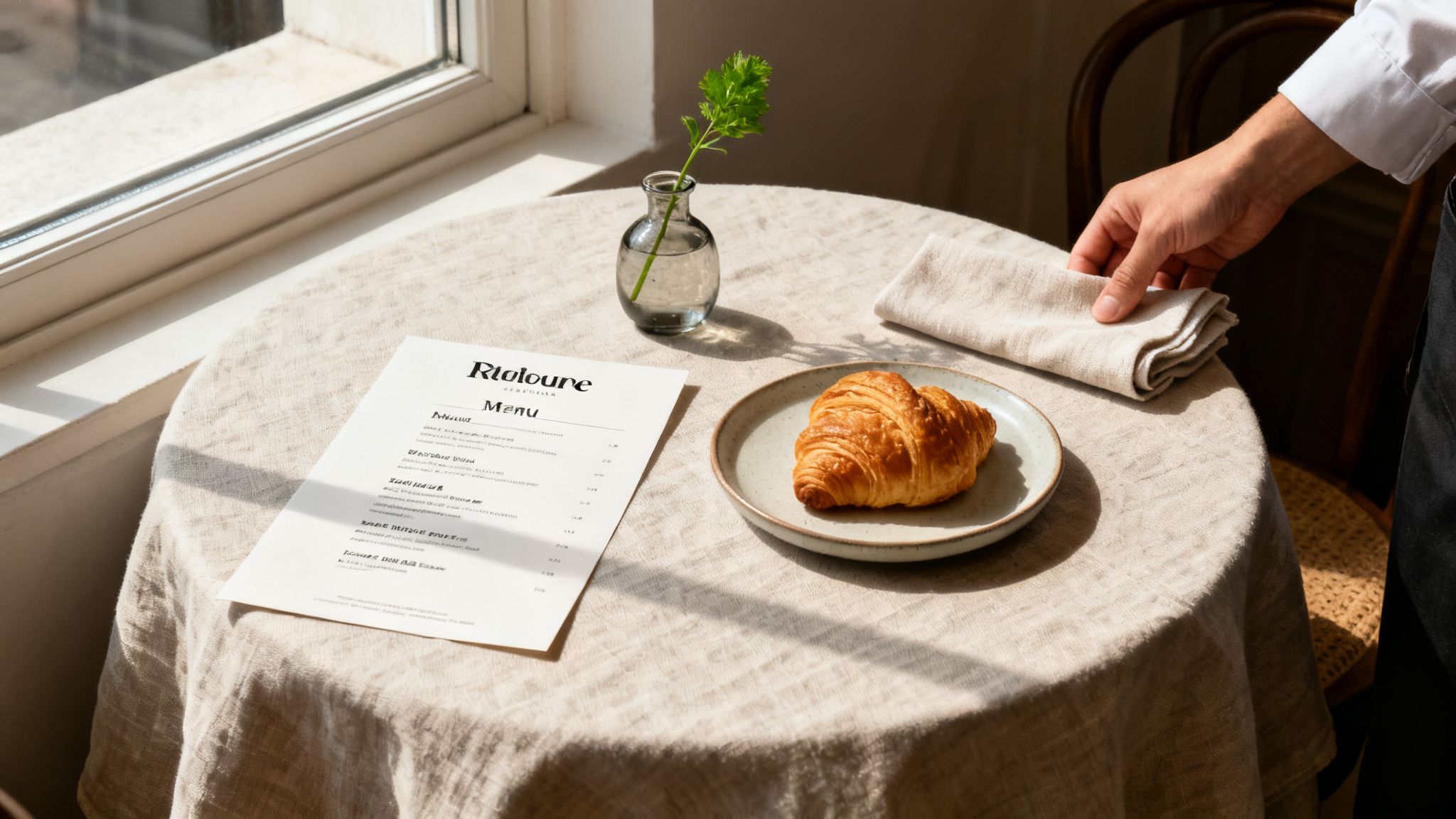
The secret is always in the small details that work together to build a mood. This isn’t just about cleaning up; it’s about making the space feel lived-in and inviting. Start with the tables. They should never be completely bare. Even a simple, crisp linen napkin, polished cutlery, and your branded menu can add a layer of sophistication and set the stage for the experience you offer.
Breathing Life into the Details
Props are your best friend here, but only if they feel authentic to your brand. Avoid anything that looks generic or out of place. Instead, think about elements that are already part of your story.
- Fresh Ingredients: A small bowl of vibrant lemons, a sprig of fresh rosemary beside a plate, or a basket of artisanal bread adds colour and a touch of authenticity. It hints at the quality of your kitchen.
- Branded Elements: Don’t miss this opportunity. Strategically place your beautifully designed menus, coasters, or a custom coffee cup to subtly reinforce your brand identity.
- Greenery and Florals: Plants are non-negotiable. They add life, colour, and texture to any space. A simple vase with fresh flowers on the host stand or potted plants in well-lit corners can instantly soften a room and make it feel more welcoming.
The goal of styling isn’t to add clutter; it’s to add character. Every single object in the frame should have a purpose and contribute to the story you want the photograph to tell.
The Human Element
While you absolutely need shots of your pristine, empty restaurant, adding a human touch can make the space feel much more dynamic and relatable. The key is to make it look natural, not staged. A shot of a barista crafting a latte, a chef adding a final garnish in the kitchen, or a host welcoming guests at the door can inject so much energy.
If you decide to use models, their actions should be subtle and believable—a hand reaching for a glass, friends sharing a quiet laugh, or someone simply reading a book in a cosy nook. These moments create a sense of aspiration, allowing viewers to picture themselves enjoying your space. Make sure you discuss these “lifestyle” shots with your photographer beforehand, as they require a different approach to lighting and direction than purely architectural photos.
Finally, remember to declutter without sterilising. Of course, you need to tidy up stray cables, remove unnecessary signs, and straighten chairs. But leave some personality intact. A stack of curated magazines on a coffee table or a thoughtfully arranged bar cart adds warmth and character. It’s this careful balance of clean presentation and authentic soul that will make your interior photos truly stand out.
Making the Most of Your Final Photos
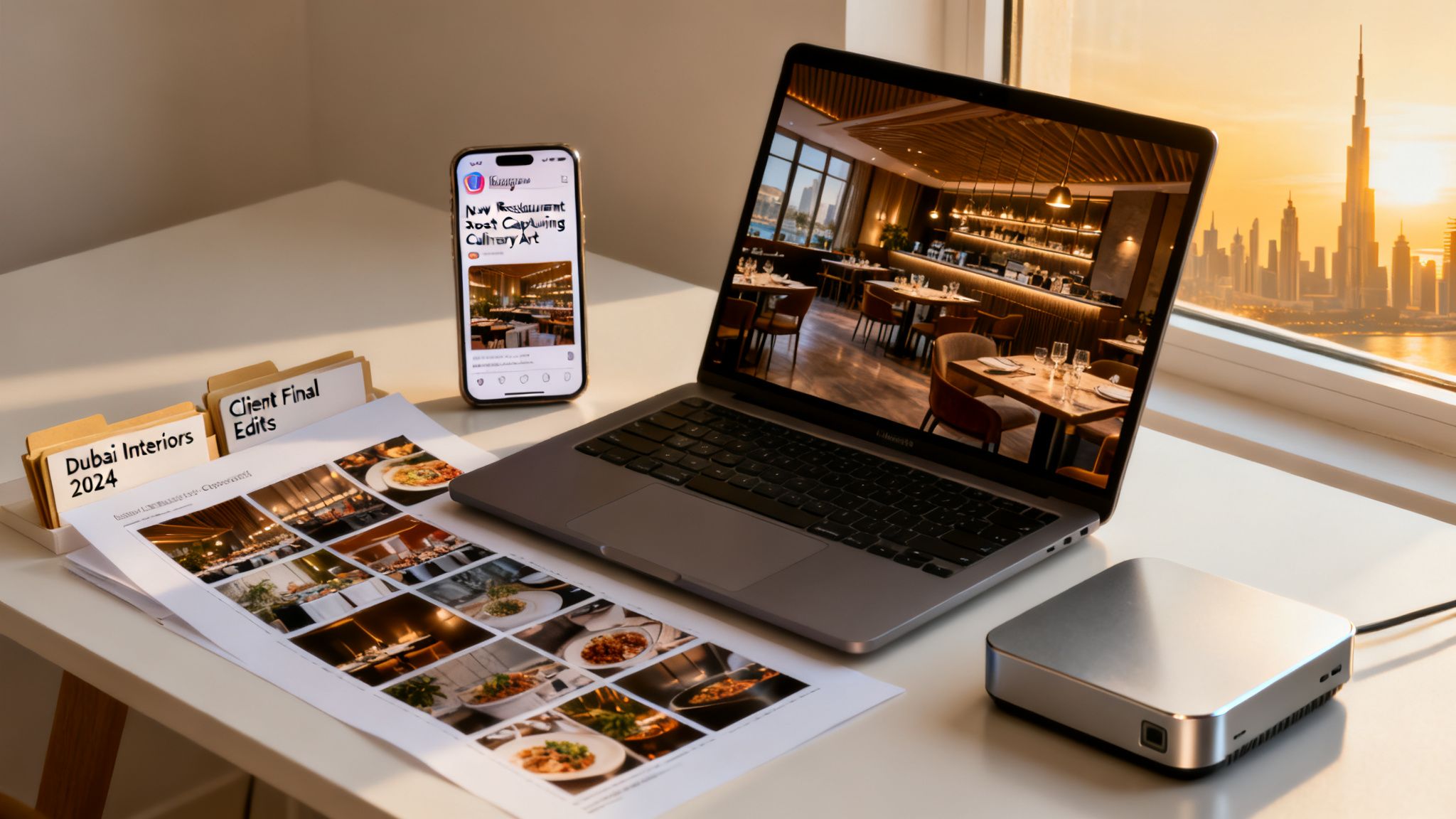
The photoshoot is a wrap, the gear is packed away, but your work isn’t quite done. In fact, the most important part is just getting started: putting those beautiful new photos to work.
When your photographer delivers the final images, you’re not just getting pictures; you’re getting a powerful new set of marketing assets. The key is understanding exactly what you’ve received and how you’re allowed to use it.
Typically, the final delivery includes high-resolution files for print and web-optimised versions for everything digital. It’s also wise to clarify the level of retouching beforehand. Basic edits like colour correction and straightening lines are standard, but heavy lifting like removing an exit sign or a stray cable might cost extra.
Understanding Image Licensing and Usage
This is easily the most overlooked—and most important—part of your agreement. A common mistake is assuming that because you paid for a photoshoot, you own the photos outright and can use them anywhere, forever. That’s rarely the case.
Most professional photographers license their images for specific uses, so you need to be crystal clear about your intentions from the very beginning.
Image licensing isn’t about restricting you; it’s about defining value. A photo used on a single Instagram post has a different value than one used in a nationwide print campaign. Clear licensing protects both you and the photographer.
Before signing anything, think about every single place you might want to feature your new interior shots. Common usage rights you need to discuss include:
- Social Media: The right to post on your own profiles like Instagram, Facebook, and TikTok.
- Website & Blog: Using the images on your own digital properties.
- Third-Party Listings: Essential for your profiles on Zomato, Deliveroo, and Google Maps.
- Paid Advertising: Using images for digital ads (social media or Google) and print campaigns almost always costs more.
- PR & Media: Allowing magazines, blogs, and newspapers to use your photos for articles and features.
It’s almost always more cost-effective to negotiate a broader licence upfront that covers your marketing plan for at least a year. An experienced interior photographer in Dubai will have no problem creating a custom package that fits your exact needs.
Repurposing Your Photos for Maximum ROI
Now for the fun part. Don’t just post these stunning photos once and let them gather digital dust. Squeeze every drop of value out of them by repurposing them across all your channels.
That gorgeous wide shot of your entire dining room? Perfect for your website’s homepage.
A close-up of that cosy, well-lit nook? That’s an engaging Instagram story or a reel waiting to happen. Detail shots of your unique decor are ideal for highlighting your brand’s personality in a blog post or email newsletter.
A strategic approach to your visual content is a total game-changer. You can learn more about building a powerful visual strategy with our guide to social media marketing services in Dubai.
Ready to transform your venue with scroll-stopping visuals? The team at Food On Focus Media are experts in creating compelling interior photography that captures your brand’s essence and attracts more diners. Let’s tell your story. https://www.foodonfocus.com