Opening a cloud kitchen in Dubai looks simple on paper, which is exactly why so many founders underestimate what it actually takes to succeed.
Most guides will walk you through licenses, costs, and setup steps, and while those are necessary, they are not what determine whether your cloud kitchen grows or struggles. The real challenge begins after you go live, when your brand is placed alongside dozens of competitors on delivery platforms and has only a few seconds to convince someone to order.
This is the point most founders do not plan for.
Because a cloud kitchen is not just a food business. It is a digital-first brand competing in a visual marketplace, where customers decide based on what they see, not what you cook.
And this is where working with a specialized F&B team like Food on Focus begins to change outcomes, because the focus shifts from simply launching a kitchen to building something that actually converts.
What Most Guides Get Right and Where They Fall Short
Most existing resources explain the operational side well. They outline licensing requirements, approvals, and setup costs, which typically range between AED 30,000 to AED 100,000 depending on your scale and model.
They also break down the process into clear steps such as choosing a concept, securing a kitchen, and onboarding delivery platforms.
These are all essential.
But they stop at operations.
What they rarely address is the performance layer of a cloud kitchen, which determines whether your brand actually gets orders once it is live. They do not explain how customer behavior works on delivery apps, how perception influences pricing, or how visuals directly impact conversions.
That gap is where most cloud kitchens fail, not because they are poorly set up, but because they are poorly positioned.
The Reality: A Cloud Kitchen Is a Marketing-First Business
Unlike traditional restaurants, cloud kitchens do not benefit from location, ambiance, or walk-in traffic. Everything depends on how your brand performs on a screen.
Customers scroll through options quickly. They compare thumbnails, dish images, and pricing. They make decisions in seconds.
This means your business depends on:
- How your food looks visually
- How quickly your listing builds trust
- How strongly your brand stands out
Two kitchens can have the same cuisine, pricing, and operations, yet produce completely different results.
The difference is not food quality.
It is perception and positioning.
This is where most restaurants struggle, because they build operations first and think about branding later. In a cloud kitchen model, that order needs to be reversed.
And this is where a team like Food on Focus becomes relevant, because the focus is not just on content creation but on how that content performs in real decision-making environments.
Step-by-Step: How to Open a Cloud Kitchen in Dubai

1. Define a Delivery-First Concept
The most common mistake founders make is choosing a concept based on personal interest rather than delivery performance.
Not all cuisines travel well. Not all dishes retain quality. Not all menus scale.
A strong cloud kitchen concept considers:
- Ease of delivery
- Repeat order potential
- Packaging compatibility
- Visual appeal
Because in delivery, your product is experienced through a box and a screen. A dish that is spectacular fresh from the pass but arrives soggy, collapsed or unphotogenic twenty minutes later will struggle, however good the recipe. Choosing a concept that travels well, holds its quality in packaging and still looks appealing in a thumbnail is not a compromise on the food; it is matching the product to the way it will actually be eaten.
If it does not look good online, it will not get ordered.
2. Choose the Right Cloud Kitchen Model
You can choose between:
Single-brand kitchens for focused positioning
Multi-brand kitchens for higher revenue potential
Shared kitchens for lower initial investment
Shared kitchens are often the fastest way to enter the market, especially for startups.
But the choice should not be based on cost alone.
It affects scalability, brand identity, and long-term growth. A low-cost entry that limits differentiation can become a bottleneck later. A shared kitchen gets you live quickly and cheaply, but if it leaves your brand looking interchangeable with everyone else operating from the same space, you have saved on rent and paid for it in orders. Weigh the model against where you want the brand to be in a year, not just what it costs to open this month.
3. Secure Licenses and Approvals
To operate legally, you need:
- Trade license
- Food license
- Municipality approvals
- Food safety compliance
Costs can vary, but food licenses alone can range between AED 5,000 to AED 8,000 depending on setup.
This step is essential, but it is often overemphasized compared to what actually drives success after launch.
4. Set Up Kitchen Infrastructure
This includes:
- Renting a compliant kitchen
- Equipment setup
- Staffing
- Hygiene protocols
Kitchen rent can start from AED 5,000 monthly and scale depending on location and size.
At this point, most founders feel ready to launch.
In reality, they have only built the backend.
5. Get Listed on Delivery Platforms
Delivery platforms are your primary sales channel.
They control visibility, discovery, and ordering behavior.
But listing alone does not generate orders.
Your listing needs:
- Strong visuals
- Clear menu structure
- Differentiation
This is where most cloud kitchens struggle, because they treat listings as operational steps rather than conversion tools. A listing is not a form to complete and forget; it is the shopfront of a business that has no other shopfront, and it has to be built to convert. Our guide to menu photos that sell on Talabat, Deliveroo and noon covers how to make those listing images work, and the platform photo requirements guide covers the exact specifications each app expects.
Why This Matters for Your F&B Brand’s Growth
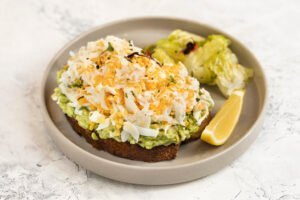
Opening a cloud kitchen is not just about getting live. It is about building a system that converts attention into orders.
Better visuals increase conversion rates by reducing hesitation. Strong branding improves pricing power and reduces reliance on discounts. Clear positioning improves recall and repeat orders.
All of this compounds over time. A listing that converts a little better earns more orders, which earns better placement and more reviews, which earns more orders again. The same loop runs in reverse for a weak listing, which is why the presentation work done before launch keeps paying back, or costing, long after the kitchen is running.
The challenge is not understanding these factors.
The challenge is executing them correctly.
And this is where many founders realize that without the right creative and strategic support, their growth plateaus despite having a good product.
Real Scenario: Same Kitchen, Different Outcome

Two brands operate from the same shared kitchen.
They have similar menus and pricing.
One uses inconsistent visuals, generic branding, and basic listing images. The other invests in strong visual identity, clear positioning, and structured content.
Within months, one struggles with low orders.
The other scales.
The kitchen is the same.
The difference is how the brand is presented.
This is why cloud kitchens are not just operational businesses. They are content-driven businesses, and the content is not marketing that sits beside the product. For a customer who never sees your kitchen, it is how the product is experienced before they buy.
What Most Restaurants Get Wrong
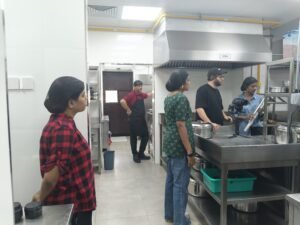
Most founders focus heavily on setup and underestimate the importance of execution on the customer-facing side.
They rely on amateur visuals that reduce perceived quality. They treat branding as secondary. They do not optimize for platform behavior. They approach content as a one-time task.
This is where execution breaks down, and where many brands realise that even strong food cannot compensate for weak presentation. In a delivery-first model, presentation is not a finishing touch on top of the product; for the customer deciding in a few seconds, it effectively is the product.
What High-Performing Cloud Kitchen Brands Do Differently

High-performing brands treat visuals and branding as core business drivers.
They invest in:
- Conversion-focused visuals
- Consistent identity
- Platform-specific optimization
- Continuous content
They align creative output with business goals.
This level of alignment rarely happens by accident, which is why brands that partner with expert branding teams tend to scale faster, not because they create more content, but because they create content that performs.
When Should You Work with an F&B Creative Agency
There are specific moments where this becomes critical:
When launching and needing strong first impressions
When rebranding and shifting perception
When scaling and improving ad performance
When conversions are low despite traffic
When your brand lacks consistency
At this stage, the issue is not effort.
It is execution.
The Bigger Insight: Your Cloud Kitchen Is Only as Strong as Its Perception
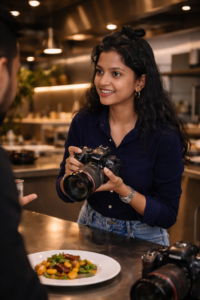
Cloud kitchens remove traditional advantages like location and ambiance.
What replaces them is perception.
And perception is built visually.
Customers are not choosing the closest option.
They are choosing the most compelling one.
This is why two identical kitchens can produce completely different outcomes.
Because one understands how to present oneself.
And the other does not.
Getting Your Delivery Listing Right
If a cloud kitchen has a single storefront, it is the delivery-app listing, so it deserves the same care a restaurant would give its entrance and dining room. On the apps your brand sits in a dense grid of competitors, reduced to a thumbnail, a name and a price, and the customer decides in seconds which one to tap. Everything that would normally build trust in person has to be carried by that listing instead.
In practice that means a few things done well and kept consistent. Every dish needs a clean, well-lit, platform-correct image, because a listing with mixed or missing photos signals carelessness exactly where trust is thinnest. The menu needs a clear structure that guides the customer rather than overwhelming them. And the brand needs a point of difference that is obvious at a glance, since "another burger place" converts far worse than a listing that says plainly what it is and who it is for. Our guides on photos that sell on the delivery apps and the photo requirements for each platform cover how to get this layer right, and it is usually the highest-leverage work a new cloud kitchen can do.
A Realistic Launch Timeline
Because a cloud kitchen is a marketing-first business, the content work has to run in parallel with the build, not after it. A common mistake is to spend months on licensing and fit-out, go live, and only then start thinking about photography and branding, which leaves the listing weak just as the platforms give a new brand its first burst of visibility. A better sequence treats the brand and the kitchen as two tracks that finish together:
- While securing the licence and kitchen: lock the concept, the menu and the brand identity, so the positioning is decided before anything is cooked for the camera.
- Once the menu and plating are settled: shoot the full menu and brand visuals, built to the delivery platforms’ specifications, not as an afterthought.
- Before going live: build the listings with complete, consistent imagery and a clear menu structure, ready for the opening visibility rather than scrambling to fill them afterwards.
- After launch: keep producing content and refining the listing based on what actually converts, because the first version is rarely the best one.
The point is simply that presentation cannot be bolted on at the end. In a model where the screen is the only storefront, the content is part of the build, and planning it early is what separates a strong launch from a quiet one. A steady posting plan after launch matters too, which is what our content calendar for a new venue is built to support.
Budgeting Beyond the Build
Founders tend to budget carefully for the things they can touch, the kitchen, the equipment, the licences, and underbudget for the things that actually win orders. A realistic cloud-kitchen budget treats photography, branding and ongoing content as line items alongside rent and equipment, not as optional extras to fund later if there is money left over. The listing imagery in particular is not a cost to minimise; it is the single asset doing the selling, seen by every customer before they order.
It also helps to think of this spend the way you would any recurring part of marketing rather than a one-off. Menus change, new items launch, and seasonal pushes come and go, so a plan that keeps the content current, rather than letting the launch photos quietly date, protects the investment over time. If you are weighing what a shoot should cost against what it returns, our Dubai food photography pricing guide breaks down the factors involved.
Positioning Comes Before Operations
The single biggest shift a cloud-kitchen founder can make is to decide the positioning before building the operations, rather than the other way around. In a traditional restaurant you can open first and let the location and the room do some of the work while the brand finds its feet. A cloud kitchen has none of that cushion: the moment it goes live it is judged entirely on how it presents on a screen, so the question of who the brand is for and why someone would choose it has to be answered before the first order is ever cooked.
Answered early, that positioning guides everything downstream, the concept, the menu, the photography, the listing structure, so each piece reinforces the others. Answered late, or not at all, each decision is made in isolation and the brand ends up looking assembled rather than designed. The operational steps in this guide are necessary, but they are the easy half. The half that decides whether the kitchen is busy is the one most founders leave until last.
FAQs
Why is food photography important for restaurants?
Food photography creates the first impression and directly influences whether customers choose your brand on delivery platforms.
Does it increase orders?
Yes. Strong visuals improve engagement, increase click-through rates, and drive higher conversions, because they reduce the hesitation a customer feels when choosing between unfamiliar options. On a delivery app, where you are compared side by side with competitors, the image often does more to win the order than the menu description does.
Cost in Dubai?
Costs vary depending on scope and production quality, but should be evaluated based on return in terms of orders and brand positioning.
Improving delivery conversions?
Focus on high-quality visuals, structured menus, and consistent branding that communicates value instantly.
Need for branding?
Branding helps customers recognise, trust, and remember your business, which is critical in a competitive digital-first market. Without a physical location to anchor recall, a cloud kitchen relies on a consistent identity across its listings, packaging and social channels to become a name a customer chooses again rather than a one-off order.
For more on building a delivery brand that converts, browse our how-to guides and insights.
Planning this for your own brand? See our cloud kitchen branding.