
If you search for food photography tips, you will find hundreds of articles telling you how to adjust lighting, choose backgrounds, or plate food beautifully.
Most of that advice is not wrong.
It is just incomplete.
Because in today’s F&B landscape, the goal of food photography is not to make your food look nice. It is to make your food sell.
Customers are not scrolling through your menu appreciating the composition. They decide within seconds whether your food is worth ordering. That decision is visual, fast, and highly influenced by perception.
This is where most restaurants struggle. They follow generic tips and slightly improve their images, but still do not see a meaningful impact on orders or conversions.
The gap is not effort. It is a strategy.
What Most Food Photography Advice Gets Right and Where It Falls Short
Most reference guides focus heavily on technical execution.
They talk about:
- Natural lighting
- Composition techniques
- Camera angles
- Props and styling
These are useful and necessary. They improve the baseline quality of your images.
But they rarely answer the questions that matter for a restaurant owner.
Why do some dishes get ordered more than others, even with similar visuals?
Why do some brands command higher prices with the same cuisine?
Why do certain listings perform better on delivery apps?
The missing layer is commercial intent.
Food photography is not just about how the dish looks. It is about how that image performs in a real-world environment where customers are comparing multiple options at once.
This is where execution begins to break down, and this is where a more strategic approach becomes necessary.
The Real Shift: From Aesthetic Photography to Conversion-Focused Visuals
The biggest shift in food photography is this.
You are no longer creating images for appreciation. You are creating images for decision-making.
A strong food image should immediately answer:
- Does this look worth the price
- Does this feel premium
- Does this look filling and satisfying
- Does this stand out among other options?
If your image does not answer these questions quickly, it will not convert.
This is where most restaurants struggle, because they focus on making the food look “nice” instead of making it look desirable and valuable.
And this is where working with a specialized F&B team like food on focus changes outcomes, because the focus shifts from visual quality to visual performance.
Food Photography Tips That Actually Impact Orders
1. Shoot for Appetite, Not Accuracy
One of the most common mistakes is trying to make food look exactly as it is served.
In reality, customers do not want accuracy. They want desire.
That means emphasizing:
- Texture
- Freshness
- Contrast
- Portion clarity
For example, highlighting the crispiness of a fried dish or the creaminess of a sauce creates a stronger emotional response than simply showing the full plate.
When you shoot for appetite, you are not documenting food. You are triggering craving.
And that directly impacts ordering behavior.
2. Optimize for Small Screens
Most customers will see your food on a phone screen, often in a crowded list of options.
This changes how images should be composed.
Wide shots that look great on desktops often fail on delivery apps. Details get lost. The dish looks smaller. The impact disappears.
High-performing visuals:
- Focus tightly on the dish
- Highlight key elements
- Maintain clarity even at thumbnail size
This is where many restaurants struggle, because they shoot for presentation rather than platform performance.
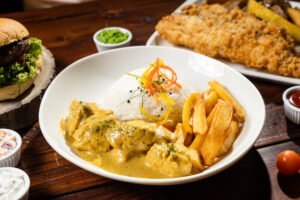
3. Lighting Is Not About Brightness, It Is About Depth
Lighting is often reduced to a simple rule: use natural light.
That is correct, but incomplete.
Good lighting creates depth, which helps customers understand the dish better. Shadows, highlights, and contrast all play a role in making food look more dimensional and appealing.
Flat lighting removes texture.
Depth creates appetite.
This difference is subtle but powerful, and it is one of the reasons professional food visuals outperform amateur ones so consistently.
4. Composition Should Guide Attention
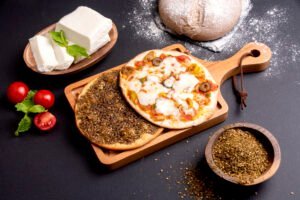
Composition is not about making the image look artistic. It is about guiding the viewer’s eye.
The goal is to make sure the customer sees exactly what matters most.
That could be:
- The melted cheese
- The layering of a dessert
- The freshness of ingredients
Everything else should support that focus.
When the composition is unclear, the image becomes harder to process, and hesitation increases.
5. Consistency Builds Brand Recall

One strong image can attract attention.
Consistency builds a brand.
If your menu, Instagram, and ads all look different, your brand feels fragmented. Customers may not consciously notice it, but it affects trust and recognition.
High-performing brands maintain consistency in:
- Lighting
- Color tones
- Styling
- Composition
This is where many restaurants struggle, because they treat photography as isolated shoots rather than a connected system.
And this is where we at food on focus approach content differently, focusing on building visual consistency that supports long-term growth.
Real-World Scenario: Same Dish, Different Sales
Two restaurants sell the same burger.
One uses a flat image with poor lighting and unclear texture.
The other uses a well-lit, close-up shot that highlights the crisp patty, soft bun, and fresh ingredients.
The product is the same.
The perception is not.
Customers choose the second option more often because it looks more satisfying and valuable.
This is not a creative difference.
It is a commercial one.
What Most Restaurants Get Wrong
Most restaurants invest in food photography at some point, but the approach is usually flawed.
They rely on amateur visuals that reduce perceived quality. They shoot randomly without prioritizing high-impact dishes. They use the same images across platforms without optimization. They treat photography as a one-time activity instead of an ongoing growth asset.
This is where execution breaks down.
And this is where many brands realize that even good food cannot compensate for weak presentation, which is why working with specialists becomes a strategic shift rather than just a creative upgrade.
What High-Performing F&B Brands Do Differently

High-performing brands approach food photography differently.
They invest in visuals that are designed to convert, not just impress. They maintain consistency across all platforms. They create content tailored to specific use cases such as delivery listings, ads, and social media.
Most importantly, they align visuals with business goals.
This level of alignment rarely happens without intention, which is why brands that work with teams like food on focus tend to scale faster, not because they produce more content, but because they produce the right content.
Why This Matters for Your F&B Brand’s Growth
Food photography directly impacts key business outcomes.
Better visuals increase conversion rates by reducing hesitation. Strong imagery improves pricing power by making dishes feel more valuable. Consistent branding improves recall and repeat orders.
It also affects platform performance. Listings with better visuals tend to perform better, leading to increased visibility over time.
Most restaurants understand that visuals matter.
Few execute them at the level required to compete.
When Should You Work with an F&B Creative Agency
There are clear moments when professional support becomes necessary.
When launching and needing a strong first impression
When rebranding and changing perception
When scaling and improving ad performance
When conversions are low despite traffic
When your brand feels visually inconsistent
At this stage, the issue is not effort. It is execution.
The Bigger Insight: Your Food Is Only as Valuable as It Looks
Customers cannot taste your food online.
They can only see it.
That means your visuals are not just supporting your product.
They are representing it entirely.
If your food looks average, it will be treated as average.
If it looks premium, it will be valued accordingly.
That perception drives everything from orders to pricing to brand growth.
FAQs
Why is food photography important for restaurants?
Food photography shapes first impressions and directly influences customer decisions, especially on delivery platforms where visuals determine whether users click or scroll.
Does it increase orders?
Yes. Strong food visuals improve engagement, increase click-through rates, and lead to higher conversions.
Cost in Dubai?
Costs vary depending on scope and production quality, but should be evaluated based on return in terms of orders and brand positioning.
How to improve conversions?
Focus on high-quality visuals, clear composition, and consistent branding that communicates value instantly.
What is the Need for branding?
Branding helps build recognition and trust, which are critical in competitive, digital-first markets.