
In Dubai’s cutthroat F&B scene, world-class photography isn’t just a nice-to-have—it’s a core part of your survival kit. For any restaurant, cafe, or cloud kitchen, your visuals are the single most powerful tool you have to grab attention, drive bookings, and boost online orders in a city that runs on spectacle.
Why Great Photography Is Your Brand’s Secret Weapon in Dubai
Picture two restaurants side-by-side on Talabat. One has dark, blurry phone snaps. The other has bright, professionally shot images where every ingredient looks impossibly fresh. Which one gets the click? We all know the answer. In Dubai, customers don’t just buy food; they buy an experience, and that experience starts with their eyes.
High-quality photography is your silent salesperson, working around the clock on every platform. It’s the visual handshake that introduces your brand on Instagram, the tempting menu that convinces browsers on your website, and the proof of quality that builds immediate trust.
Cut Through the Visual Noise
Dubai is a city of superlatives, and its food scene is no different. Standing out takes more than just a great menu; you need a visual story that cuts through the noise. Generic stock photos or amateur snaps just fade into the background.
Investing in bespoke, professional photography is how you communicate value before a customer ever tastes your food. It’s about crafting an identity that resonates with an audience accustomed to excellence.
This approach is fast becoming the standard, not the exception. The UAE’s professional photography market is set to grow by a huge 6.64% CAGR through 2031, largely because businesses need unique brand content that stock images can’t deliver. Dubai’s affluent crowd and packed events calendar are pushing F&B brands to create bold, cinematic visuals to build their presence and get people in the door.
A Tangible Return on Investment
It’s tempting to see photography as just another creative expense, but it’s smarter to view it as a direct investment in your bottom line. The link between powerful visuals and business growth is clear and measurable.
- Increased Online Orders: Mouthwatering dish photos on delivery apps like Deliveroo and Careem can seriously lift your conversion rates.
- More Dinner Reservations: Stunning interior and lifestyle shots create an aspirational vibe, encouraging diners to book a table to experience it for themselves.
- Stronger Brand Recall: A consistent and professional visual style makes your brand instantly recognisable, building loyalty and trust over time.
Ultimately, incredible photography in Dubai isn’t just about making your food look good—it’s about building a profitable, resilient brand that captures the hearts (and stomachs) of your audience. If you’re still on the fence, you might want to explore why professional food photography in Dubai is worth the investment.
Choosing the Right Photography Services for Your Business
Investing in professional photography in Dubai is a great first move, but it’s not a one-size-fits-all solution. Just like a chef wouldn’t use a cleaver for delicate garnishes, a smart F&B owner needs to pick the right style of photography for the right job. Simply booking a “photoshoot” without a clear goal is like cooking without a recipe—you might get something, but it probably won’t be what you wanted.
This is about moving beyond just “pretty pictures.” It’s about commissioning strategic visual assets designed to hook customers, drive sales, and tell your brand’s story in one of the world’s most competitive markets.
The right images don’t just decorate your menu or social feed; they become a core part of your growth strategy, directly supporting your brand identity and attracting new customers.
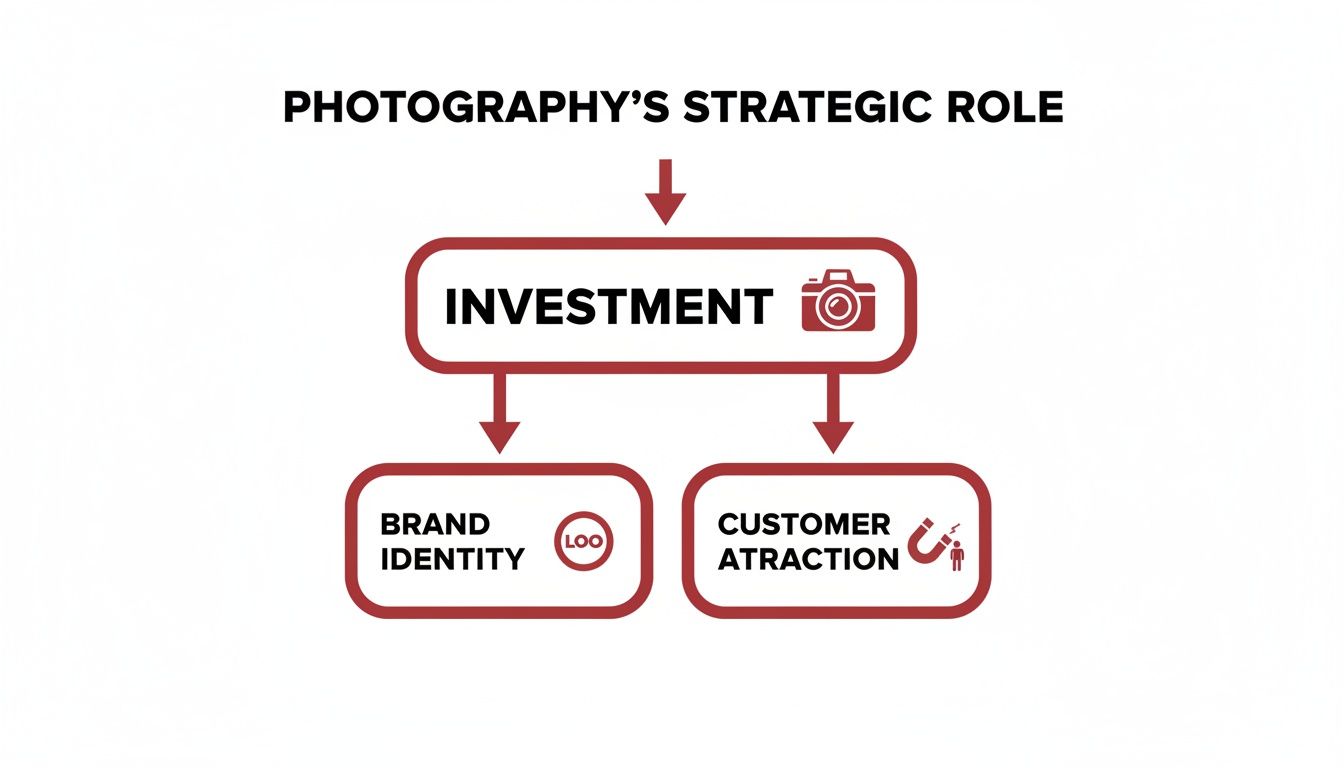
As you can see, that initial investment is fundamental to building your brand and pulling in business. It proves that great photography isn’t an expense—it’s a foundational marketing tool.
Matching Photography Services to Your F&B Business Goals
To make this crystal clear, let’s break down which photography style aligns with specific business objectives. Think of this table as your guide to choosing the right visual tool for the job, ensuring every dirham you spend on photography works as hard as possible for your brand.
| Photography Type | Primary Goal | Best For | Key Platforms |
|---|---|---|---|
| Food & Menu | Drive immediate sales & trigger cravings | Cloud kitchens, delivery-focused brands, restaurants with large menus. | Talabat, Deliveroo, Careem, Website Menus |
| Lifestyle | Build an emotional connection & sell an experience | Cafés, dine-in restaurants, brunch spots, family-friendly venues. | Instagram, Facebook, Website Gallery, Ads |
| Venue & Interior | Showcase atmosphere & attract target clientele | Fine dining, themed restaurants, venues with unique views or decor. | Google My Business, Website Banners, PR Kits |
By understanding these distinctions, you can build a versatile and powerful library of images where every shot has a purpose, from driving an immediate online order to building long-term brand love.
Your Silent Salesperson: Food and Menu Photography
Think of your menu photos as your best employee. This is your silent salesperson, working 24/7 on platforms like Talabat, Deliveroo, and your own website to turn casual browsers into paying customers. In the fast-scrolling world of food delivery apps, your dish photos are often the only thing standing between you and a competitor.
The mission here is pure, unapologetic appetite appeal. These shots need to be clean, bright, and so detailed that customers feel like they can almost taste the food through the screen. For a cloud kitchen, this isn’t just important—it’s everything. With no physical location, your menu images are your brand experience.
One perfectly captured dish can make all the difference. To dive deeper, check out our guide on how to choose the right dish and make food look irresistible on camera.
Telling Your Story: Lifestyle Photography
While menu photography sells a dish, lifestyle photography sells an experience. This is where you move beyond the plate to tell your brand’s story and create an emotional connection with your audience. These are the photos that show real people enjoying your food, your space, and the unique vibe you’ve worked so hard to create.
Picture a group of friends laughing over brunch at your café, a couple sharing a romantic dinner, or a family celebrating a special occasion. These are the moments that make your brand feel human, relatable, and aspirational. They answer the customer’s silent question: “Is this a place for someone like me?”
Lifestyle photography transforms your restaurant from just a place that sells food into a destination for connection and memories. It’s the visual language that builds a community around your brand.
These images are gold for social media platforms like Instagram, your website’s gallery, and digital ad campaigns. They provide the rich, story-driven content that stops the scroll and invites potential customers to see themselves as part of your world.
Setting the Scene: Venue and Interior Photography
Your restaurant’s atmosphere is a massive part of your product, and venue photography is how you sell it. A thoughtfully designed interior, a breathtaking view from your terrace, or a quirky architectural detail are powerful assets that can pull customers in before they’ve even glanced at the menu.
High-quality interior shots do more than just show what your space looks like; they communicate a feeling. Is your restaurant intimate and cosy? Modern and buzzing with energy? Or is it chic and sophisticated? Professional venue photography captures that essence, helping to set customer expectations and attract your ideal crowd.
For any restaurant in a prime Dubai location—whether it’s a beachfront spot in Jumeirah or a slick rooftop lounge in DIFC—showcasing the environment is non-negotiable. These images are invaluable for:
- Google My Business: Giving potential diners a compelling virtual tour.
- Website Banners: Making an immersive and unforgettable first impression.
- PR and Media Kits: Attracting press coverage, influencers, and private event bookings.
By strategically combining these different types of photography, you create a complete and compelling visual identity. Each style plays a distinct role, and together, they build a brand that not only looks incredible but also drives real, tangible business results.
Budgeting and Planning Your Photoshoot for Maximum ROI
Great visuals don’t just happen by accident. They’re the result of careful planning and smart investment. The first step to building a powerful library of images is to get your head around the costs, but instead of seeing it as an expense, think of your budget as fuel for your brand’s growth.
A question I hear all the time is, “How much should I spend?” There’s no single magic number. The answer is tied directly to your goals. A simple menu refresh for a cloud kitchen is naturally going to have a different price tag than a full-scale lifestyle campaign for a new five-star hotel restaurant. The key is to match your spending with the results you expect.
What Drives Photoshoot Costs in Dubai
When you get a quote, understanding what goes into it helps you see where the real value is. Several key factors shape the final cost of a professional F&B photoshoot, and knowing them helps you make choices that fit your budget and what you’re trying to achieve.
Here’s what typically drives the cost:
- Photographer’s Expertise and Crew: You’re paying for experience, not just a person with a camera. A seasoned F&B photographer in Dubai knows exactly how to make food look incredible under the pressure of a busy shoot day. This cost might also cover assistants or a digital technician to keep things running smoothly.
- Food and Prop Styling: For high-end results, this is non-negotiable. A professional food stylist is an artist who makes every single dish look its absolute best on camera—a skill that’s completely different from a chef’s. Prop styling adds the context and story that makes your brand memorable.
- Scope and Deliverables: It’s simple maths, really. The total number of final, edited images you need directly impacts the price. A shoot for ten hero menu items will cost less than one for a fifty-item catalogue.
- Location and Logistics: Shooting on-site at your restaurant is the standard, but if you need an external studio or a unique outdoor spot, you’ll have to factor in rental fees and permit costs.
The Blueprint for Success: a Creative Brief and Shot List
A successful photoshoot is 90% planning and 10% execution. Seriously. Walking into a shoot without a clear plan is the fastest way to waste time, money, and everyone’s energy. Your two most important documents are the creative brief and the shot list.
The creative brief is your strategic compass. It’s a document that lays out the “why” behind the shoot. It should define who you’re talking to (your target audience), the brand mood you want to capture (e.g., vibrant and casual, or elegant and sophisticated), and exactly where the final images will live. This makes sure everyone, from the photographer to the stylist, is on the same page.
The shot list is your tactical map for the day. This is a detailed, itemised list of every single photograph you need. A good shot list goes beyond just naming the dish; it specifies the angle (like overhead or 45-degree), orientation (horizontal for website banners, vertical for Instagram Stories), and any specific props or backgrounds required for each shot.
A detailed shot list is your insurance policy against disappointment. It kills any guesswork on shoot day, guarantees you get every critical image, and keeps the whole process efficient and on budget.
Typical Timelines: From First Call to Final Delivery
Understanding the project timeline helps you slot content creation into your marketing calendar without any last-minute chaos. Rushing the process almost always means compromising on quality, so planning ahead is vital. For a smoother ride, it helps to work with a dedicated interactive agency in Dubai that knows these workflows inside and out.
Here’s a realistic look at how a standard F&B photoshoot unfolds:
- Discovery and Quoting (3-5 Business Days): This kicks off with your first enquiry, followed by a discovery call where we’ll dive into your brief. After that, the agency will put together a detailed proposal and quote for you.
- Pre-Production and Planning (1-2 Weeks): Once the quote gets the green light, the real work begins. This is where the shot list is finalised, props are sourced, the crew is scheduled, and all the logistics are coordinated with your team.
- Shoot Day (1-2 Days): This is where all that planning pays off. Depending on what we’re shooting, it could be a half-day for simple menu items or multiple days for extensive lifestyle and venue content.
- Post-Production and Delivery (1-2 Weeks): After the shoot, the images head into post-production. This involves culling the best shots, colour correction, retouching, and final optimisation for different platforms. You’ll then get a gallery to review and download your final assets.
From start to finish, you should expect a typical project to take 2-4 weeks. By planning for this timeline, you can make sure your shiny new visual assets are ready exactly when you need them for a menu launch, a marketing campaign, or a website refresh.
Navigating Permits and Choosing Iconic Dubai Locations
Dubai’s incredible cityscape makes for a world-class photography backdrop, but getting those perfect shots involves more than just pointing and shooting. The city has clear rules for managing public spaces, and knowing them is non-negotiable. Trying to run a professional shoot without the right permits can lead to hefty fines and an immediate shutdown—a costly way to learn a lesson.
This is especially true for any kind of commercial photography. While a tourist snapping personal photos is perfectly fine, the moment you bring in professional gear, models, or a crew for your business, you need a permit. The rules change depending on whether your dream spot is public, semi-private, or fully private property.
Honestly, this isn’t just about avoiding trouble; it’s about being professional. An experienced local photography team knows this landscape inside and out. They’re the ones who handle the paperwork and logistics, making sure your shoot is fully compliant and runs without a hitch.
Understanding Dubai’s Photography Permit System
At first glance, the permit system can feel like a maze. But it really just boils down to the type of location you’ve chosen. Every authority has its own set of rules, fees, and application timelines, which is exactly why having local expertise on your side is so valuable.
Here’s a simple way to break it down:
- Public Locations: This covers places like public beaches (think Kite Beach), parks, or historic areas like Al Fahidi. For these spots, you’ll generally need a permit from the Dubai Film and TV Commission (DFTC).
- Semi-Private Locations: Think of master-planned communities like Downtown Dubai, City Walk, or Dubai Marina. These areas are managed by major developers (like Emaar or Meraas), and you’ll need to get separate permission directly from them, often in addition to any DFTC approvals.
- Private Locations: This is everything from malls and hotels to your own restaurant. While you have full control over your own space, shooting inside a mall or hotel requires explicit permission from their management team.
The key takeaway is simple: never assume you can just show up and shoot. Always, always verify the specific requirements for your chosen location well ahead of time. It’ll save you from last-minute surprises and potential legal headaches.
Choosing Locations That Tell Your Brand Story
Once the paperwork is out of the way, the fun part begins. The right location does so much more than provide a pretty background; it reinforces your brand’s identity and connects with your target audience. In Dubai, the most effective lifestyle photography uses the city itself as a character in your restaurant’s story.
The city’s status as a global hotspot fuels a massive demand for professional shoots that capture its unique energy. In fact, Dubai’s digital camera market is projected to be worth USD 59.79 million by 2031, reflecting just how central high-quality visuals are here. You can dive deeper into the UAE digital camera market trends to see how this demand is shaping the industry.
Think about the story you want to tell:
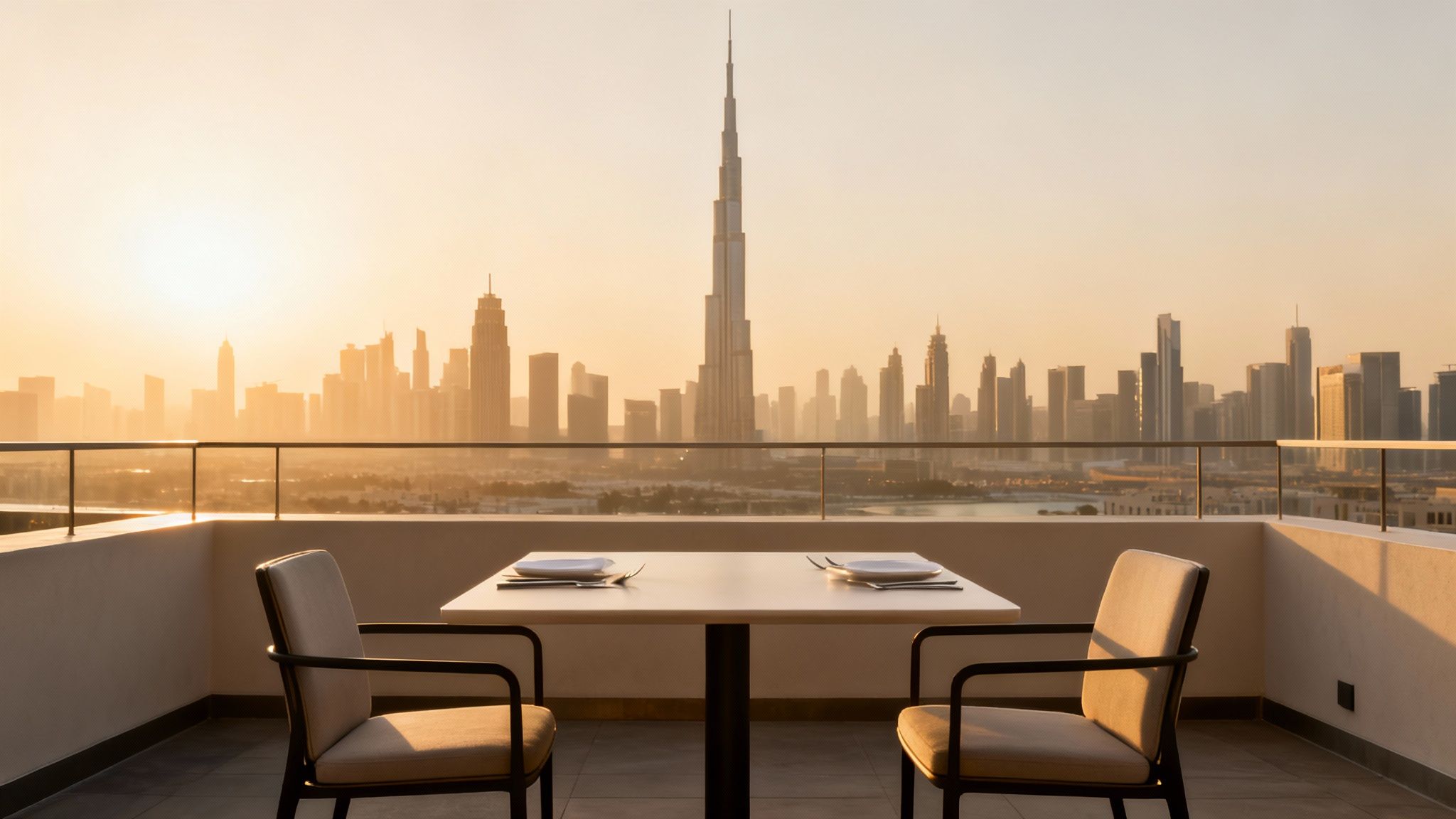
- Urban Sophistication: A chic rooftop lounge with the Burj Khalifa piercing the skyline screams luxury and aspiration. It’s the perfect setting for a high-end restaurant or an exclusive cocktail bar.
- Bohemian Beach Vibe: Imagine a casual picnic set up on a quiet stretch of Jumeirah beach. This scene immediately connects with a relaxed, family-friendly café brand.
- Historic Charm: The textured alleyways and traditional architecture of Al Seef can add a touch of authentic, rustic appeal for a brand that prides itself on heritage and tradition.
Ultimately, you want to pick a location that feels like a natural extension of your restaurant. When you combine meticulous permit planning with a creative location strategy, you end up with stunning visuals that don’t just look incredible—they resonate powerfully with the exact customers you want to attract.
How to Turn Your Photos into Profit
Getting amazing photos is only half the battle. Owning a library of stunning images is one thing; turning them into a revenue-generating machine is where the real work—and the real value—begins. The goal is to stop thinking about photography as a one-off expense and start treating it as a powerful visual marketing engine that delivers a measurable return on your investment.
This is where strategy comes in. Your images shouldn’t just be pretty decorations; they need to be hard-working assets. Every single photo should have a job, whether it’s stopping the scroll on Instagram, driving a click on Talabat, or convincing a diner to book a table through your website. Done right, a single photoshoot should fuel your marketing for months, not just a few days.
Optimise Every Image for Every Channel
Your visual content has to be tailored to the platform where it lives. A brilliant website banner will almost certainly fall flat as an Instagram Story, and a perfect menu shot for Deliveroo won’t have the same impact in a press kit sent to food bloggers. Strategic optimisation is everything.
Start by getting into your customer’s mindset on each platform:
- Delivery Apps (Talabat, Careem): The goal here is instant conversion. Photos must be clean, bright, and focused entirely on making the dish look irresistible. Run A/B tests by rotating different hero images for your best-selling items to see which one actually drives more orders.
- Social Media (Instagram): This is your brand’s storybook. Repurpose lifestyle shots to create engaging posts, Reels, and Stories. A single photo of friends laughing over brunch can be cropped into a vertical Story, used in a carousel post, or turned into a targeted ad.
- Website and Email: Your website is your digital storefront. Use high-resolution venue photos to create immersive banners and drop lifestyle shots into email campaigns to announce new menus or special events. It makes your communication feel personal and aspirational.
Create a Multi-Channel Content Engine
The most successful F&B brands in Dubai squeeze every last drop of value from their photography. A photoshoot isn’t a one-time event; it’s the start of a content cycle that can be repurposed, remixed, and redeployed across every single customer touchpoint.
Think of your photo library as a collection of ingredients. You can combine them in different ways to create endless new ‘recipes’ for your marketing, ensuring you always have fresh, relevant content ready to go.
For example, a series of stunning interior shots can be used in a dozen different ways. Send them to journalists for PR features, turn them into a virtual tour on Google My Business, or use them as the backdrop for graphic announcements about upcoming events on social media. Maximising your assets isn’t just smart; it’s essential for survival. For a deeper dive into visual storytelling, check out our guide on food videography and turning every bite into a story.
Beyond the Digital Screen
While digital platforms are crucial, don’t overlook the power of tangible, physical assets. The Middle East and Africa photo prints market is growing at a significant 8.3% CAGR, which points to a renewed appreciation for high-quality physical materials. This trend gives F&B brands a fantastic opportunity to elevate the in-person customer experience, turning one photoshoot into a multi-channel asset. You can read more insights on the growth of the regional photo prints market.
Here’s how to put it into practice:
- Redesign Your Menu: Use your professional dish photos to create a visually stunning physical menu that instinctively guides customers toward your high-margin items.
- In-Store Promotion: Print large-format posters of your best lifestyle or food shots to create an inviting atmosphere and promote special offers inside your venue.
- Branded Materials: Feature your top images on takeaway bags, flyers, and table talkers to reinforce your brand identity and leave a lasting impression long after the meal is over.
By strategically distributing your visual assets across both digital and physical channels, you build a cohesive and powerful brand presence. This integrated approach ensures that every dirham spent on photography in Dubai works tirelessly to attract customers, drive sales, and ultimately, grow your business.
Finding the Right Photography Partner in Dubai
Choosing your creative partner is probably the most critical decision you’ll make for your visual strategy. In a market as demanding and fast-paced as Dubai, you aren’t just hiring someone with a fancy camera; you’re investing in a consultant who can translate your brand’s soul into powerful, revenue-generating content.
The right partner acts as a true extension of your marketing team. They get the difference between simply taking a picture of food and creating an image that makes someone stop scrolling and immediately think, “I need to order that.” It’s a specific skill set, a blend of artistic vision with a sharp understanding of what drives people to eat.
What to Look for in a Portfolio
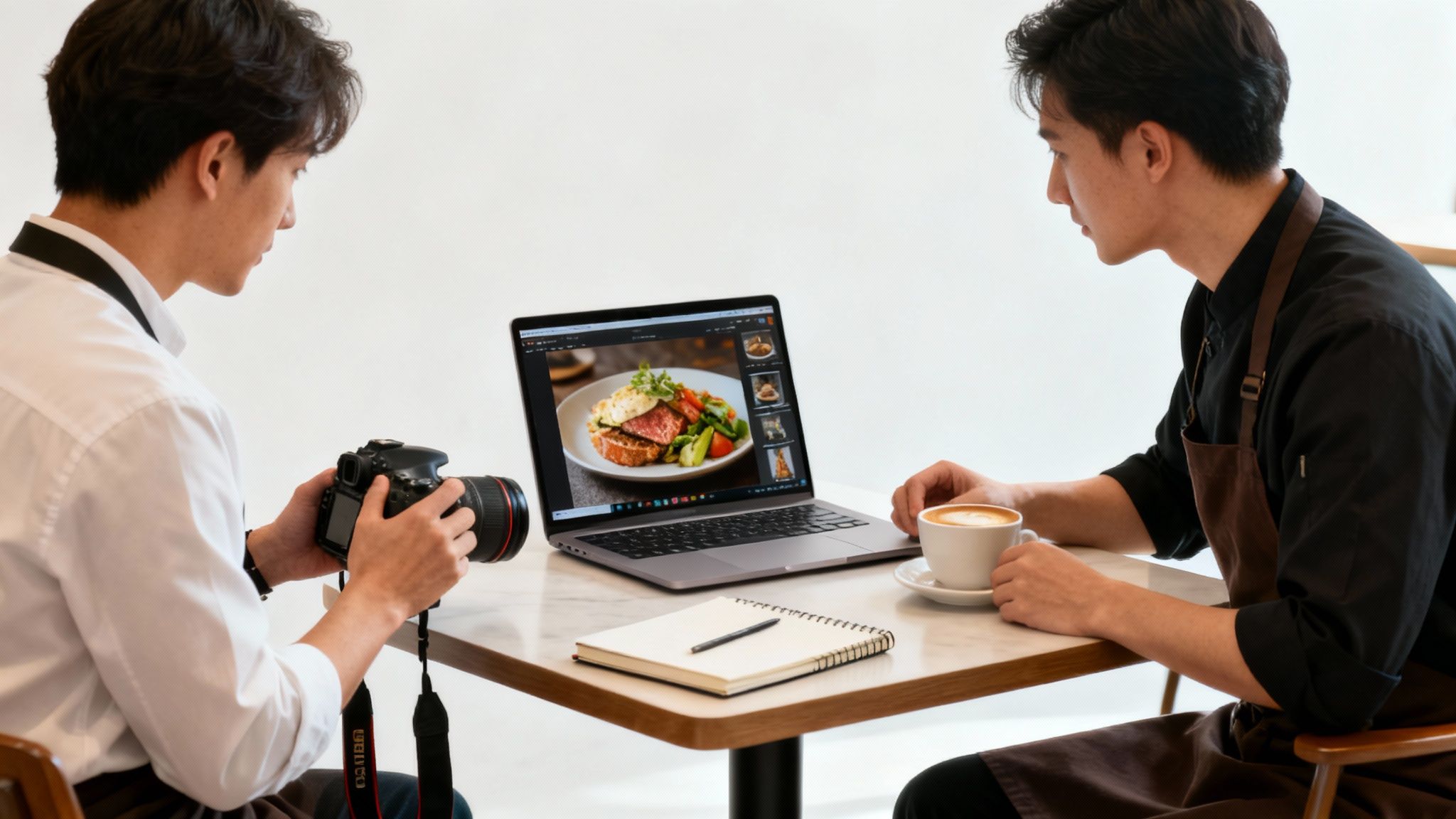
When you’re vetting potential photographers or agencies, their portfolio is your first piece of evidence. Don’t just flip through pretty pictures. You need to analyse their work with a strategic eye. The best photography in Dubai for F&B will show a clear mastery of light, composition, and styling—the holy trinity of food visuals.
Your goal here is simple: find a specialist, not a jack-of-all-trades. A photographer who shoots weddings on Friday, real estate on Saturday, and corporate headshots on Sunday might be technically skilled, but they won’t have the deep-seated expertise needed to make your dishes look utterly irresistible.
An F&B specialist brings priceless industry knowledge to the table. For a curated look at what specialisation means in practice, check out our guide to the best food photographers in Dubai.
Think of it like hiring a chef. You wouldn’t ask a pastry chef to run your grill station. In the same way, you need a photographer whose entire world revolves around making food the hero of every single shot.
Key Questions to Ask During a Consultation
Once you’ve shortlisted a few candidates, the consultation is your chance to dig deeper. This conversation should feel less like a formal interview and more like a strategy session. Their answers will tell you everything you need to know about their process, professionalism, and whether they genuinely “get” your brand.
Here are a few essential questions to guide that discussion:
- Can you walk me through your creative process, from brief to delivery? This peels back the curtain on their workflow. You’re looking for a structured, organised approach, not chaos.
- Is food styling included in your packages? For commercial-quality results, a professional food stylist is a non-negotiable. Clarify if this is an in-house service or an extra cost you need to budget for.
- What are the image usage rights? Get this in writing. Be crystal clear on where you can use the photos (social media, website, print ads, delivery apps) and for how long.
- Have you worked with brands similar to mine? While it’s not a deal-breaker, previous experience with your type of cuisine or restaurant concept is a massive advantage. They’ll already speak your language.
Ultimately, finding the right partner is about building a relationship founded on trust, a shared vision, and a mutual obsession with hitting your business goals. They should be just as invested in your success as you are.
Your F&B Photography Questions, Answered
Stepping into the world of professional photography can feel a bit daunting, with all the moving parts. To give you some clarity and confidence, we’ve put together answers to the questions we hear most often from F&B founders and managers here in Dubai.
How Much Should I Budget for Food Photography in Dubai?
The honest answer? It varies. A simple, clean menu shoot for a delivery-only brand could start from a few thousand dirhams. On the other hand, a full-blown lifestyle campaign with models, props, stylists, and multiple locations is a much larger investment.
The final price tag really comes down to a few key things:
- The photographer’s experience and reputation.
- The total number of edited, final images you need.
- How complex the shoot is—think food styling, unique props, or multiple setups.
To get a clear picture, always ask for a custom quote based on a detailed brief. It’s the only way to get a number that accurately reflects what you want to achieve.
What’s a Realistic Timeline for a Photoshoot?
From our first chat to you getting your final, sparkling images, a typical project takes about two to four weeks. This schedule isn’t just about making things look pretty; it’s a structured process designed to guarantee top-quality results without cutting corners.
Here’s how that time usually breaks down:
- Planning & Pre-Production (1–2 weeks): This is where we nail down the creative brief, finalise the shot list, and sort out all the logistics.
- Shoot Day (1 day): Most shoots wrap up in a single day, though bigger, more complex projects might need more time on set.
- Post-Production (1–2 weeks): Our team gets to work selecting the best shots, editing them to perfection, and preparing them for final delivery.
While we can sometimes work faster for urgent projects, giving the creative process the time it deserves always pays off in the final images.
Is a Professional Food Stylist Really Necessary?
If you want those scroll-stopping, mouthwatering photos that make people say, “I need that right now,” then yes, a food stylist is essential. They’re the artists who make food look incredible under the glare of studio lights, using techniques that go way beyond what happens in a normal kitchen. Their entire job is to make your food look absolutely irresistible.
A food stylist is the secret ingredient to photos that stop the scroll. They work with textures, colours, and plating to create a hero version of your dish that looks perfect from every angle.
The good news is that many dedicated F&B photography studios in Dubai, including ours, build this service right into their packages.
What Kind of Photo Usage Rights Can I Expect?
This is a big one. Your photography contract should always spell out your image usage rights in plain English. Typically, clients get a licence to use the photos on their own digital channels—like your website, social media pages, and delivery apps—for a set amount of time.
If you’re planning to use the images for bigger advertising campaigns, like billboards or print ads, that usually requires broader rights and an additional fee. It’s always best to get this crystal clear upfront to avoid any mix-ups down the road.
Ready to create stunning visuals that drive real business results? The team at Food On Focus Media are experts in crafting scroll-stopping food photography and videography for Dubai’s top F&B brands. Get in touch today to discuss your project.