

Dubai has become one of the most competitive food markets in the world, and the pressure on restaurants, cafés, and cloud kitchens has shifted in a way that many operators still underestimate. A decade ago, a great location, a strong recipe, and consistent service were usually enough to build a loyal base. Today, the first encounter a customer has with your brand almost never happens at your table. It happens on a phone screen, inside a delivery app, on an Instagram feed, or in a Google search result, and the decision to choose you or scroll past you is made in a fraction of a second based on how your food and your brand look. This is the reality that defines why a specialized restaurant branding agency Dubai operators trust has become less of a luxury and more of a commercial necessity.
The uncomfortable truth is that great food does not sell if it does not look irresistible online. You can serve the best shawarma, the most refined omakase, or the richest specialty coffee in the city, but if your visuals fail to communicate that quality before a customer tastes anything, you are quietly losing orders to competitors whose food may be inferior yet whose presentation is sharper. This blog unpacks how branding influences revenue in the F&B context, where most restaurants go wrong, and how a strategic branding partner can change outcomes rather than simply decorate them.
What Restaurant Branding Actually Means in a Conversion-Driven Market
Before going further, it helps to correct a misconception that holds many F&B businesses back. Branding is frequently reduced to a logo, a colour palette, and a menu layout, treated as a one-time cosmetic exercise that gets completed at launch and then forgotten. That definition is not only outdated, it is commercially dangerous, because it ignores the way branding functions inside the buying journey of a modern diner.
A useful way to understand restaurant branding today is to see it as the entire system of visual and emotional signals that tell a customer what to expect from your food before they ever experience it. Those signals include your logo and identity, but they extend far deeper into your food photography, your delivery-app thumbnails, your reel aesthetics, your packaging, your storefront, and the consistency that ties all of these together into a single recognisable personality. When these elements align, they create instant trust and desire, and when they contradict each other, they create hesitation, which in a market as fast and crowded as Dubai almost always results in a lost order.
The business implication is significant. If branding is a conversion system rather than a decoration, then weak branding is not a missed aesthetic opportunity, it is a continuous leak in your revenue. This is precisely the lens a serious restaurant branding agency Dubai businesses rely on should bring to the work, and it is what separates strategic creative partners from vendors who simply hand over a logo file and disappear.
How Visuals Translate Directly into Buying Decisions
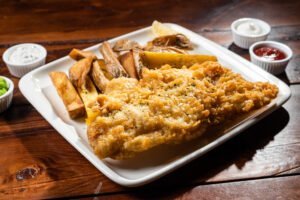
To appreciate why visuals, carry so much commercial weight, it is worth looking at the psychology of how people choose food online. Human beings process images far faster than text, and when it comes to food specifically, the brain responds to visual cues of freshness, warmth, texture, and abundance almost instantly. A diner scrolling through Talabat or Deliveroo is not reading your menu line by line in a calm, analytical state. They are scanning, comparing, and reacting emotionally, and the dish that looks most appetizing in that moment wins the order even if a competitor offers something nearly identical at a similar price.
This behavior has a direct and measurable effect on conversion. When a delivery listing features dull, poorly lit, or inconsistent images, the click-through and add-to-cart rates fall regardless of how good the actual food is, because the customer never gets far enough to find out. The real-world implication is that two restaurants selling the same burger at the same price can experience dramatically different sales volumes purely because one has invested in conversion-focused visuals and the other has relied on amateur phone photography or supplier stock images.
The outcome of understanding this is liberating rather than discouraging, because it means revenue growth is often available without changing your recipe, your pricing, or your location. The lever is the visual layer, and pulling it correctly requires both creative skill and strategic intent. This is where execution becomes the deciding factor, and it is also where most restaurants quietly fall short.
Restaurant Branding Agency Dubai: What Most Restaurants Get Wrong
Across Dubai’s F&B scene, the same pattern of branding mistakes repeats itself, and recognizing these patterns is the first step toward fixing them. The issue is rarely a lack of ambition or even a lack of budget. The issue is almost always a fragmented, non-strategic approach to visuals and identity that undermines the business from the inside.
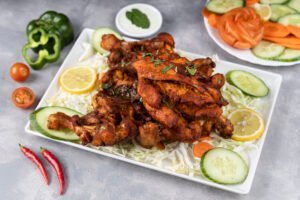
The most common failure is a reliance on amateur visuals. Many owners, understandably trying to control costs, photograph their dishes themselves or hand the task to a staff member with a smartphone. The result tends to look improvised, with harsh lighting, distracting backgrounds, and colors that do not represent the food accurately. On a screen, this signals low quality even when the food itself is excellent, and customers interpret that signal as a reason to choose someone else.
The second recurring mistake is the complete absence of a visual strategy. Photos get taken when there is time, posts go up when someone remembers, and packaging gets designed in isolation from the logo or the social feed. Without a guiding strategy, the brand becomes a collection of disconnected pieces rather than a coherent identity, and customers struggle to remember it. This is where execution breaks down for so many promising concepts, because talent in the kitchen is never matched by discipline in the brand.
Inconsistent branding compounds the problem. When the storefront says one thing, the Instagram grid says another, and the delivery thumbnail says something else entirely, the brand loses the repetition it needs to build recall. A customer might enjoy a meal yet fail to recognize the same brand a week later in a different context, which means every interaction starts from zero instead of building on the last.
A fourth mistake is treating photography and branding as a one-time shoot. A restaurant launches, invests in a single round of content, and then runs that same imagery for two years while menus evolve, seasons change, and platform expectations rise. Visual content has a shelf life, and stale imagery slowly erodes the sense that a brand is active, relevant, and worth choosing.
Finally, most restaurants neglect platform optimization entirely. The visual requirements of an Instagram reel, a Talabat hero image, a Google Business listing, and a printed menu are not the same, yet many brands push identical or poorly adapted assets across all of them. Content that is not optimized for the platform it lives on consistently underperforms, and the cumulative cost of that underperformance across every channel is substantial. When these gaps appear together, which they usually do, the brand is effectively paying a tax on every customer interaction. Closing those gaps is exactly the kind of work a specialized F&B creative team is built to handle, and it is the difference between visuals that merely exist and visuals that actively sell.
What High-Performing F&B Brands Do Differently
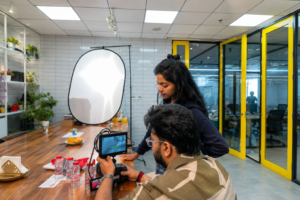
The restaurants and cloud kitchens that consistently outperform their peers in Dubai are not necessarily the ones with the biggest budgets or the most famous chefs. They are the ones that treat branding as a growth discipline and apply it with the same rigor they apply to operations and finance. Understanding their habits offers a clear blueprint for any operator who wants to compete at that level.
High performers begin with conversion-focused visuals rather than decorative ones. Every photograph and every video is created with a commercial question in mind, which is whether this image will make someone stop scrolling and place an order. That intent shapes everything from styling and lighting to composition and the choice of which dishes to feature most prominently. The visuals are beautiful, but beauty is in service of conversion, not the other way around.
These brands also maintain relentless consistency. Their identity feels the same whether a customer encounters it on a billboard, a delivery app, a social feed, or inside the venue, and that consistency builds the kind of recognition that turns first-time buyers into loyal regulars. Consistency is not accidental, it is the product of clear brand guidelines and disciplined execution applied across every touchpoint over time.
Crucially, leading F&B brands create platform-specific content. They understand that a vertical reel designed to capture attention in three seconds is a different asset from a clean, well-lit hero image engineered to win the click on a delivery platform, which is different again from the imagery that builds desire on a Google listing. By tailoring content to the behavior and format of each platform, they extract maximum performance from every channel rather than diluting their impact with generic assets.
Underpinning all of this is strategic thinking. High performers connect their visuals to business goals, whether that goal is launching a new location, increasing average order value, supporting a price increase, or improving the return on their ad spend. They do not create content for its own sake, they create it to move a specific number. This integration of creativity and commercial strategy is the signature of brands that grow, and it is the standard that a results-oriented restaurant branding agency Dubai operators choose should be measured against.
Real-World Scenarios Where Visuals Change the Numbers
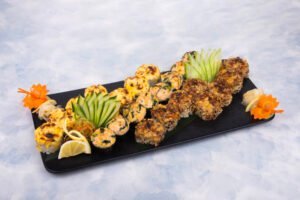
The link between branding and revenue becomes far more tangible when expressed through scenarios that play out across Dubai’s F&B market every single day. These situations are not hypothetical abstractions, they are the practical mechanics of how visual quality converts into commercial results.
Consider the simplest case, which is the same dish presented two different ways. A cloud kitchen selling a signature pasta photographs it once under fluorescent kitchen light against a steel counter, and the listing performs modestly. The same pasta, re-shot with intentional styling, warm directional light, and a composition that emphasizes texture and steam, suddenly looks like a premium product worth ordering. Nothing about the recipe, the portion, or the price has changed, yet the order volume climbs because the visual finally communicates the quality that was always there. The dish did not improve, the brand’s ability to sell it did.
A second scenario involves pricing power. Restaurants frequently feel trapped at a price point, convinced that raising prices will drive customers away, when in reality the constraint is perceptual rather than financial. When the visual presentation of a brand and its food signals premium quality, customers accept and even expect higher prices, because the imagery has already justified the cost in their minds before they read the number. Strong branding gives operators the confidence and the customer permission to charge what their food is genuinely worth, which protects margins in a market where discounting has become a destructive default.
A third scenario shows up in advertising performance. Two restaurants run paid campaigns with similar budgets and similar targeting, but one uses sharp, conversion-engineered creative while the other uses weak visuals. The brand with stronger creative achieves a lower cost per acquisition and a higher return on ad spend, because the same advertising budget works harder when the creative converts more efficiently. Over a campaign cycle, that difference can mean thousands of dirhams in either wasted spend or recovered profit, all determined by the quality of the visual asset rather than the size of the budget. This is the gap where many advertising efforts quietly fail, and it is the gap that disciplined creative execution is designed to close.
Why This Matters for Your F&B Brand’s Growth
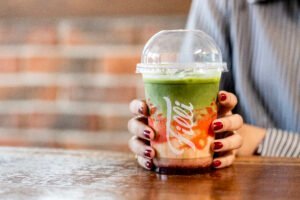
Pulling these threads together reveals why visual branding sits at the centre of F&B growth rather than at its periphery. The effects are not isolated to one metric, they cascade across the entire commercial engine of the business, and ignoring them limits growth in ways that are difficult to diagnose because the loss is invisible. You do not see the orders you never received or the customers who chose a competitor before you had a chance to compete.
The most immediate impact is on orders and conversion rates. Because the buying decision online is driven so heavily by visuals, improving the quality and consistency of your imagery directly increases the percentage of viewers who become buyers, both on delivery platforms and across social channels. A higher conversion rate on the same level of traffic is one of the most efficient forms of growth available to any restaurant, because it requires no additional spend to acquire the audience that is already finding you.
The second impact is on pricing power and brand perception. As visuals elevate the perceived value of your food and your brand, you gain the ability to command prices that reflect your actual quality, which strengthens margins and reduces the dependence on discounts that erodes profitability across the industry. A brand that looks premium is permitted to be priced as premium, and that permission compounds over time as recognition grows.
The third impact is on platform visibility and brand recall. Platforms increasingly reward engaging, high-performing content with greater reach, which means strong visuals do not only convert the customers who see them, they also expand the audience that gets to see you in the first place. Combined with the recognition that consistency builds, this creates a reinforcing cycle in which better branding leads to more visibility, more visibility leads to more customers, and a memorable identity ensures those customers return. This compounding effect is why branding deserves to be treated as an investment in growth rather than a line item in the launch budget.
When Should You Work With an F&B Creative Agency
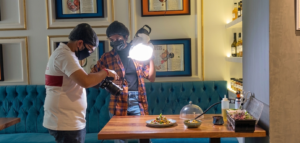
Recognizing the value of strong branding naturally raises a practical question, which is when the right moment is to bring in specialized support rather than continuing to manage visuals internally. While every business is different, several clear inflection points tend to signal that a dedicated F&B creative partner will deliver outsized returns.
The most obvious moment is a launch. Opening a new restaurant, café, or cloud kitchen is the one occasion where first impressions are formed at scale and cannot be repeated, which makes it the highest-leverage point to establish a brand identity, a content system, and platform-ready visuals from day one. Getting this right at launch avoids the far more expensive and slower work of rebuilding perception later.
A rebrand is the second clear trigger. When a concept has evolved, when the existing identity no longer reflects the quality of the food, or when a brand feels dated against sharper competitors, a strategic rebrand realigns the visual signals with the business reality and gives the brand a renewed ability to compete. The third trigger is scaling, because adding locations, expanding a cloud kitchen network, or entering new platforms multiplies the number of touchpoints that must stay consistent, and that complexity quickly outgrows ad hoc internal effort.
The fourth and perhaps most financially urgent trigger is low conversions, whether on delivery platforms, social media, or your website. When traffic exists but orders lag, the problem is frequently the visual layer, and addressing it directly recovers revenue that is currently being lost. Closely related is poor ad performance, where a high cost per acquisition or a weak return on ad spend often traces back to creative quality rather than targeting or budget. In each of these situations, the common thread is that the business has more to gain from expert execution than it has to lose from the investment, and this is the precise point at which a specialized partner such as Food on Focus becomes a strategic growth decision rather than a cost. Food on Focus works specifically within the F&B space, combining high-impact food photography and videography with brand design, platform optimization, and consulting across menu engineering, launches, and growth, which means the creative work is always tied to the commercial outcomes it is meant to produce.
Frequently Asked Questions
Why is food photography important?
Customers judge your food before they taste it. Professional photography helps build trust, attract attention, and increase orders across delivery apps and social media.
Does restaurant brand increase orders?
Yes. Strong branding improves visibility, engagement, customer recall, and conversion rates, helping turn more visitors into paying customers.
How much does restaurant brand cost in Dubai?
Costs depend on the scope, from basic branding packages to full-service marketing programmes. The focus should be on ROI, as effective branding can drive higher sales and better marketing performance.
How can I improve delivery platform conversions?
Use high-quality food photography, optimized menu images, clear branding, and appealing visuals tailored for platforms like Talabat and Deliveroo.
Is good food enough without branding?
No. Great food matters, but customers often decide based on what they see online first. Strong branding helps attract, convert, and retain customers in a competitive market.

A Final Audit Worth Running
The most valuable thing you can do after reading this is to look at your own brand the way a first-time customer does. Open your delivery listing, scroll your Instagram feed, and search your name on Google, then ask yourself honestly whether the visuals make your food look as good as it actually tastes, and whether the identity feels consistent and memorable across every place a customer might find you. If there is a gap between the quality you serve and the quality your visuals communicate, that gap is almost certainly costing you orders, margin, and recall every single day.
Closing that gap is a strategic decision rather than a cosmetic one, and it is the work Food on Focus exists to do for restaurants, cafés, and cloud kitchens that are ready to turn their visuals into a genuine engine for growth. If your current branding is not selling as hard as your kitchen is cooking, it may be time to evaluate what your visuals are really worth to your revenue, and to build a brand that finally looks as irresistible as it deserves to.