Let’s be honest. For years, food and beverage brands have been trained to think one way:
post more, follow trends, run ads, chase reach. But GPT-powered ads change the rules completely. This is not another ad format. It’s a shift in how people decide where to eat. When someone asks an AI assistant questions like “Where should I eat lunch today?” or “Good Tamil non-veg mess in Dubai”, they are not browsing. They are already halfway to a decision. GPT ads for F&B Brands appear inside that moment. That’s why most F&B brands are not ready. This blog breaks down what GPT ads really mean and how restaurants, cafés, and cloud kitchens must prepare if they want to stay discoverable in 2026 and beyond.
GPT Ads Are Not Traditional Ads
The biggest mistake F&B brands make is treating GPT ads like Meta or Google ads. These aren’t banners, boosted posts, or loud promotions they appear within AI answers. That means the “ad” is judged the same way as the recommendation itself. If your brand doesn’t feel clear, reliable, and relevant, it simply won’t be shown. GPT ads reward clarity and punish confusion.
Brand Clarity Comes Before Advertising
- What cuisine it serves
- Who it is for
- What problem it solves
- When someone should choose it
Generic statements like “authentic food with great taste” fail to signal anything meaningful. Clear positioning looks like:
A Tamil-style non-veg mess serving homely lunch meals for office-goers and families in Dubai.
If this clarity is missing or inconsistent across websites, menus, and social profiles, GPT systems simply skip the brand. Before investing in GPT ads, F&B brands must first fix their identity.
AI Readability Matters More Than Visuals
Instagram aesthetics alone won’t make a brand discoverable in AI recommendations. GPT and other AI systems pull from websites, Google Business profiles, menu descriptions, reviews, FAQs, and long-form content not just images. If an F&B brand’s online presence is mostly visual with little explanatory text, it becomes invisible to AI.
Brands need simple, direct language that explains:
- What the food is
- How it’s prepared
- When it’s eaten
- Who it’s for
This means clear menu descriptions, location details, operating hours, and cuisine explanations. In AI discovery, clarity always beats creativity.
Content Must Answer Real Questions
Reviews Become Future Ad Copy
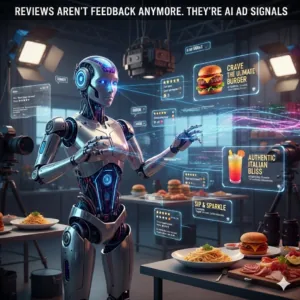
Customer reviews are no longer just social proof they are future ad copy for AI. GPT-based systems read reviews to understand context, emotion, cuisine type, occasion, and usage, not just star ratings. A review that says “the food felt like home and was perfect for a relaxed lunch” gives AI clear signals on when, why, and to whom the brand should be recommended. For F&B brands in Dubai and the UAE, guiding customers to leave descriptive, experience-led reviews instead of one-word feedback helps AI accurately position the brand for discovery. The more specific the review, the stronger the AI recommendation power.
Decision Pages Beat Landing Pages
Traditional landing pages are built to sell, but decision pages are built to guide choices and that’s what AI understands best. GPT-ready pages focus on search intent, answering questions around cuisine-specific meals, lunch options, dietary preferences, and location-based dining in Dubai and the UAE. These pages aren’t spam; they are clear signals. They tell AI exactly what problem the F&B brand solves, when to recommend it, and to whom. The clearer the decision path, the stronger the AI discovery.
Offers Need Meaning, Not Noise
GPT-driven ads don’t rely on flashy discounts they highlight value, reliability, and comfort. For F&B brands in Dubai and the UAE, messaging that builds habit, trust, and emotional connection outperforms short-term offers. Food is a daily choice, and brands that position themselves as safe, familiar, and consistently satisfying become the go-to recommendation for AI and customers alike.
Think Like a Recommendation, Not a Brand
The ultimate test is simple: if a friend asked an AI assistant “where should I eat today?”, would your brand come across as a safe, reliable choice? If not, no amount of advertising can fix it. GPT-driven ads amplify clarity they don’t create it. For F&B brands in Dubai and the UAE, the focus must be on clear positioning, consistent messaging, and trust-building content before AI will confidently recommend them.
The Bigger Truth for using GPT Ads for F&B Brands
GPT ads reward brands that know themselves. They expose those relying on trends, vague messaging, or shallow marketing. For F&B businesses in Dubai and the UAE, the future belongs to brands that invest in clarity, structured content, and long-term discoverability. At Food on Focus Media, we believe the next era of food marketing isn’t louder it’s clearer. Brands that embrace this won’t just run GPT ads; they’ll be recommended.
Planning this for your own brand? See our restaurant marketing service.